
Home
Rip Cards Online 2026: Compare the Best Card Rips Sites & Apps
Best Trading Cards to Collect 2026
Best Pokémon Trading Cards 2026
Contains commercial content
Best Pokémon Trading Cards 2026: Top Cards to Collect and Invest In
Last Updated on 20.10.2026
The beauty of building your own collection is that there is no right or wrong way to do so, and the best Pokémon trading cards aren’t always the most valuable, but the most personal to you.
In this guide, we take numerous factors into account, building a list of five truly spectacular cards to grace the hobby. We have a vintage classic, a $16 million grail, a Pokémon movie promo, a heavy hitter from Neo Genesis, and the modern-day Mona Lisa of Pokémon cards for your consideration. We wonder if you’ll agree with our rankings.
Table of Contents
The best Pokémon trading cards to collect
Our latest comparisons don’t just focus on the most valuable Pokémon cards but also those that we would consider to be iconic throughout the scene. This includes some timeless vintage cards and modern-day grails.

Pikachu Illustrator: The most expensive card in the hobby
We know that we’ve mentioned the price isn’t everything and then gone and placed the most expensive card at number one. However, when you understand our reasoning, you’ll get it. In short, this one has sold for $16.5 million, an unbelievable feat that even surpasses the sports grail of Mickey Mantle #311. The card itself was printed just 39 times and was only awarded to contestants of the CoroCoro Comic illustration contest over in Japan. With so few copies, it is unsurprising to see an incredibly low-graded population. Not to mention that this one was designed by the original creator of Pikachu, Atsuko Nishidia.
-
- Ungraded: Unknown
- Artist: Atsuko Nishidia
- Overall Rating: 9.9/10
Shadowless Charizard: The original Pokémon grail
Up next, the card that all the cool kids wanted (and still do): Base Set Charizard. Many cringes at the thought of how many of these were subject to severe damage while being traded in the school yard – but that’s what it was all about. Unsurprisingly, those who kept their Charizards in great condition are now sitting on a small goldmine, with those from the first print (1st edition Shadowless) seeing prices of PSA 10s hit over the $400,000 mark. This card has proven so popular that even those with the ungraded and unlimited reprint can expect around $800. Of course, much of its popularity comes from being the first holographic Charizard released in English and comes from Mitsuhiro Arita – one of the franchise’s most loved artists.
- Ungraded: $800 (unlimited)
- Artist: Mitsuhiro Arita
- Overall Rating: 9.8/10
Lugia: The Gen II takeover
Time for Gen II. Beyond Kanto lies Johto, and a stream of 100 new Pokémon that soon became fan favorites. This includes the likes of your three starters (Chikorita, Cyndaquil, and Totodile), as well as Tyranitar, Umbreon, and the Legendary Beasts. Amongst them, we also see Lugia – the Guardian of the Seas.
It is the Neo Genesis Lugia that makes our list, thanks to its beautiful holographic design, which featured the sought-after swirl (if you were lucky). Collectors now solely look for cards with these swirls, but that isn’t all that sets this one apart. Lugia is, obviously, one of the most loved Pokémon, print copies of this card were limited, and the prints themselves were subject to many issues, making PSA 10s hard to come by.
- Ungraded: $519
- Artist: Hironobu Yoshida
- Overall Rating: 9.7/10
Umbreon VMax: The elusive Moonbreon
Umbreon VMax from the Evolving Skies expansion comes next. For most, including many of us here at The Spike, this card is the modern-day grail of Pokémon collecting. The first thing that stands out is the design. The Moobreon depicts one of Pokémon’s most-loved characters reaching up at the moon, which ties in brilliantly with Umbreon’s Dark typing. You also have to consider that Evolving Skies gained the nickname “Evolving Cries” because of its poor pull rates.
Later, it was discovered that warehouse staff had been stealing copies of the card before they made it to the packaging stage, and this has only made this top chase even more sought-after. It continues to be the star of the show at many card rip sites and local card shows, and it also has a slightly lower price tag than some of the others on the list.
- Ungraded: $2,416
- Artist: Keiichiro Ito
- Overall Rating: 9.7/10
Ancient Mew: An iconic piece of Pokémon history
We all remember this one, right? The Ancient Mew felt more like a relic than an actual card back in the day, and we were all impressed to see that it also featured in Pokémon Movie, 2000. The card was an artifact found by Lawrence III, and you would receive your own copy for going to watch the movie at the cinema, making it fairly common for collectors of the time.
However, this also makes it one of the most loved collectors items, taking you back to a memorable time in the franchise’s history. It is also worth mentioning that some of the initial prints contained a “Nintedo” misspelling, and these have become even more popular within the scene.
- Ungraded: $102
- Artist: Unconfirmed
- Overall Rating: 9.6/10
| Rank | Card | Set | Graded Value | Reason for Selection |
|---|---|---|---|---|
| 1 | Pikachu Illustrator | CoroCoro Comics | $16.5 million (PSA 10) | The most expensive Pokémon card ever sold. |
| 2 | Shadowless Charizard | Base Set | $422,000 (PSA 10) | The first true grail for Pokémon collectors. |
| 3 | Lugia | Neo Genesis | $8,786 (PSA 10) | Marked the introduction of Generation II Pokémon. |
| 4 | Umbreon VMAX | Evolving Skies | $4,414 (PSA 10) | Known as the iconic “Moonbreon” among collectors. |
| 5 | Ancient Mew | Pokémon: The Movie 2000 | $2,850 (PSA 10) | A cult-classic promotional card beloved by longtime fans. |
How did we build our Pokémon card ratings
As with all of our guides on the best trading cards to collect, we stick to a strict vetting process that covers the following areas.
💰 Market Value
Although not the sole focus of these reviews, we have found that many popular Pokémon cards will come with a certain price tag attached. We have steered away from solely adding in the most valuable, but have included those that have maintained value or gone up in price over time
🎨 Artists and Artwork
A huge part of our selection process revolved around the artists and artwork. Famed Pokémon artists, like Mitsuhiro Arita and Keiichiro Ito, both have cards that feature, and the artwork in all of our picks is sublime
👥 Fan Base
Unsurprisingly, we are also interested in cards that appeal to a larger audience. We understand that some of you may collect Caterpies, Nidorans, and Arboks, but we’ve focused our sights on those that really appeal to the masses
📉 Scarcity and Graded Pop
The graded population and scarcity will often influence the value of a card. As you will see from this list, the numbers do not lie – except for the Mew Promo which is a bit of an outlier, and made the cut based on its presence alone
📦 Sets and Era
Any budding fan or collector will notice that most of our picks come from the best Pokémon card sets, including the original Base Set, Neo Genesis, and Evolving Skies. Of course, promos from the vintage era will also carry well
How do you start your Pokémon collection?
That should have covered how we judge the best Pokémon cards, but what about how to build your own collection? Well, in this section, we guide you through the complete experience, including how to choose what to collect in the first place.
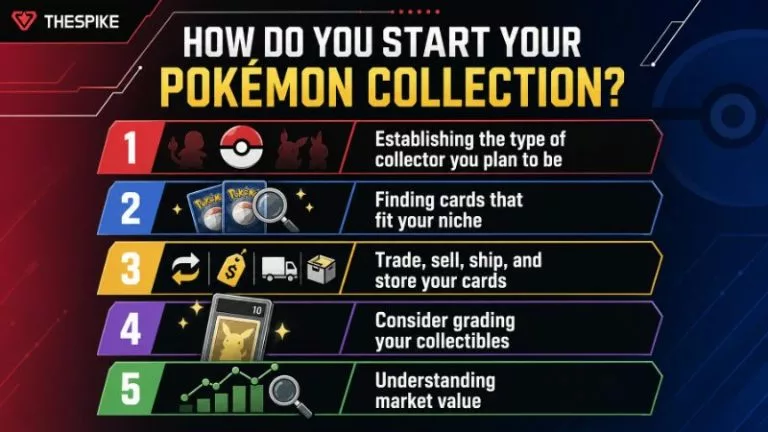
Establishing the type of collector you plan to be
To begin, you’ll want to have an idea of the types of cards you plan to collect. As mentioned throughout, you can choose to collect just about anything and everything within the hobby, but most commonly you’ll find collectors fall into one of the following:
- Grail seekers
- Mastersetters
- Specific Pokémon only
- Specific artist only
- Specific gen/era
- Full Pokedex
- Trainers
- Graded collection
Finding cards that fit your niche
Once you have finally established how you plan to collect, consider where you might be able to find them. As we are all aware, getting your hands on product is no easy task at this time, with Pokémon Center virtual queues easily averaging 5+ hour wait times, and restocks of store shelves flying out within minutes. The best options for you now are:
- Card shows
- Local stores
- Trades with friends
- Pokémon card rip sites
Trade, sell, ship, and store your cards
With your collection growing, you then need to decide how to store them. Penny sleeves are the bare minimum, but you should really invest in top loaders and binders to keep your ungraded pulls in good condition. For graded slabs, they already come in a protective plastic casing, but you may still want to find yourself a storage case or slab sleeve for extra protection. Of course, should you have packed cards through a card rip site, you’ll find that you need to decide between the following:
- Trade
- Sell
- Store
- Ship
Consider grading your collectibles
When pulling digital packs, you’ll find that graded slabs can be won in the process. However, with physical packs, you’ll notice that all cards are raw. Should you rip any high-end cards or those that would suit your collection, it pays to check out whether they are worth getting grading yourself. You can find tools online or you can take your collection down to a card show and chat with those with more knowledge. In short, though, you’ll want to look out for the following:
- Centering
- Edges
- Corners
- Surface
Understanding market value
The final piece of the puzzle revolves around tracking your collection. This can be achieved through any credible app or site, like TCG Collector or Card Ladder. Depending on where you choose to check prices, you will often find that you can upload your own collection, providing you with a snapshot of the current market value, current trajectory, and previous price highs. Although value isn’t always the main reason for building a collection, it is nice to know where your rips have led you.
Conclusion: Who would you add to our list of top Pokémon cards?
We’ve got Pikachu, Charizard, Umbreon, Mew, and Lugia all covered in our top list, but is there any card that you think we’ve obviously missed? If so, you’ll be pleased to hear that we will look to keep this guide updated with fresh takes, and it also means that you clearly have an idea of where you wish to take your collection already.
With products so quick to leave the shelves, local card shows and card rip sites may soon become the best way for you to add to your binders. Just make sure you’ve joined a site or downloaded an app that helps to track market value, and you’ve stocked up on sleeves and toploaders, you never know when your next hit is coming.
Best Pokémon Trading Cards FAQ
🌟 What is the best Pokémon trading card of all time?
The best Pokémon card of all time will vary greatly on your preferences, age, and when you started collecting. However, we think that most would agree the Umbreon VMax, Neo Genesis Lugia, Ancient Mew, Pikachu Illustrator, and base set Charizard hold some weight.
🛒 Where can you find Pokémon trading cards?
You can find Pokémon trading cards all over the place. However, getting hold of products isn’t all too easy. Its recent boom in popularity means that the Pokémon Center and retail stockists end up with huge queues and quickly sell out. With this, we suggest checking out local card shows or visiting card rip sites.
💰 Are the best Pokémon cards the most expensive?
No. Although the Pikachu Illustrator and base set Charizard have significant price tags attached to them, you’ll find plenty of the best cards can be picked up at a reasonable price.







Play Packed
4.6/5


Play Packed Promo
100% Buyback
T&Cs apply
4.6/5
More Card Rips Articles
Our Team
Editor
Close

T&Cs and 18+ apply

T&Cs and 18+ apply

T&Cs and 18+ apply