
Home
Best Prediction Market Platforms 2026
Best Tech Prediction Market Sites 2026
Contains commercial content
Best Tech Prediction Market Sites 2026: Compare AI, Technology, and Industry Markets
Last Updated on 04.11.2026
Predicting the future of tech has always been a popular pastime, from Apple’s next launch to which AI company will come out on top. Now, tech prediction market sites let you trade contracts based on how those predictions play out.
But with technology moving faster than ever, what separates the best sites from the rest? Which platforms are worth considering, and what tech events can you actually predict? We’ve dusted off our crystal ball to compare the leading options, explore the most popular markets right now, and show you how to get started. No time machine required!
The Best Tech Prediction Market Sites


We recommend

3.8/5
- 10+ event categories
- Live trading
- Live data graph
Kalshi Promo Code
Trade $25 Get $55
T&Cs and 18+ apply
Copy
Deposit Methods








Withdrawal
0 – 3 Days
Apps
License

Show More

Exclusive
3.8/5
- Contracts for all major future events
- Can close positions early
- Many prediction contracts have high liquidity
Open Crypto.com
Deposit Methods



Withdrawal
0 – 5 Days
Apps
License

Show More
Table of Contents
- Popularity of tech prediction markets & how it all works
- The kind of tech prediction markets you can trade
- What really matters when choosing a tech prediction market site?
- Stand out tech prediction market sites for 2026
- Tech prediction market pros and cons
- Telling if a tech prediction market site is trustworthy
- What influences tech prediction market prices?
- Explore tech prediction markets for yourself now
- Tech prediction market sites FAQs
Popularity of tech prediction markets & how it all works
Tech prediction markets have actually been around for decades, but it’s only in fairly recent years that they’ve gained real mass popularity, with events now becoming a regular feature on platforms like Kalshi and Polymarket. In 2026 you can literally find contracts covering everything from AI model releases and major product launches to space exploration and decisions made by the biggest names in the industry.
If you’re already familiar with prediction markets, you can go ahead and skip ahead to the next section. However, for anyone new to them, we would recommend taking a quick minute to check out the below before you even contemplate signing up to a specific site.
Familiarizing yourself with event contracts
Most tech prediction markets use Yes or No event contracts, each tied to a specific question and deadline. Here’s a broad idea of how a typical contract might work:
- The question: Will OpenAI release a new AI model before December 31st?
- Your prediction: Buy Yes contracts if you think it will happen, or No contracts if you disagree.
- The price: A Yes contract trading at $0.65 costs $0.65, before any applicable fees.
- The outcome: Correct contracts settle at $1 each, while incorrect ones settle at $0.
Be aware that contract prices can change as new info emerges, and some platforms let you sell before the event is settled, provided there’s sufficient liquidity.
The settlement rules also matter. For example, an announcement about an upcoming AI model wouldn’t necessarily count as an official release, so it’s worth checking exactly what needs to happen for your contract to settle at $1.
The kind of tech prediction markets you can trade
AI emergence might be very on-trend and grabbing most of the headlines at the moment, but it’s far from the only area of tech you can make predictions about. From upcoming gadgets to space missions and major industry decisions, we’ve picked out some of the most popular types of markets you can explore on leading sites:
🔍 Consumer technology and product launches
Tech companies love keeping their upcoming products under wraps, but that doesn’t stop the rest of us from speculating!
Markets can cover smartphones, gaming consoles, wearables and other gadgets, including whether Samsung will unveil a new device category or Nintendo will announce another console before a certain deadline.
🌐 Big Tech and industry developments
There’s always tons happening in Silicon Valley, with acquisitions, IPOs, company valuations and major partnerships all providing material for predictions.
Will a proposed takeover get regulatory approval? Will a tech giant announce plans to go public? These questions can overlap with economy prediction market sites, especially when stock markets and company valuations are involved.
🚀 Space exploration and innovation
Space exploration has come a long way since the ’60s golden era, although getting a spacecraft off the ground on schedule is still easier said than done!
Markets can cover NASA missions, lunar landings and satellite launches, with contracts predicting whether a mission will launch on time or achieve a specific milestone.
🎮 Gaming, software and tech regulation
Anyone who’s spent years waiting for a promised video game release will understand the appeal here!
Gaming launch dates, software announcements and rumored updates can all feature, with some crossover into culture prediction markets.
Tech regulation also brings AI legislation, antitrust rulings and government restrictions into the mix, sometimes overlapping with politics prediction markets.
🤖 AI and machine learning
Finally, the AI race is hotting up, with OpenAI, Google, Anthropic and others competing for the top spot. But who’s actually winning?
Prediction markets can cover AI model rankings, new tool launches and major development milestones, putting a price on which companies will come out ahead.
What really matters when choosing a tech prediction market site?
We’ll soon be revealing our top picks for tech prediction market sites, but before we get to those what should they be judged on?
After spending a lot of time researching, these are the top things we recommend paying attention to when comparing your options:
- Selection of tech markets: Look for varied categories, fresh contracts and plenty of choice.
- Trading fees: Check transaction costs and how they affect potential profits.
- Liquidity and trading activity: Active markets generally make buying and selling easier.
- Clear settlement rules: Look for defined outcomes, deadlines and reliable settlement sources.
- Ease of use: Finding markets, checking prices and managing contracts should be simple.
- US availability: Check state restrictions and eligibility before signing up.
Stand out tech prediction market sites for 2026
After trawling through the market (and applying the criteria we’ve listed above) we’ve narrowed our selection down to three platforms. We’ve looked closely at their technology markets, trading features, fees and US availability to help you decide which one best suits your interests.
Polymarket: great for tech market variety

Polymarket: Pros and Cons
- Two downloadable apps.
- 7 different prediction categories.
- Superb trade volume and liquidity.
- Low trading fees.
- The desktop filters are poor.
- Limited promotions.
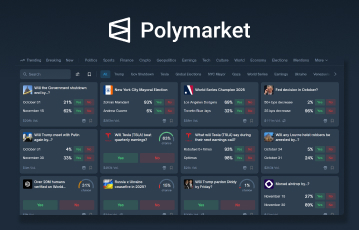
If there’s a big development brewing in the tech world, there’s a decent chance you’ll find people predicting the outcome on Polymarket. The platform has an impressive collection of markets covering AI, big tech, product launches and scientific breakthroughs.
It’s easy to browse the markets as well, while comparing prices and seeing where other traders are putting their money is really simple and transparent.
- Tech markets: AI benchmarks, product launches, company developments and scientific milestones.
- Trading features: Live prices, trading volumes and clearly published settlement rules.
- Welcome bonus: $25 in trading credits, following ID verification and a minimum $10 deposit. The credits aren’t withdrawable cash.
Kalshi: top for US tech predictions

Kalshi: Pros and Cons
- 24/7 support
- Fiat and crypto payments
- Responsive mobile app
- Possible location-specific restrictions
Kalshi has built up a fab collection of technology and science markets, and there’s loads more to explore than the usual questions about the next Apple releases.
Its contracts tend to cover everything from autonomous vehicles and AI performance to company developments and scientific discoveries. You’ll also find events with different settlement dates, which is brilliant if you don’t want to wait six months to find out if your prediction was correct.
Another plus is that Kalshi operates as a CFTC-regulated exchange in the US.
- Tech markets: AI performance, emerging technologies, company milestones and scientific developments.
- Trading features: CFTC-regulated exchange, varied contract deadlines and published resolution criteria.
- Welcome bonus: $60 in trading credits, requiring a minimum $10 deposit and $25 in qualifying trades within seven days.
Crypto.com: tech companies and industry trends in focus
Crypto.com: Pros and Cons
- Standalone mobile apps
- Encrypted banking platform
- Live predictions
- No promotions for registered prediction users
Crypto.com is a familiar name in the crypto world, but its involvement in prediction markets is a newer chapter.
Through Crypto.com Predict, the company offers event contracts covering a range of subjects, including technology. These include predictions about major tech companies, such as when OpenAI might go public, alongside wider industry developments like whether US tech layoffs will increase.
There’s a good mix of company-specific and broader economic questions, although we’d like to see more dedicated markets available before putting the brand on the same level as Polymarket and Kalshi.
- Tech markets: Tech company IPOs, industry employment trends and other technology-related events.
- Trading features: Yes/No event contracts with live pricing and the option to close positions before settlement.
- Welcome bonus: A 100% match of up to $250 for new Predictions traders, with a minimum deposit of $125.
Sponsored by Crypto.com – Not investment advice. Trading prediction markets and crypto involves risk, including potential loss of your stake. Consider your risk tolerance before participating. Crypto.com connects U.S. users to CDNA (regulated by CFTC) for derivatives trading. CDNA membership required. Trading may not be suitable for all—you could lose your entire investment plus fees. Past performance doesn’t guarantee future results. This is not a solicitation or recommendation to trade.
Tech prediction market pros and cons
Pros and Cons
- Big variety of tech events and markets
- Fresh contracts added regularly
- Short and long-term predictions available
- Contract outcomes can depend on really specific settlement rules
Telling if a tech prediction market site is trustworthy
We’re starting to notice even more prediction market sites starting to pop up, but if you come across a newcomer you’re not familiar with- don’t take any chances. There are a few checks we’d recommend making to help establish whether a platform can be trusted:
| What to check | Look for |
|---|---|
| Regulatory status | Verify US exchange registration through the CFTC’s official register. |
| Account security | Two-factor authentication, ID verification and clear information on how funds are held. |
| Trading transparency | Published fees, settlement rules and withdrawal conditions. |
| Platform reputation | Independent reviews and recurring complaints about withdrawals, restrictions or disputes. |
What influences tech prediction market prices?
Before we sign off, we wanted to share some wider info about what can actually influence tech prediction market prices. Remember, this is a super fast-paced and constantly evolving industry, and these are a few developments we’d suggest keeping an eye on:
- Company announcements: Official launch dates, product reveals and changes to company plans.
- Leaks and industry rumors: Reports from tech insiders that can shift expectations, even when they’re unconfirmed.
- AI benchmarks: New test results and model rankings that could change predictions about who’s leading the AI race.
- Regulatory decisions: Government rulings, investigations and new legislation affecting major tech companies.
- Trading activity: Changes in demand, liquidity and the prices other traders are willing to accept.
Explore tech prediction markets for yourself now
Tech has never been the easiest industry to predict, and with AI advancing at its current pace, that’s unlikely to change anytime soon! But that’s also what makes these markets really interesting right now, with so many new questions popping up around everything from major product launches to the future of entire industries.
We’ve highlighted three platforms with different strengths, giving you a pretty solid starting point for exploring what’s available. Just be aware of trading fees, settlement rules and any restrictions that might apply.
If any of our featured sites have caught your interest, tap the relevant links and banners right here on this page to visit their official websites now.
Don’t miss out on these premier prediction market bonuses
1.
3.8/5
Earn up to $300 in CRO
Wagering (WR): open a Crypto.com Visa Signature® Credit Card and meet the qualifying spend amounts within your first 90 days depending on your tier
Open Crypto.com
T&Cs and 18+ apply
2.
3.8/5
Copy
T&Cs and 18+ apply
Tech prediction market sites FAQs
🤖 Are there prediction markets for ChatGPT and OpenAI?
OpenAI is a hot topic on tech prediction platforms like Polymarket and Kalshi. Markets can cover upcoming ChatGPT features, new AI model releases and how OpenAI’s technology performs against competitors.
⏳ How long do tech prediction markets take to settle?
Honestly that really depends entirely on the event. A contract tied to tomorrow’s product announcement could settle within days, while predictions about future AI breakthroughs might take months. Always check the settlement date and conditions.
📈 How are tech prediction markets different from tech stocks?
Purchasing tech stocks gives you a stake in a company, with returns linked to changes in its share price and any dividends. Prediction markets work differently, with contracts based on if a specific event happens. Your payout depends on the outcome of that event (not tied in any way to the company’s stock performance).
More Articles














Best Prediction Market Sites
More Prediction Market Guides
Our Team
Editor
Close
Don’t Miss Out on Our Best Offers

T&Cs and 18+ apply

T&Cs and 18+ apply