
Home
Best Prediction Market Platforms 2026
What Is Slippage in Trading? Understanding How & Why Slippage Happens
Contains commercial content
What Is Slippage in Trading? Understanding How & Why Slippage Happens
Last Updated on 04.11.2026
What is slippage in trading? Put simply, it’s when a trade executes at a different price from the one you expected. This can work in your favor if you get a better price, but it can also work against you.
Liquidity, order size, and market volatility are three of the main factors that cause slippage. Although you can’t always avoid it, you can reduce the risk of getting a worse price than expected. This is particularly useful when trading on prediction market platforms, where even a small difference in contract prices can affect your potential returns.
Our Top-Rated Prediction Market Sites in 2026


We recommend

3.8/5
- 10+ event categories
- Live trading
- Live data graph
Kalshi Promo Code
Trade $25 Get $55
T&Cs and 18+ apply
Copy
Deposit Methods







Withdrawal
0 – 3 Days
Apps
License

Show More

Exclusive
3.8/5
- Contracts for all major future events
- Can close positions early
- Many prediction contracts have high liquidity
Open Crypto.com
Deposit Methods



Withdrawal
0 – 5 Days
Apps
License

Show More
Table of Contents
What is slippage in trading?
Sometimes, a trade executes at a higher or lower price than you originally expected. This is called slippage. As an example of what slippage means, imagine placing a market order for 100 YES contracts predicting whether President Trump will impose new tariffs before the end of the year.
The lowest asking price is $0.43, but only 50 contracts are available at that price. The remaining 50 fill at $0.47, bringing your average purchase price to $0.45. That’s $0.02 per contract in slippage.
Slippage can also occur when trading sports event contracts on prediction markets. If you’re interested in how this differs from sports betting, check out our guide to prediction markets vs sportsbooks.
Pros and cons of slippage in trading
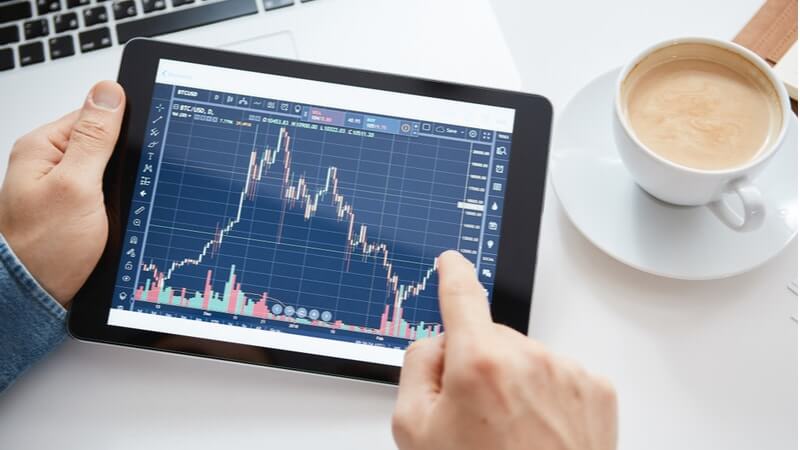
Pros and Cons
- Positive slippage can result in better prices
- May increase potential returns
- Limit orders help avoid slippage
- Negative slippage can increase trading costs
- Can reduce potential profits
What causes slippage in trading?
Slippage doesn’t happen without reason. It is caused by three main factors that affect how trades are executed. Let’s take a look at each one.
Liquidity
Whether you’re trading cryptocurrencies, forex, or prediction market contracts, liquidity is often the main factor behind slippage. In markets with low liquidity, fewer buy and sell orders are available at each price level. This means your order may need to execute at less favorable prices if there aren’t enough buyers or sellers willing to trade at your expected price.
Order size
Even in markets with high liquidity, you may still experience slippage. This happens when your order size is larger than the amount available to trade at your expected price, causing the remaining portion to execute at less favorable prices. In our earlier example, an order for 100 YES contracts exceeded the 50 available at $0.43, so the remaining 50 contracts had to be purchased at $0.47.
Market volatility
Market volatility, meaning how much prices fluctuate over time, can also cause slippage, even when there’s plenty of liquidity and your order is relatively small. Going back to our earlier example, if breaking news suddenly makes new tariffs much more likely, the price of YES contracts could jump from $0.43 to $0.80 within seconds. If this happens before your order executes, you could end up paying a much higher price than expected.
Tips for reducing slippage in trading
It’s not always possible to avoid slippage entirely, but there are ways to reduce it. Here are some practical tips to help you do just that.
💧 Trade in highly liquid markets
Highly liquid markets typically have more active buyers and sellers, making it easier to execute trades at your expected price. Many CFTC-regulated prediction markets let you filter event contracts by liquidity. To learn more about this regulator, see our guide that answers: what is CFTC?
🚫 Avoid market orders
Market orders are particularly vulnerable to slippage because they automatically fill at the best available prices, even if those prices are worse than expected. Limit orders, on the other hand, let you set the maximum price you’re willing to pay or the minimum you’ll accept when selling, protecting you from unfavorable slippage beyond your chosen price. The trade-off is that limit orders aren’t guaranteed to be filled.
✂️ Break up large orders
Instead of placing one large market order on prediction markets and other exchanges, consider splitting it into smaller orders and spreading them out over time. This gives liquidity a chance to replenish between trades, helping you secure better prices and reduce slippage. Just bear in mind that placing multiple orders could increase your overall trading fees.
Slippage vs spread: What’s the difference?
Before we wrap things up, let’s clear up a common misconception: that slippage and the spread are the same thing. While both can affect trading costs, they are two different concepts. The spread is the difference between the highest price a buyer is willing to pay (bid) and the lowest price a seller is willing to accept (ask). Slippage, on the other hand, is the difference between your expected execution price and the price you actually get.
To make the difference clearer, let’s revisit our earlier example:
| Type | Price comparison | Difference |
|---|---|---|
| Spread | Buyers offer $0.40, while sellers ask $0.43 | $0.03 spread |
| Slippage | You expect to pay $0.43, but your order averages $0.45 | $0.02 slippage |
The bottom line on slippage in trading
Slippage is often less of a concern for smaller trades in liquid markets, but it can become more significant when placing larger orders or trading during periods of high volatility. While you can’t always avoid it, choosing liquid markets, using limit orders, and splitting up larger trades can help reduce its impact. If you’re ready to put that knowledge into practice, click one of the banners on this page to visit a recommended prediction market and start trading.
Explore Leading Prediction Market Platforms
What is slippage in trading FAQs
🛑 How can I avoid slippage in event trading?
The best way to avoid slippage is to use limit orders. Unlike market orders, which execute at the best available price, limit orders let you set your desired buying or selling price. If you’re new to prediction markets, take a quick look at our guide on what event trading is before you get started.
🔍 Is slippage the same as spread?
No, slippage and spread are two different concepts in trading. The spread is the difference between the highest bid and lowest ask price, while slippage is the difference between the price you expect and the price your trade actually executes at.
💱 What is slippage in crypto?
Slippage occurs when a cryptocurrency trade executes at a different price from the one you expected. It’s common during periods of high volatility or when trading cryptocurrencies with low liquidity.
More Articles












Best Prediction Market Sites
More Prediction Market Guides
Our Team
Editor
Close
Don’t Miss Out on Our Best Offers

T&Cs and 18+ apply

T&Cs and 18+ apply