




Home
Kalshi Review
Contains commercial content
Kalshi Review 2026: Prediction Markets, Fees, Trading Features, and Legitimacy
Kalshi is not available at your location
Details
Kalshi is a CFTC-regulated prediction market where you trade Yes/No contracts on sports, politics, economics, culture, crypto and weather. After testing the Kalshi app, I can say I rate it as one of the top all-round prediction markets for beginners in the US.
The polished iOS and Android apps, transparent fees and fast USD withdrawals make it easy to get started, and new users can claim $55 in bonus credit with code THESPIKE. The trade-offs are somewhat limited support and ongoing state court battles that currently block its sports contracts in four states, including Nevada and Washington.
- Deposit Methods
-



- License
-

- Withdrawal
-
0 – 3 Days
- Owned By
-
Kalshi
- Released
-
2021
- Homepage
-
kalshi.com
- Languages Supported
-
EN
- Support
-
E-mail Customer Support
-
support@kalshi.com
- Telephone Number
-
(201) 464-0952
Last Updated on 06.11.2026
Table of Contents
- Kalshi review summary
- Is Kalshi legal and safe?
- What is Kalshi and how does it work?
- How much are Kalshi fees?
- How to sign up at Kalshi
- Kalshi bonuses and promotions
- What can you trade on Kalshi?
- What is the Kalshi app like? App and user experience
- Kalshi deposits and withdrawals
- Kalshi customer support
- Kalshi responsible trading tools
- Is Kalshi gambling or a sportsbook?
- Kalshi pros and cons
- Verdict: Is Kalshi worth it?
- Kalshi review FAQs
Kalshi review summary
Kalshi is a federally regulated exchange for event contracts. It’s open to traders aged 18+ across most of the US with a minimum deposit requirement of $10. Most debit card and crypto withdrawals clear in around half an hour, and new users get $55 in bonus credit after trading $25 with promo code THESPIKE.
| 🎁 Welcome offer | Trade $25, Get $55 |
| 🟢 Promo code | THESPIKE |
| 📈 Bonus requirement | Trade $25 within 30 days of registration |
| ⚖️ Regulation | CFTC, Designated Contract Market (DCM) |
| 🗓️ Founded | 2018 (DCM status granted November 2020, publicly launched in July 2021) |
| 🔞 Minimum age | 18+ |
| 📍 Availability | Most US states; sports contracts are blocked in Massachusetts, Michigan, Nevada and Washington |
| 🏦 Minimum deposit | $10 ($1,000 for wire transfers) |
| 💸 Payout speed | Around 30 minutes (debit card and crypto), 1-3 business days (ACH) |
| 💵 Trading fees | Taker fees of $0.07-$1.75 per 100 contracts; maker fees on some markets only |
| 📈 Markets | Sports, politics, elections, economics, finance, commodities, culture, mentions, tech and science, crypto, climate, perpetual futures |
| ⚡ Live trading and combos | Yes |
| 📱 Apps | iOS and Android, plus a full desktop site |
| 💬 Support | In-app chat, email (support@kalshi.com); call (201) 464-0952 to reach automated system |
Is Kalshi legal and safe?
Yes. Kalshi holds Designated Contract Market status from the Commodity Futures Trading Commission (CFTC), which puts it under the same federal rulebook as exchanges like CME. The platform is legal across most of the US, but state court orders currently block its sports contracts in Massachusetts, Michigan, Nevada and Washington.
How is Kalshi legal? CFTC regulation explained
KalshiEX LLC received DCM status from the CFTC on November 4, 2020. Every contract the platform lists must strictly follow federal exchange rules on listing, pricing, settlement and market surveillance. This is fundamentally different from the state-by-state gaming licenses that sportsbooks need.
In practice, that federal status gives you several protections you wouldn’t get at an offshore prediction site:
- Segregated customer funds: Your money is held by Kalshi Klear LLC, which is Kalshi’s CFTC-regulated clearinghouse. This means the money is separated from Kalshi’s own operating capital.
- Market surveillance: Federal rules prohibit market manipulation and insider trading. Kalshi monitors trading activity for both.
- Published settlement rules: Every market states in advance how and from which source its outcome will be decided.
- Mandatory identity checks: Every account must pass KYC and anti-money laundering checks before trading.
Where are Kalshi’s contracts restricted?
Right now, court orders block Kalshi sports contracts in Massachusetts, Michigan, Nevada and Washington. Nevada’s order also covers election and entertainment contracts, and Washington blocks almost everything except economics, finance, commodities and climate markets. Ohio and Tennessee can also enforce their gambling laws following the September 2026 ruling.
| State | What’s restricted | Status |
|---|---|---|
| Massachusetts | Sports contracts | State court injunction in force since early 2026; appeal pending |
| Michigan | Sports contracts | Injunction requires geofencing; other markets available |
| Nevada | Sports, election and entertainment contracts | Ninth Circuit ruled for Nevada in August 2026 |
| Washington | Sports, elections, politics, entertainment, culture, tech, science and mention markets | Final court order in August 2026; Kalshi is appealing |
| Ohio and Tennessee | States may enforce gambling laws against sports contracts | Sixth Circuit ruled against Kalshi in September 2026; rehearing requested |
Here are the key legal developments behind each of the restrictions I just covered.
- January 20, 2026: A Massachusetts state judge granted an injunction barring Kalshi’s sports contracts in the state. Kalshi’s appeal was heard by the state’s Supreme Judicial Court in April but hasn’t been decided.
- April 6, 2026: Kalshi won 2-1 at the Third Circuit, which stopped New Jersey from treating its sports contracts as illegal betting. New Jersey has since petitioned the Supreme Court.
- June 10, 2026: The CFTC published draft rules covering sports and other event contracts. They haven’t been finalized.
- August 13, 2026: A Washington court ordered Kalshi to geofence most of its markets in the state by September 2.
- August 28, 2026: The Ninth Circuit sided with Nevada, ruling that Kalshi’s sports contracts are likely not swaps under federal law, so Nevada can regulate them as gambling.
- September 2026: A Michigan injunction required Kalshi to geofence its sports contracts, while leaving the rest of the platform live.
- September 25, 2026: The Sixth Circuit ruled 3-0 against Kalshi, allowing Ohio and Tennessee to enforce their gambling laws. Kalshi wants the full Sixth Circuit to take another look.
- October 2, 2026: In a rare win for Kalshi, a Chicago federal judge stopped Illinois, for now, from forcing its sports gaming license rules onto some Kalshi contracts.
Because the appeals courts are split, the Supreme Court is likely to have the final say on whether states can regulate sports event contracts. Until then, availability can change quickly. Kalshi geofences restricted markets automatically, so check which contracts appear in the app for your location, and think twice about long-dated sports positions if your state is involved in an active case. Don’t use a VPN to get around a restriction, as that breaks Kalshi’s terms and can get your account closed.
Who owns Kalshi, and is it publicly traded?
Kalshi is a privately held company, so it isn’t publicly traded, and you can’t buy its shares on a stock exchange. It was founded in 2018 by Tarek Mansour, its CEO, and Luana Lopes Lara, its COO, and is headquartered in New York. Its investors include Sequoia Capital and Andreessen Horowitz.
The exchange itself is operated by KalshiEX LLC, which holds the CFTC license, while its affiliate Kalshi Klear LLC acts as the clearinghouse that holds customer funds.
How does Kalshi protect your money and data?
Kalshi holds customer funds at its CFTC-regulated clearinghouse, Kalshi Klear LLC, separately from company money. Every account must pass identity verification, logins are protected by two-factor authentication and biometric login, while bank connections run through Plaid or Aeropay. This way, Kalshi never sees your banking credentials.
Kalshi runs on Amazon Web Services and encrypts personal and financial data. During sign-up, I had to provide my Social Security Number, address and a valid driver’s license or passport before I could deposit, which is standard for a CFTC-regulated exchange.
| Regulatory status | Details |
|---|---|
| Regulator | Commodity Futures Trading Commission (CFTC) |
| License type | Designated Contract Market (DCM), since November 4, 2020 |
| Operator | KalshiEX LLC |
| Clearinghouse | Kalshi Klear LLC (CFTC-regulated), which holds member funds |
| Customer funds | Segregated from company operating funds |
| Identity checks | Mandatory KYC and AML checks before trading |
| Account security | Two-factor authentication, biometric app login, encryption |
| State restrictions | Sports contracts blocked in MA, MI, NV and WA; wider restrictions in NV and WA |
What is Kalshi and how does it work?
Kalshi is a peer-to-peer exchange where you buy Yes or No contracts on real-world events. Each contract trades between 1¢ and 99¢, and that price doubles as the crowd’s estimate of the odds. Get it right and you’re paid $1 per contract; get it wrong and it’s worth nothing. Kalshi itself never bets against you.
There’s no house setting lines here, and Kalshi doesn’t win when you lose. Every contract you buy is matched with another trader taking the opposite position, and Kalshi earns money from trading fees instead. If you want, you can learn more in my guide to Kalshi event contracts.
How do Kalshi contract prices work?
A contract’s price equals the market’s implied probability of that outcome. A Yes contract at $0.70 means traders give the event a 70% chance of happening. Whatever you paid below $1 is your potential profit, less fees.
Here’s an example:
- You buy 100 Yes contracts at $0.70 each, costing $70.
- The taker fee is $1.47 (0.07 × 100 × 0.70 × 0.30).
- If the event happens, your contracts settle at $1 each, paying $100. Your profit is $28.53 after the fee.
- If it doesn’t happen, your contracts settle at $0, and you lose $71.47 in total.
To see how that works with real prices, take Kalshi’s House-control market ahead of the recent November 3 midterms. In late September, the “Democrats win the House” contract traded at around 92¢. Buying 100 of those contracts would have cost $92, plus a taker fee of about $0.52, for a potential $100 payout. That’s a small profit for a lot of capital tied up for weeks, which is the trade-off with heavily favored outcomes.
When I tested Kalshi, I bought 100 Yes contracts on US core CPI coming in at 0.3% or higher month-on-month, at 40¢ each. That cost $40.00 plus a $1.68 fee. The figure came in lower, the contracts settled at $0, and I lost $41.68. It was a useful reminder that once official data is published, a losing contract is worth nothing.
What is the spread on Kalshi?
The spread is the gap between the cheapest available “Yes” price and the cheapest available “No” price. If “Yes” costs $0.58 and “No” costs $0.44, they add up to $1.02, so the spread is 2¢. Narrow spreads mean a market is liquid, with plenty of traders on both sides.
A matched pair of “Yes” and “No” contracts always adds up to exactly $1. The spread only exists in the asking prices on the order book. Wide spreads usually signal thin trading, so check a market’s volume and order book before entering a position, especially in niche sports or culture markets.
How does Kalshi settle contracts?
Kalshi settles each contract using the source and rules published on its market page. Correct positions pay $1 per contract and incorrect positions pay $0, and winnings become available as cash once the market settles. Some contracts, like NFL ladder markets, can settle at amounts in between.
| Scenario | How Kalshi settles it |
|---|---|
| Your prediction is correct | $1 per contract |
| Your prediction is incorrect | $0 per contract |
| Ladder and other non-binary contracts | Between $0 and $1, as set out in the market rules |
| Event canceled or postponed | Handled according to that market’s published rules |
| Settlement source | Named on each market page, such as official league data or National Weather Service figures |
| Settlement fee | None |
Settlement timing varies by market. Most sports contracts settle shortly after the game ends, but some political and economic markets only settle when official results or data are published, which can take days or weeks.
Can you sell Kalshi contracts before settlement?
Yes. You can sell your contracts at the current market price at any time before a market closes, to lock in a profit or cut a loss. Your sale needs a buyer at your chosen price, so exiting can be harder in markets with low liquidity.
What order types does Kalshi offer?
Kalshi offers quick orders and limit orders. Quick orders fill immediately at the best available price, while limit orders let you set the maximum price you’re willing to pay. You can place quick orders by dollar amount or by number of contracts. If there aren’t enough contracts at your price, only part of your order may fill.
How much are Kalshi fees?
Kalshi charges a taker fee of $0.07 to $1.75 per 100 contracts when your order fills immediately, with the highest fees at 50¢ prices. Maker fees apply only on some markets and cost a quarter of the taker rate. There are no settlement, membership or ACH fees.
Kalshi calculates its taker fee with the formula 0.07 × contracts × price × (1 – price), rounded up to the nearest cent. Fees are highest when an outcome is most uncertain and lowest near the 1¢ and 99¢ extremes. You can find a full breakdown in my Kalshi fees guide.
| Contract price | Taker fee (per 100 contracts) | Maker fee (per 100 contracts, where charged) |
|---|---|---|
| 1¢ or 99¢ | $0.07 | $0.02 |
| 10¢ or 90¢ | $0.63 | $0.16 |
| 25¢ or 75¢ | $1.32 | $0.33 |
| 50¢ | $1.75 | $0.44 |
There are a few other costs I have to point out after my hands-on tests:
- Maker fees: Most markets don’t charge them, but they exist. Still, where these fees apply, like with some NFL markets, they’re only charged when your resting order fills, never when you cancel it.
- Non-standard markets: Some markets use their own fee multipliers, and a few have no fees at all. Kalshi will show you the exact fee before you confirm a trade.
- Deposit fees: Debit card, Apple Pay and Google Pay deposits cost up to 2%, while ACH transfers are free.
- Withdrawal fees: Kalshi doesn’t charge withdrawal fees, though crypto network fees and bank charges can still apply.
How to sign up at Kalshi
Signing up at Kalshi took me about five minutes. I created an account with Google, although you can also use Apple or old-school email, I verified my phone number, then completed ID verification with SSN and a photo ID. An automatic check approved my account in about 3 minutes, but you should know that manual reviews can take up to 48 hours.
-
Tap the banners on this page to visit Kalshi.
-
Click “Sign Up” and choose Google, Apple or email. I signed up with Google, so I didn’t need to verify my email separately.
-
Enter promo code THESPIKE to qualify for the welcome offer.
-
Add your phone number and enter the verification code Kalshi sends you.
-
Provide your name, date of birth, Social Security Number, address and a valid US driver’s license or passport.
-
Once you’re verified, deposit at least $10 to be able to place your first trade.
Make sure the details you enter match your ID exactly, as I’m pretty sure mismatches are the most common reason for a manual review.
Kalshi bonuses and promotions
New Kalshi users get $55 in bonus credit with promo code THESPIKE. To unlock it, verify your identity and put $25 into Predictions markets within your first 30 days. The credit must be used within seven days, and it can’t be withdrawn directly.
| 🎁 Offer | Trade $25, Get $55 in bonus credit |
| 🟢 Promo code | THESPIKE |
| 👤 Eligibility | New US users who have never held a Kalshi account and pass KYC |
| 📈 Qualifying activity | $25 in Predictions trades during your first 30 days |
| ⏳ Bonus expiry | Seven days after the credit is granted |
| 💸 Withdrawals | Bonus credit can’t be withdrawn; you must trade an amount equal to the credit first |
The $25 can be spread across several trades, and you can only use one promo code per account. You also can’t combine a promo code with a referral link. Kalshi runs ongoing programs for existing traders too, including a referral program and a liquidity incentive program that pays for placing resting orders. I made a separate Kalshi referral code guide to explain how the friend-invite offer works.
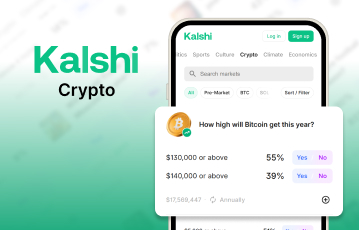
Predict crypto market moves at Kalshi
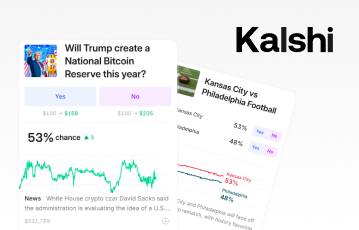
Discover Kalshi’s forecasting markets
What can you trade on Kalshi?
Kalshi covers sports, politics, economics, culture, crypto and weather, plus perpetual futures for approved accounts. I talked to the support team and they mention that sports and politics are the busiest categories by trading volume these days. Economics and culture markets are active but thinner. Crypto offers short-term contracts that settle in as little as 15 minutes.
🏈 Sports
The sports category is the largest one on-site. There were always more than 4,000 Kalshi sports markets across 2,000+ games during any of my tests. The platform covers 15+ sports, from the NFL, NBA and MLB to niche picks like darts, esports and even Russian volleyball. You’ll find game winners, spreads, totals and player contracts, and the combo builder lets you link several outcomes into one trade.
🗳️ Politics
Politics is where Kalshi first made its name, actually, and it remains one of the busiest categories. You can trade on US federal and state elections, legislation, government appointments and international politics. During my test, a single market on who would be charged with a federal crime that year had traded more than $2 million.
The 2026 midterms showed just how active these markets get. Kalshi’s House-control contract priced Democrats at around 92% in late September and about 94% on Election Day, while its Senate markets swung from roughly 62% to 77% for Democrats over the same period.
🏦 Economics
Economics markets cover Fed rate decisions, inflation, jobs reports, GDP and gas prices. They’re less active than sports or politics, but they’re popular with traders who follow macroeconomic data closely and want to hedge against it.
📊 Finance
These markets let you trade on where major stock indexes will close – like S&P 500 and Nasdaq – with daily and longer-term contracts.
🛢️ Commodities
Kalshi launched a dedicated Commodities Hub in April 2026. Right now, it covers oil, natural gas, gasoline, gold, silver and copper, plus agricultural markets like coffee, wheat, corn and soybeans. Contracts run from 15 minutes to a full year, and they trade 24/7, including weekends, which is when traditional commodities markets are closed.
🎭 Culture
This section covers the Billboard Hot 100, award shows, box office results, reality TV and Rotten Tomatoes scores. As a fan of the Dune films, I had to check the market on Dune: Part Three’s Rotten Tomatoes score. It shows just how specific these markets get.
🎙️ Mentions
Mention markets are pretty niche. They ask whether a public figure will say a specific word or phrase during an event like a speech, press conference or earnings call. They’re one of Kalshi’s more unusual categories, and they settle on the official transcript or recording of the event.
🔬 Tech and science
The Tech section covers AI releases, big tech companies, space launches, medicine, public health and energy. Listings shift with the news cycle more than other categories, so the selection changes often.
₿ Crypto
Kalshi’s crypto category covers around 10 assets, including BTC, ETH, SOL, XRP and DOGE. It’s a narrow selection compared with crypto-native platforms, but you still get 15-minute, hourly, weekly, monthly and annual price markets. All trading happens in USD, so you don’t need a crypto wallet.
⛅ Climate and weather
Kalshi’s climate category covers daily temperatures in major cities, hurricanes and other weather events. Settlement uses official National Weather Service data, which actually makes them some of the most objective markets on the platform.
📈 Perpetual futures
Kalshi has CFTC-regulated perpetual futures on crypto assets, starting with Bitcoin (BTC). They let you take leveraged long or short positions with no expiry date. You’ll need to apply for a separate margin account, and leverage means your position can be liquidated if the market moves against you.
What is the Kalshi app like? App and user experience
Kalshi’s iOS and Android apps match the full desktop platform, with biometric login, push notifications for price moves and settlements, and a clean layout. The Kalshi app holds a 4.8-star rating from more than 600,000 App Store ratings and 4.7 stars from over 150,000 Google Play reviews.
| Platform | Rating | Number of ratings |
|---|---|---|
| 🍎 App Store | 4.8/5 | 600,000+ |
| 🤖 Google Play | 4.7/5 | 150,000+ |
My two favorite app features are the biometric login – a nice extra layer of security – and push notifications. Event categories sit as buttons along the top of the screen, while contract prices and probabilities are displayed front and center. You can also switch between Prediction and Sports Fan modes. Fan mode is a nice touch if you’re more used to sportsbook-style odds, too.
The desktop site is just as easy to use. I didn’t really like the white background at first, but it grew on me quickly. My biggest frustration during testing was the AI-first support chat, which couldn’t help with anything specific to my account and meant waiting to be transferred to a human agent.
What do Kalshi users complain about?
Kalshi’s app ratings are strong, but its Trustpilot score sits at around 2.6 out of 5, from a much smaller pool of reviews. The most common complaints are slow withdrawals, fees, frozen accounts and disputes over how certain markets were settled.
That gap between app ratings and review sites is common for trading platforms, since people who run into a problem are more likely to leave a review than people having a smooth week. Still, it lines up with my own experience: the trading product is excellent, but support is where Kalshi falls short.
Kalshi platform features
- Live trading: Trade while events are still happening.
- Combos: Combine several outcomes into one trade, something like a parlay.
- Early exit: Sell your position at any time before settlement.
- Order book visibility: See where liquidity sits before you place a trade.
- Kalshi Pro: A free desktop trading terminal, in public beta since July 2026 at pro.kalshi.com, with customizable multi-market layouts, TradingView charting and a market screener.
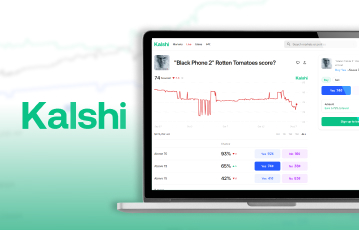
Explore Kalshi’s easy-to-use platform
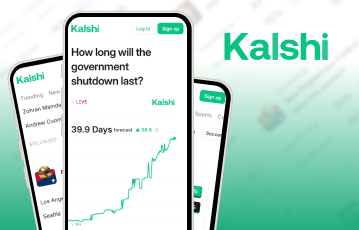
Trade on Kalshi from your mobile browser
Kalshi deposits and withdrawals
You can fund Kalshi with a debit card, Apple Pay, Google Pay, ACH, PayPal, Venmo, Cash App, crypto or a wire. Most methods start at $10, while wires need $1,000. Card and crypto cash-outs typically clear in about 30 minutes, and ACH takes one to three business days.
| Method | Minimum deposit | Deposit fee | Withdrawals | Withdrawal speed |
|---|---|---|---|---|
| Debit card, Apple Pay, Google Pay | $10 | Up to 2% | Yes | Around 30 minutes |
| ACH bank transfer | $10 | Free | Yes | 1-3 business days |
| PayPal | $10 | First deposit free, then up to 2% | Yes | Varies |
| Venmo | $10 | First deposit free, then up to 2% | Yes | Varies |
| Cash App | $10 | Up to 2% | No | N/A |
| Crypto | $10 | Provider fees may apply | Yes, after a qualifying crypto deposit | Around 30 minutes |
| Wire transfer | $1,000 | No Kalshi fee; bank fees may apply | $500,000 or more only | Varies |
ACH deposits can take a few business days to settle, but Kalshi usually lets you start trading with part of the deposit straight away. Kalshi can also place a short security hold on newly deposited funds, and withdrawing by a different method from the one you deposited with can add up to two days.
Those are Kalshi’s own timings, and user reports are more mixed. Slow or delayed withdrawals are one of the most common complaints in Kalshi’s Trustpilot reviews but the thing is that, for optimal results, you should withdraw to the same method you deposited with and complete verification before your first cash-out.
That’s what I did and for my own test, I withdrew $75 by standard ACH transfer on a Tuesday, and it reached my bank account on Friday night, roughly 80 to 85 hours later. That was within Kalshi’s estimate.
Kalshi customer support
Kalshi offers support through in-app and web chat, which starts with an AI assistant before passing you to a human agent, and by email at support@kalshi.com. Don’t expect full-on phone support, either. In my tests, I reached a human agent in about three minutes.
| Channel | Details | Best for |
|---|---|---|
| 💬 In-app and web chat | AI assistant first, with handoff to a human agent | Account, deposit and trading questions |
| support@kalshi.com | When you can’t access chat | |
| ❓ Help Center | Self-service articles | Fees, verification and banking basics |
| 📞 Phone | (201) 464-0952 | Automated system only |
The AI assistant handles simple questions, but I found it limited for anything account-specific. Thankfully, the human agent I reached was knowledgeable and answered all my questions. Email also starts with a bot, which replied in under an hour, while a human agent answered in about two hours.
Kalshi asks you to use the same email address as your account and to continue an existing chat rather than opening a second request. The platform also says its entire support team is US-based and human, so you’ll always end up talking to a real person once you’re past the AI assistant.
Kalshi responsible trading tools
Kalshi offers trading breaks, deposit limits, time and trade limits, and voluntary self-exclusion. It also partners with Birches Health to provide confidential support for traders who need it, and publishes educational guides on trading responsibly.
Is Kalshi gambling or a sportsbook?
Under federal law, no. Kalshi is a CFTC-regulated financial exchange where you trade against other users, not against the house. Buyers and sellers set the prices, not a bookmaker, and you’re free to cash out before the final whistle. Some states disagree, though, and argue its sports contracts amount to unlicensed gambling.
| Feature | Kalshi | Traditional sportsbook |
|---|---|---|
| Regulation | Federal (CFTC) | State gaming commissions |
| Who you trade against | Other traders | The house |
| Pricing | Contract prices in cents, set by the market | Odds set by the sportsbook (-110, +150) |
| Early exit | Sell at the market price any time before close | Cash-out at the sportsbook’s discretion |
| Market range | Sports, politics, economics, finance, commodities, culture, crypto, climate and more | Sports only |
| Tax documents | Annual profit and loss statement; 1099 forms where applicable | W-2G when winnings meet IRS thresholds |
Kalshi pros and cons
I would now like to sum up my findings in a brief pros and cons rundown, and then I would like to wrap this one up with a summary.
Kalshi: Pros and Cons
- Federally regulated by the CFTC
- Wide market range, including commodities and perpetual futures
- Highly rated iOS and Android apps
- Transparent, low trading fees
- Fast debit card and crypto withdrawals
- Sports contracts blocked in some states
- No full-on phone support, and chat starts with an AI assistant
- Thin liquidity in niche markets
- Up to 2% fee on card deposits
- Limited crypto asset selection
Verdict: Is Kalshi worth it?
Kalshi is a tier-one all-round prediction market for most US traders, especially beginners. CFTC regulation, a polished app, transparent fees and fast withdrawals make it easy for me to recommend this platform.
Sports and politics are where Kalshi is strongest, with thousands of markets and deep liquidity on major events. Economics, culture and weather add genuine variety, though thinner order books mean you should check spreads before trading. If you’re interested in giving Kalshi a go, use the secure links and banners on this page to get started safely.
Kalshi review FAQs
⚖️ Is Kalshi legal?
Yes. Kalshi is a CFTC-designated contract market, so it operates legally in most states. State court orders currently block its sports contracts in Massachusetts, Michigan, Nevada and Washington, but its other markets remain available in most states.
📍 Which states restrict Kalshi?
Kalshi’s sports contracts are blocked in Massachusetts, Michigan, Nevada and Washington. Nevada also restricts election and entertainment contracts, and Washington restricts most categories except economics, finance, commodities and climate. Ohio and Tennessee can enforce their gambling laws following a September 2026 ruling.
💵 How much are Kalshi fees?
Kalshi charges taker fees of $0.07 to $1.75 per 100 contracts, depending on the contract price. Maker fees apply only on some markets, at a quarter of the taker rate. Settlement and membership are free, and so are ACH transfers in both directions.
⏱️ How fast are Kalshi payouts?
Card and crypto withdrawals typically land in about half an hour. ACH withdrawals take one to three business days, and wire withdrawals are only available for amounts of $500,000 or more.
🎲 Is Kalshi a sportsbook?
No. Kalshi is a federally regulated exchange where you trade contracts with other users. It doesn’t set odds or take the other side of your trade, and it earns money from trading fees.
🔞 How old do you have to be to use Kalshi?
You must be at least 18 to open a Kalshi account. You’ll also need to pass identity verification, which requires your Social Security Number and a valid photo ID.
🇺🇸 Is Kalshi legal in California and Texas?
Yes. Kalshi is available in both California and Texas. California sits under the Ninth Circuit, which ruled against Kalshi in its Nevada case in August 2026, but that decision doesn’t impose any restrictions in California. Kalshi has voluntarily disabled its markets on the lands of three California tribes since the ruling.
🌲 Is Kalshi legal in Washington state?
Partly. A Washington court ordered Kalshi in August 2026 to block most of its markets for users in the state, including sports, elections, politics and culture contracts. Economics, finance, commodities and climate markets are still available. Kalshi is appealing the order.
More Articles Related to Kalshi
- How Does Kalshi Work for Prediction Markets? Kalshi Trading Explained 2026
- Is Kalshi Legal in 2026? Regulation, Availability, and State Restrictions
- Kalshi Election Markets 2026: Event Contracts, Pricing, and Trading Explained
- Kalshi Event Contracts Explained 2026: Trading, Pricing, and Payouts
- Kalshi Fees Explained 2026: Trading Costs, Maker Fees, and Fee Structure
- Kalshi Prediction App Review 2026: Trading Features, Markets, Usability, and Safety
- Kalshi Referral Code 2026: Referral Offers, Rewards, and Requirements
- Kalshi Sports Markets 2026: Contracts, Pricing, Trading, and Payouts
Our Team
Editor