
Home
Kalshi Review
Kalshi Election Markets 2026
Contains commercial content
Kalshi Election Markets 2026: Event Contracts, Pricing, and Trading Explained
Last Updated on 29.10.2026
Fact checked by:
Alyx Tzamantanis
If you enjoy predicting election outcomes and want to put your political knowledge to work, Kalshi offers you a way. You can trade contracts based on the political events you believe will happen and see how your predictions stack up.
Kalshi election markets let you trade “Yes” or “No” contracts on a wide range of political outcomes, including presidential elections, gubernatorial races, congressional contests, and political party control. In this guide, we’ll break down how Kalshi election contracts work, walk you through the available election markets on the platform, and share some expert tips to help you trade political outcomes.
Table of Contents
- What are Kalshi election markets?
- How do Kalshi election contracts work?
- Range of election markets you can trade on Kalshi
- How to trade election markets on Kalshi
- Pros and cons of Kalshi election markets
- Expert tips for trading Kalshi election markets
- Wrap up – It is straightforward to trade on Kalshi election contracts
- FAQs about Kalshi election markets
What are Kalshi election markets?
Simply put, a Kalshi election market is a regulated prediction market where you can buy and sell contracts based on how you think political events will play out.
These events typically include everything from congressional races to presidential contests, and political party control of government, both in the United States and in other regions around the world.
With Kalshi, this does not involve placing traditional political bets. Instead, you’ll be trading event contracts. Each market of the Kalshi election asks a specific question, such as whether the Republican Party will control the Senate after the 2026 midterm elections. You purchase a “Yes” contract if you believe the event will happen or a “No” contract if you expect the opposite.
Contracts on the prediction market platform come with prices that range between $0.01 and $0.99, and they reflect the market’s implied probability of an outcome. But as new polling data, political developments, and election news are released, traders react and cause the price to move in real time.
In other words, Kalshi election markets aren’t just opinion polls. They reflect the collective participation of traders putting real money behind their predictions.
How do Kalshi election contracts work?
Kalshi election contracts run on a “Yes” or “No” trading system. Each contract is tied to a specific election outcome, and you choose the side you believe will happen. If your prediction is correct, the contract settles at $1. And if you’re wrong, it settles at $0.
For example, let’s say Kalshi offers a contract on whether Democrats will win control of the United States House of Representatives after the 2026 midterm elections.
If you believe they will, you can buy “Yes” contracts. However, if you believe Republicans will come out on top instead, you can buy “No” contracts. In the end, your potential returns depend on the price you pay for the contract and the outcome.
To make things easier for you to understand, here’s what different “Yes” contract prices can mean:
| Yes contract price | Implied probability | Profit if Yes wins | Loss if Yes loses |
|---|---|---|---|
| $0.20 | 20% | $0.80 | $0.20 |
| $0.40 | 40% | $0.60 | $0.40 |
| $0.60 | 60% | $0.40 | $0.60 |
| $0.80 | 80% | $0.20 | $0.80 |
Keep in mind that these figures are calculated per contract and don’t include any Kalshi fees charged for trading. Not to mention, you also don’t have to hold a contract until it settles. As long as the market remains open and another trader is willing to take the other side of the trade, you can sell your position at any time.
If you’re wondering how does Kalshi work overall, remember that you’re trading against other market participants, not directly against Kalshi itself. The prediction market simply matches buyers and sellers, provides the marketplace, and handles contract settlement according to its rules.
Range of election markets you can trade on Kalshi
One of the biggest draws of Kalshi election markets is the wide availability of political outcomes you can trade. To give you a better idea of what’s available, here are some of the main categories you’ll find on the platform:
Congressional election markets
These contracts focus on outcomes involving the United States Senate and House of Representatives. With this, you can trade on which political party will control either chamber or predict the results of the individual races.
For instance, Kalshi offers markets that let you trade on the balance of power in Congress after the 2026 midterm elections.
Presidential election markets
Presidential contracts allow you to trade on a wide range of outcomes, including election winners, party nominees, and other presidential election outcomes throughout the election cycle. For example, you can trade on who you believe will be the 2028 Republican presidential nominee between J.D. Vance and Marco Rubio.
State and gubernatorial election markets
These markets focus on state-level elections, including trading on gubernatorial races and other political contests across the country. An example of this market is predicting who will win the Florida gubernatorial election between Byron Donalds and David Jolly.
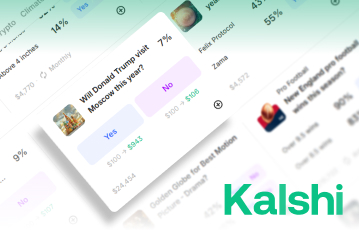
Predict election-related events with Kalshi
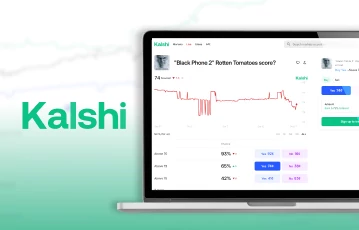
Discover more prediction markets on Kalshi
How to trade election markets on Kalshi
From what we’ve explained so far, you should now know how Kalshi event contracts work and what it takes to trade them. Next up, we’ll be sharing with you how to get started, which, by the way, is pretty straightforward as well. To help you hit the ground running, we’ve put together a simple step-by-step guide below:
-
Click the banner on this page to head straight to Kalshi
-
Create and verify your Kalshi account
-
Deposit funds into your account
-
Click the Elections option on the platform
-
Find your preferred election market
-
Choose “Yes” or “No” and place your trade
-
Review the fees and confirm your order
-
Monitor or close your position
To make more informed election trades, be sure to keep an eye on election polls Kalshi data. However, just remember that traditional polls measure voter preferences, while Kalshi prices reflect what traders believe the outcome is likely to be based on the information available at the time.
Pros and cons of Kalshi election markets
Like any prediction market, trading Kalshi election markets has its upsides and drawbacks. Before you kick things off with this market, here are the pros and cons so you know exactly what to expect:
Pros and Cons
- CFTC-regulated market access
- Wide selection of political outcomes
- Dedicated mobile application
- Trading fees apply
Expert tips for trading Kalshi election markets
Although Kalshi makes starting election trading easy, making successful predictions takes more than choosing your favorite political candidate. With that in mind, here are some proven strategies to help you make better trading decisions:
🔍 Compare Election Polls with Market Probabilities
Right before you buy a contract, take some time to dig into the latest polling data, past election patterns, and candidate performance. Just because a candidate is leading in national polls doesn’t mean they’ll have an easy path to victory in individual states. That’s where Kalshi election forecast data comes in handy. You can use it to distinguish between polling numbers and implied winning probabilities.
📰 Understand How Election News Affects Prices
Political markets react to a lot of things, including debates, endorsements, fundraising reports, campaign controversies, and economic developments. For instance, a strong debate performance can increase demand for a candidate’s contracts, which then pushes prices higher. That said, not every price movement signals a lasting change in an election race.
💧 Check Market Liquidity Before Trading
In case you’re not familiar, liquidity plays a role when it comes to buying or selling election contracts. The more active a market is, the easier it becomes to buy and sell contracts at prices you’re more comfortable with. That’s why it’s always worth checking a market’s trading activity before placing any purchase. The good news is that Kalshi recently introduced features such as low volume indicators and activity feeds for its midterm markets, which makes it easier to gauge market participation and spot where trading activity is strongest.
📜 Read the Contract Settlement Conditions
One important rule when trading prediction markets is not to assume a contract will settle as soon as an election winner is announced. Prediction markets determine outcomes according to each contract’s rule, which may be specific new calls or resolution conditions. In some cases, election disputes or recounts can also delay settlement.
🏆 Focus on Elections You Understand
When it comes to election trading, only sticking to political races you’ve researched can give you a real edge. If you regularly follow Senate races, for instance, you’re likely better off trading congressional contracts over unfamiliar local elections. And if you’re looking for a break from political markets, you can try Kalshi sports markets to test your prediction skills in a new spot.
Wrap up – It is straightforward to trade on Kalshi election contracts
To wrap things up, Kalshi is a regulated prediction market that gives you a platform to trade on political outcomes through “Yes” or “No” contracts. This includes everything from congressional races to presidential elections, or individual candidate races.
The platform also makes it easy for you to kick things off, with dedicated apps for both Android and iOS. So, if this sounds like what you like, use the banners on this page to head over to Kalshi and start trading your preferred election outcomes.
FAQs about Kalshi election markets
✅ Is it legit to trade on Kalshi election contracts?
Yes. Kalshi is a CFTC-regulated designated contract market in the United States, which means it operates under federal oversight. The prediction market platform is available in most parts of the country, but there are some state-level restrictions. As long as you’re at least 18 years old and eligible in your state, you can sign up on Kalshi and trade election contracts.
🗳️ What types of Kalshi election contracts can you trade?
Kalshi offers a good variety of contracts covering presidential elections, congressional races, party control of the Senate and House, and state gubernatorial elections. You’ll also find contracts focused on individual candidates and other specific political outcomes, depending on the election cycle.
📱 Can I trade election contracts on the Kalshi app?
Yes. Kalshi has a dedicated mobile app that you can download on your smartphone. This app is available on both Android and iOS devices, and allows you to purchase “Yes” or “No” contracts tied to a range of political outcomes, including the US elections and other global political events available on the platform.
More Articles Related to Kalshi
- Kalshi Review 2026: Prediction Markets, Fees, Trading Features, and Legitimacy
- How Does Kalshi Work for Prediction Markets? Kalshi Trading Explained 2026
- Is Kalshi Legal in 2026? Regulation, Availability, and State Restrictions
- Kalshi Event Contracts Explained 2026: Trading, Pricing, and Payouts
- Kalshi Fees Explained 2026: Trading Costs, Maker Fees, and Fee Structure
- Kalshi Prediction App Review 2026: Trading Features, Markets, Usability, and Safety
- Kalshi Referral Code 2026: Referral Offers, Rewards, and Requirements
- Kalshi Sports Markets 2026: Contracts, Pricing, Trading, and Payouts
Our Team

Editor