
Home
Kalshi Review
Kalshi Fees Explained 2026
Contains commercial content
Kalshi Fees Explained 2026: Trading Costs, Maker Fees, and Fee Structure
Last Updated on 27.10.2026
We’ve been browsing Kalshi’s fees, with a focus on the trading fees. We found that the fee structure works on a variable rate, instead of a fixed price, based on the price of your contract.
We pinned down that some fees are low, while others are a bit higher. The sweet spot is for contracts that are priced at $0.01 or $0.99. We’ve dissected the fee structure to give you an honest overview of how it all works. Keep reading to find out more about what fees you can expect to pay.
Table of Contents
Learn more about the Kalshi fees and costs
Most of us focus more on the trading fees than anything else. So much so that we can often forget about the payment processing fees, for example. So that you know exactly what you are going to be charged, here’s a quick summary of the main Kalshi fees:
| Type of Fee | When It’s Charged |
|---|---|
| Taker | When your contract is immediately matched |
| Maker | When your contract is executed after being a resting order |
| Deposit Processing | When you deposit into your Kalshi account |
| Withdrawal Processing | When you request a withdrawal from your Kalshi account |
Trading fees
There are two types of trading fees at Kalshi: taker and maker. As we were browsing the Kalshi event contracts and exploring how the fees work, we picked up on the fact that contracts priced between $0.01-$0.05 and $0.95-$0.99 have the lowest trading fees. Contracts priced around $0.40-$0.50 have the highest fees, which isn’t too surprising.
This is the case because if an event contract is priced at $0.50, this indicates a 50/50 probability of the outcome happening. It represents a level of uncertainty on the market, so calculating the potential profit is difficult. Seeing as Kalshi’s trading fees are based on the potential profit of a contract, this will directly change the fee.
Taker fees
These fees are applied to all event contracts that are instantly matched with another order. What we realized is that the Kalshi trading fees are variable and are based on a percentage of the potential profit and implied probability of each contract. Kalshi uses a formula that represents exactly that, which is as follows:
Fees = round up (M x 0.07 x C x P x (1-P))
To help you decode the formula, the ‘P’ represents the price of the contract, ‘C’ refers to the number of contracts, and ‘M’ is the multiplier of the contract. Once you’ve got your head around the formula, it’s pretty easy to use.
Maker fees
The maker fees are applied when your contract is left as a resting order. This is when your contract isn’t immediately matched with another. However, the fee is only charged when your order is executed. If you decide to cancel your contract when it’s a resting order, there will be no maker fees due. The formula for calculating the maker fees is similar to taker fees, but with a small adjustment:
Fees = round up (M x 0.0175 x C x P x (1-P)).
Transaction fees
Just like the trading fees above, the fees attached to your deposits and withdrawals are also variable. What helps clear things up a little further is that the fees are generally the same for deposits and withdrawals for each payment type:
- ACH Transfer – No fees for deposits or withdrawals.
- Wire Transfer – Variable fees, but withdrawals aren’t available for less than $500,000.
- Debit Card – 2% processing fee on both deposits and withdrawals.
- Cryptocurrency – Fees are added by Kalshi’s third-party processor and are shown before the transaction is completed.
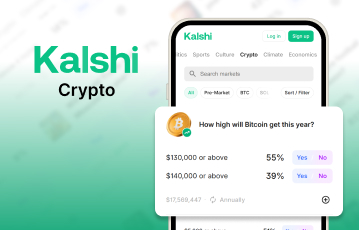
Make crypto market predictions with Kalshi
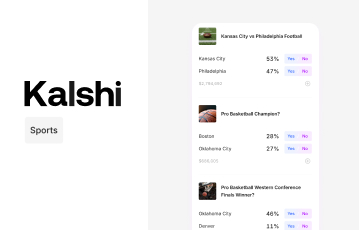
Explore sports event contracts on Kalshi
Pros and cons of Kalshi’s fees
All prediction market sites apply trading fees, but they all have a different approach. Whether the fees are fixed or variable, it’s important to know how to read them. You can also generally expect payment processing fees, depending on the payment method you use. Hopefully this guide has highlighted how Kalshi works, but here’s a recap of the main pros and cons to help you weigh things up:
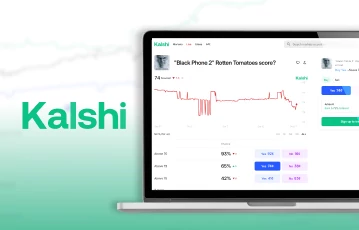
Pros and Cons
- Clear fee structure
- Low trading fees
- Fees are shared upfront
- Some transaction fees are vague
Conclusion: A clear and upfront fee structure makes planning easier
If you’re thinking about joining Kalshi or have already signed up, learning about the trading fees is crucial. Thankfully, Kalshi has made it easy for new users by sharing an easy-to-read fee structure. The fees are per contract, so while they aren’t fixed, they are easy to predict and plan for. All you need to do is confirm the price of the contract and check out the associated fee.
It’s also important to note the transaction fees, because this can directly eat into your deposited funds and withdrawals. Always browse the list of available payment methods and the processing fees to make sure that you’re using the right method for you.
If you haven’t created an account yet, but you’re pleased with the fees that we’ve shared here, there’s only one thing left to do. You can join today by clicking the promotional banners on this page.
Kalshi fees FAQs
💰 Do you need to pay a settlement fee at Kalshi?
No. Kalshi doesn’t charge a settlement fee, so that’s one thing less to worry about. You’ll receive a $1 settlement for every correct prediction, with no additional charges.
🏦 Does Kalshi charge withdrawal fees?
Yes, you will need to pay a withdrawal fee. However, the size of the fee depends on your chosen payment method and how much you are withdrawing.
🔗 Can I use a referral bonus to lower my fees at Kalshi?
Sharing your Kalshi referral code will not directly reduce your fees. However, you can pick up various promotions that could give you some credit back to make up for trading or payment processing fees.
🧾 Who needs to pay fees at Kalshi?
Provided that you have an active account and are trading event contracts, you will be subject to various fees on the platform. To open your account and get started, you will need to confirm that you’re 18+ years old and located in any of the Kalshi legal states.
More Articles Related to Kalshi
- Kalshi Review 2026: Prediction Markets, Fees, Trading Features, and Legitimacy
- How Does Kalshi Work for Prediction Markets? Kalshi Trading Explained 2026
- Is Kalshi Legal in 2026? Regulation, Availability, and State Restrictions
- Kalshi Election Markets 2026: Event Contracts, Pricing, and Trading Explained
- Kalshi Event Contracts Explained 2026: Trading, Pricing, and Payouts
- Kalshi Prediction App Review 2026: Trading Features, Markets, Usability, and Safety
- Kalshi Referral Code 2026: Referral Offers, Rewards, and Requirements
- Kalshi Sports Markets 2026: Contracts, Pricing, Trading, and Payouts
Our Team
Editor