
Roblox The Forge ores guide: Locations, traits & how to use them
All ores, traits, and locations explained.
Reviewed by : Naim Rosinski
Roblox The Forge is built around one core system: ores. Everything you craft - weapons & armor- comes from the ores you mine in caves or obtain from enemies. Understanding how The Forge ores work is the secret to getting stronger gear, progressing faster, and building powerful damage or defense builds.
What are The Forge ores?
In Roblox The Forge, ores are raw materials used for forging weapons and armor. You mine them from different rock types or get them as enemy drops. Each ore has four important qualities:
- Rarity: Ores range from Common → Uncommon → Rare → Epic → Legendary → Mythical. Rarer ores are harder to find and much stronger.
- Multiplier: Determines how much an ore boosts weapon damage or armor defense. Higher multiplier = stronger gear.
- Drop chance: Each ore has a different chance to appear when mining. Rare ores can have 1/200 to 1/5000+ drop rates.
- Traits: Some The Forge ores grant effects like crit chance, burn, explosions, dodge, speed, or defense. Traits activate if the ore makes up ~10–30% of the craft.
Rock types & ore progression
Different rocks produce different ores. These are the basic rock types:
- Pebble: Easiest to mine, common ores
- Rock: Basic ores
- Boulder: Higher early-game ores
- Basalt Rock: Mid-game ores
- Basalt Core: Deeper mid-game ores
- Basalt Vein: Rare ores
- Volcanic Rock: High-tier ores
- Crystal Nodes: Crystal ores in Goblin Cave
Better rocks require better tools. Upgrading your pickaxe unlocks deeper ores.
How to use ores in The Forge
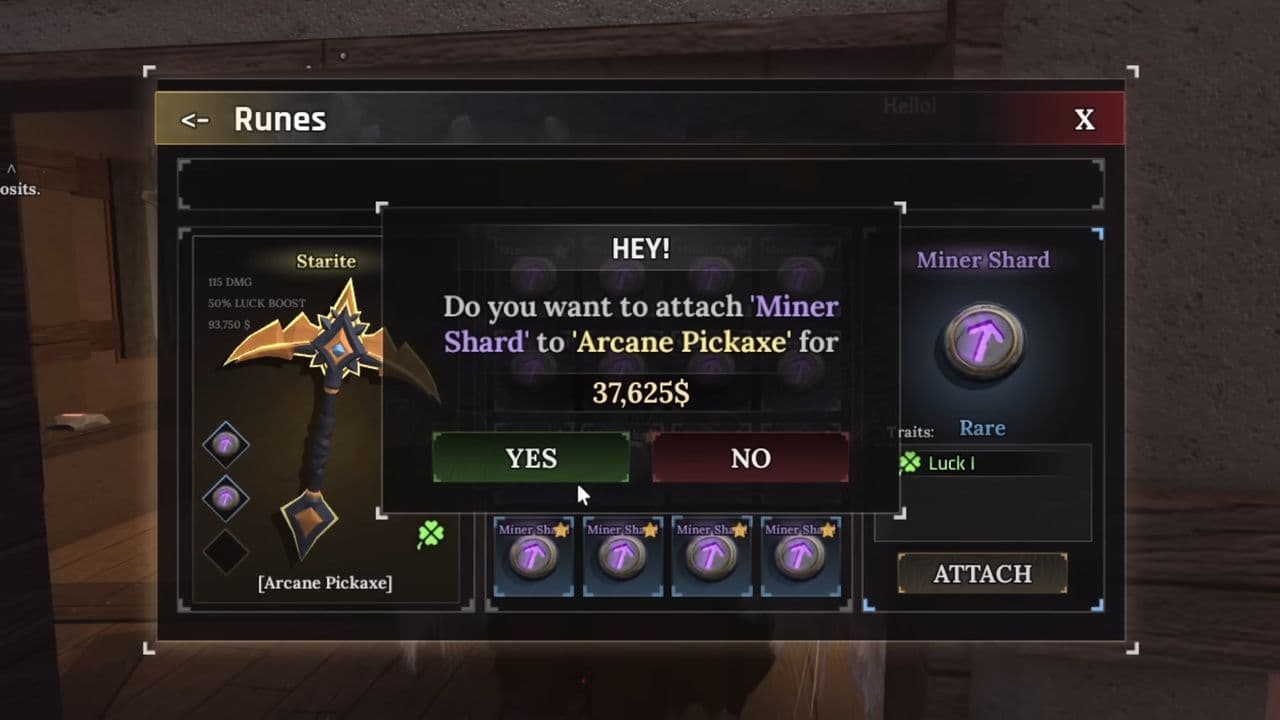
To use ores in The Forge, you first need to mine them. Equip a pickaxe and break rocks to collect ores. Oh, you have some already! After collecting ores, go to the Forging Station and:
- Choose what to craft: a weapon or a piece of armor.
- Add ores to the forge: The rarity and multiplier affect damage or defense, and the number of ores affects the size/type of gear.
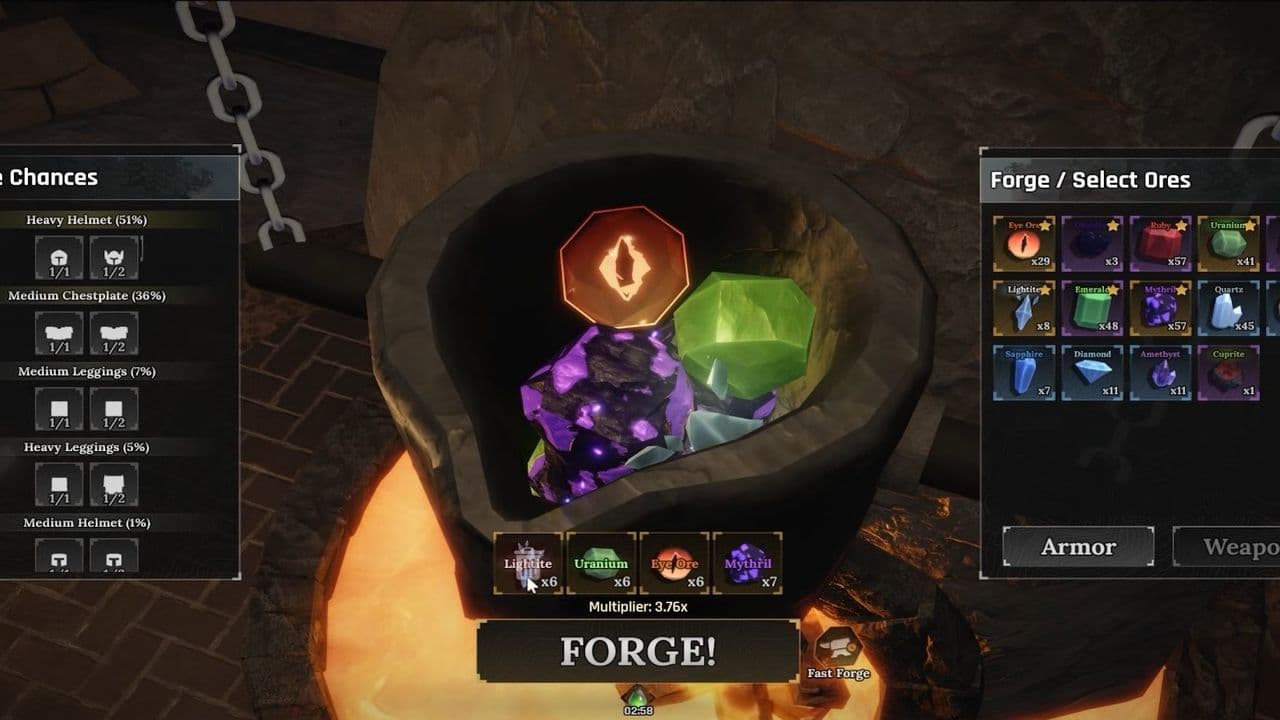
- Traits activate only if a trait-ore makes up enough of the mix (usually about 10–30%).
- Complete forging mini-games (heating, pouring, shaping, cooling); better performance means better item quality.
- Receive your gear, with stats based on ores used and mini-game results.
- Equip, upgrade, or sell the item depending on your needs.
Got your pickaxe ready and looking for the exact locations of The Forge ores? Keep reading.
How to get ores in The Forge: Complete list of all ore locations
This section lists all Roblox The Forge ores, their rarity, multipliers, and where to find them.
Early-game ores: Stonewake’s Cross (Starter Area)
These ores appear in Pebbles, Rocks, and Boulders:

3 things to keep in mind
- Use Stone → Iron → Tin/Silver ores to build a steady early resource base, good for beginners.
- Keep an eye out for Cardboardite, Bananite, Mushroomite, Aite, and Poopite, though rare, they can give surprisingly strong early-game gear.
- Once you get a Boulder-capable pickaxe, switch to Aite or Platinum if mid-game ores aren’t available yet. They provide decent multipliers without needing advanced rocks.
Mid-game ores: Forgotten Kingdom – Basalt Zones
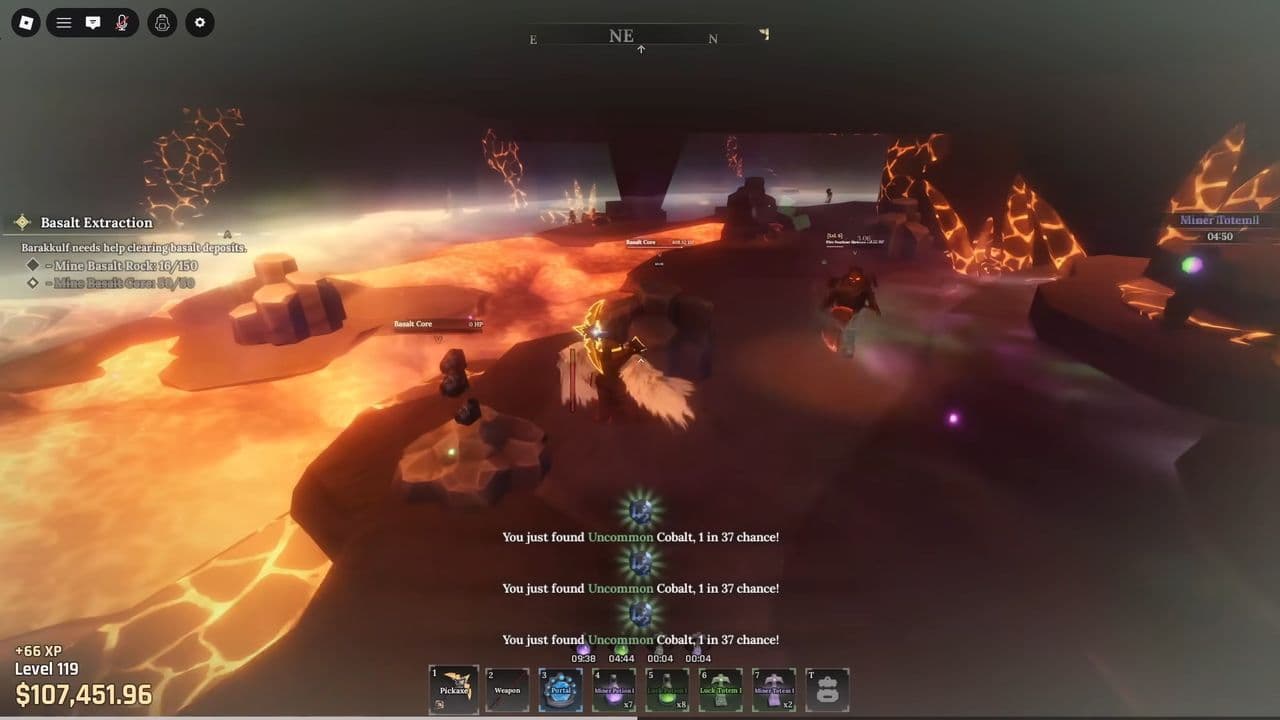
As you enter World 2, you’ll meet Basalt Rocks and Cores. These give much stronger ores.
3 tips for mid-game ores
- Upgrade your pickaxe. Mid-game ores only appear in tougher rocks like Basalt Core and Basalt Vein.
- Mix power and traits. Don’t chase multipliers alone; trait ores often give better results.
- Manage extras wisely. Save strong ores for forging, sell surplus for gold.
Late-game legendary The Forge ores: Volcanic Depths
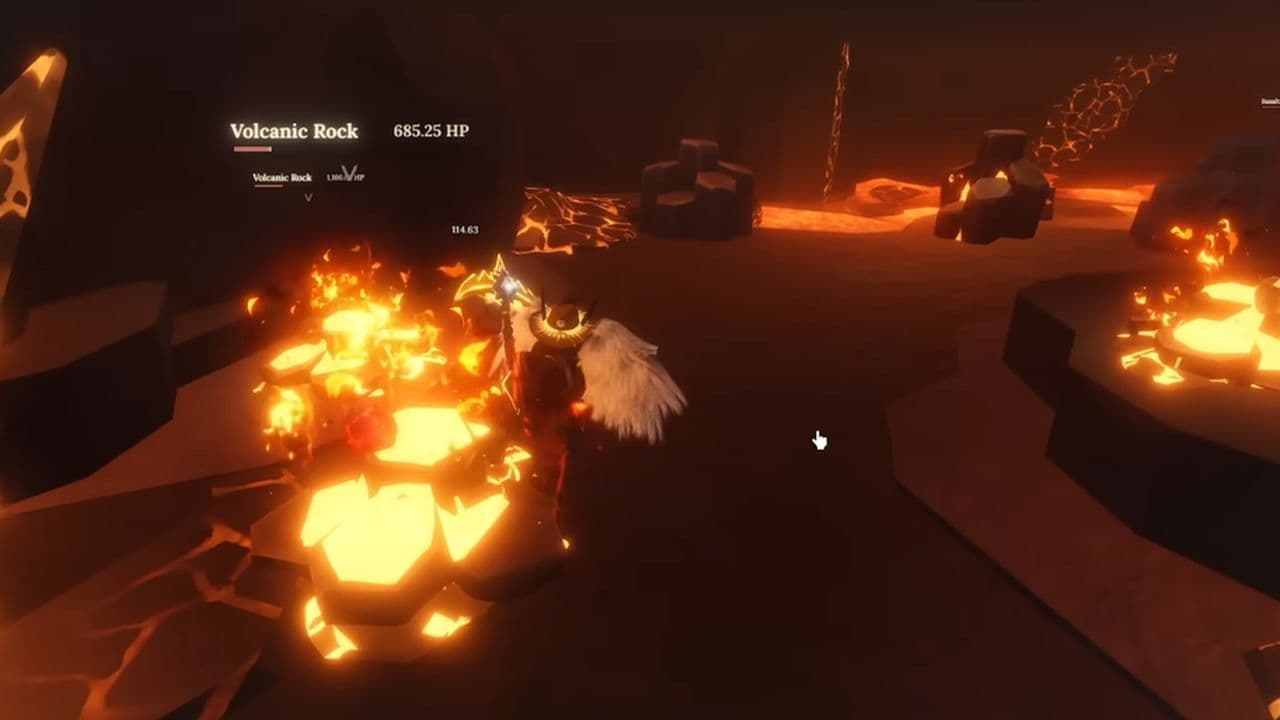
These ores are strong and rare, often with a 1/1000+ drop chance.
3 things you should know for using these ores effectively
- To activate a trait of an ore (like Fireite or Uranium), you usually need to have that ore make up a significant portion of your crafting recipe (often ~20–30%).
- Even if an ore has a high multiplier, combining a trait ore with high-multiplier but no trait can produce more powerful or specialized gear depending on what you need (raw damage, survivability, crowd control, mobility, etc.).
- Legendary ores are rare and harder to find - expect low drop rates - so plan forging attempts strategically (e.g. save multiple legendary ores for one high-impact weapon/armor).
Mythical ores: Best & rarest in Roblox The Forge
These are extremely rare and extremely strong. Because these ores are mythical and extremely rare, aim to use them on high-quality gear only - e.g., end-game weapons or heavy armor - to maximize their value.
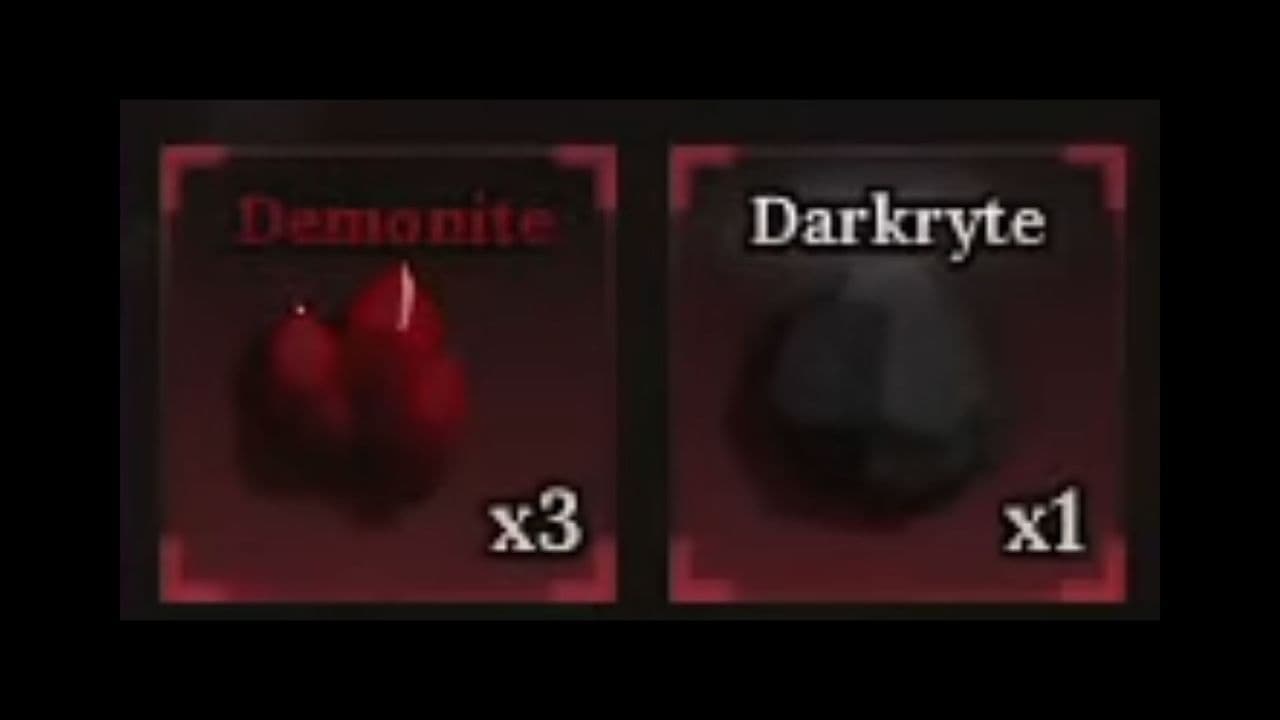
You should be careful about…
- For Demonite, its burn and backfire effects make it good for mixed builds (damage + utility). It works well on armor if you expect heavy combat, or on weapons if you want ongoing burn damage effects.
- For Darkryte, the dodge trait is powerful for survivability. Use it on armor, especially if you prefer close-range or high-risk combat scenarios.
- Given their rarity, consider saving multiple pieces before forging; mixing mythicals with lower-tier ores can balance cost and power.
Crystal ores: Goblin Cave
Crystal Nodes drop special crystal ores with high multipliers.
Before using crystal ores…
- Crystal ores are best used when you want a strong multiplier boost, especially Rainbow or Arcane Crystal for high-tier gear.
- Even the “lower” crystal ores (Magenta, Crimson, Green, Blue, Orange) are useful when you don’t yet have high-tier ores - they offer much better stats than early-game rock ores.
- Because crystals come from special crystal nodes, you likely need a good pickaxe and access to Goblin Cave - treat crystal mining as a mid-to-late game activity once basic forging and mining are established.
- Save rare crystals (Rainbow, Arcane) for forging important gear, rather than using them immediately. They’re rare enough to be “power multipliers.”
Enemy-drop ores
These don’t come from mining. They come from defeating enemies.

You earn these yourself, so make sure you spend them wisely
- Use these ores when mining isn’t practical - fighting standard enemies can still yield useful crafting resources.
- Dark Boneite and Slimite - with higher multipliers - are especially valuable if you want better gear without diving into deep caves.
- Enemy-drop ores are a good fallback for early-to-mid game or for supplementing mined ores when you want to save mining resources.
The Forge ore farming
Ore farming in The Forge is mainly about having a good pickaxe and mining the best rocks you can access. Early in the game, you will mine Pebbles, Rocks, and Boulders to collect common and uncommon ores. These are useful for crafting basic weapons and armor, and for earning gold. At this stage, the goal is to gather enough materials to improve your gear and upgrade your pickaxe.
Once your pickaxe is stronger, you can move into the mid-game areas and start mining Basalt Rock, Basalt Core, and Basalt Vein nodes. These rocks drop rarer ores with higher multipliers, which greatly improve your damage and defense. Some of these ores can also give special traits, making your gear more effective. Mid-game ore farming is important because it allows you to prepare for harder areas and tougher enemies.
In the late game, farming focuses on Volcanic Rock, deep Basalt Veins, and Crystal Nodes found in places like the Goblin Cave. These locations drop legendary, mythical, and crystal ores with very high multipliers, which are needed for powerful end-game builds. To farm efficiently, always use your best pickaxe, use luck boosts when possible, and focus on the highest-level rocks you can break. If you have extra low-tier ores, forging them into large items can often give more gold than selling the ores directly.
The overall approach is simple: farm lots of ores early, then aim for higher-quality ores as your tools and gear improve.
From basic Stone to Mythical Darkryte and Crystal ores, each ore has a purpose. Learn where to find them, upgrade your tools, and use traits wisely, and you’ll be able to craft some of the most powerful gear in the entire game.
Meet Eray, a tech enthusiast passionate about AI, crypto, gaming, and more. Eray is always looking into new developments, exploring unique topics, and keeping up with the latest trends in the tech industry, and gaming is the sweetest spot.
Eray has been rocking it as a news manager and content creator at spots like, TechBriefly, Gamelevate, Softonic, and various tech realms. Crafting over 2k tech articles, Eray captivated millions of readers for over three years.
Now, over at THESPIKE, Eray is a content writer, blending the love for spinning stories and helpful guides for all-things gaming.