VCT 2026 Stage 1 map stats: How each region approached the map pool differently
VCT 2026 Stage 1 delivered four very different regional identities despite sharing the same core map pool, with Lotus, Haven, and Breeze emerging as the key battlegrounds while Pearl and Split shaped defensive macro across the board. At the same time, the mid-stage swap from Bind to Ascent adds important context to how you read some of the numbers.
Bind-Ascent Map Swap Disclaimer
Bind was removed from the competitive map pool and replaced with Ascent mid-event, which means teams had far fewer official reps on Ascent than on the rest of the pool, while Bind’s stats are front‑loaded into the earlier weeks. As a result, Ascent’s very low pick rates in Pacific, EMEA and China, and its skewed win percentages in smaller samples, should be taken with a grain of salt.
Lotus and Haven as Global Anchors
Across all four regions, Lotus quietly becomes the true “universal” map, sitting near the top of the pick-rate charts while maintaining relatively modest ban rates. Pacific, EMEA, Americas, and China all hover around the low‑ to mid‑20% range for Lotus picks, with China peaking at roughly 19-20% pick rate and EMEA topping out at just over 20%. This consistency suggests teams worldwide are converging on Lotus as a default comfort pick, rather than a niche pocket map.
Haven plays a similar anchoring role, particularly in EMEA, Americas, and China, where it sits in the high‑teens to low‑20% pick range and sees a healthy mix of picks and bans. Attack win rates on Haven trend slightly above or around the mid‑50s in EMEA and China but dip closer to even in Americas and just above in Pacific, hinting at how different regions approach the three‑site macro and retake discipline.
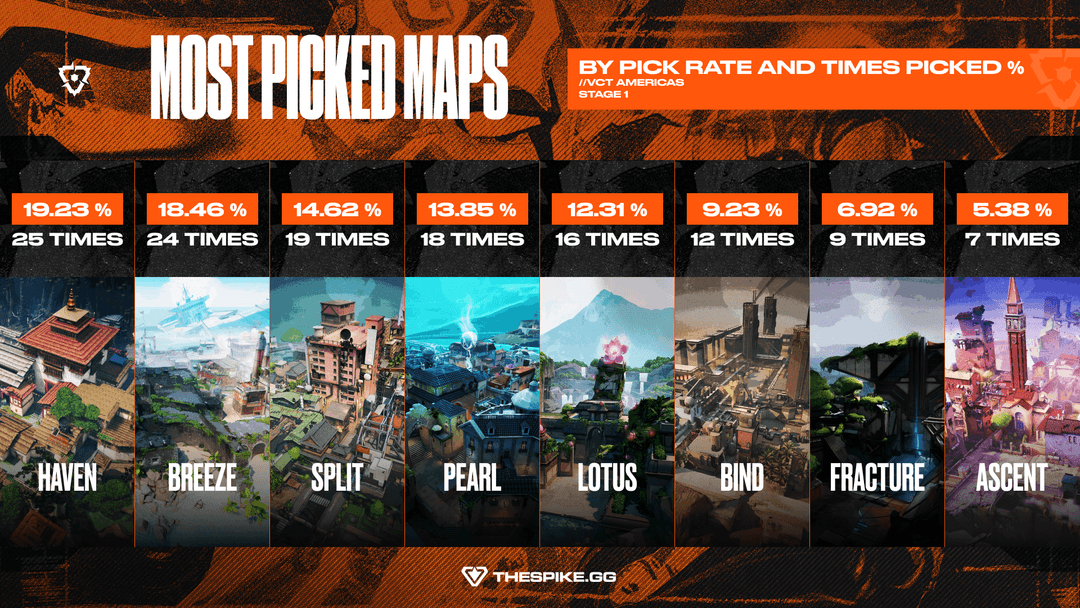
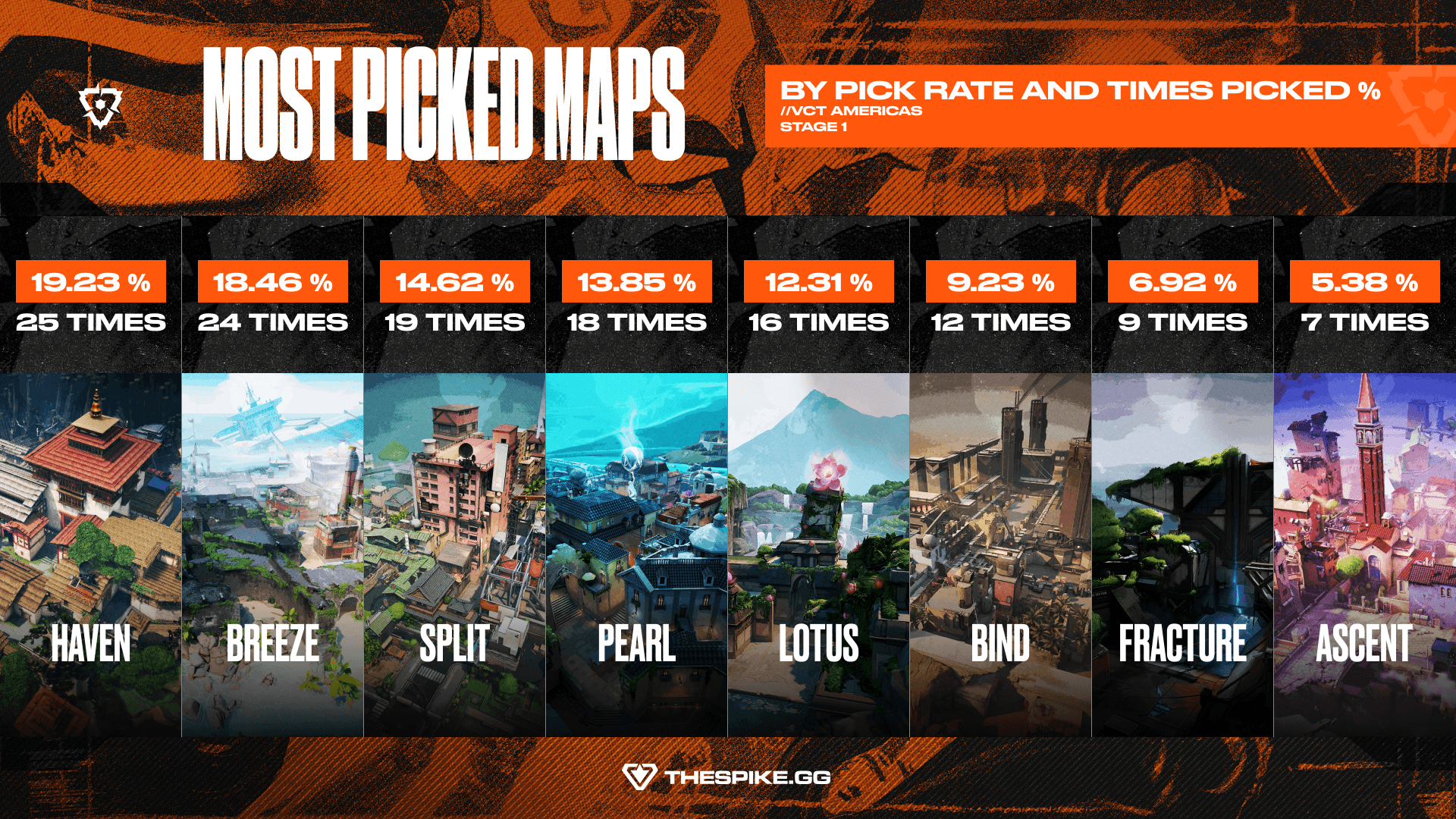
Most picked maps in VCT Americas 2026 Stage 1 (Image Exclusive to THESPIKE.GG)
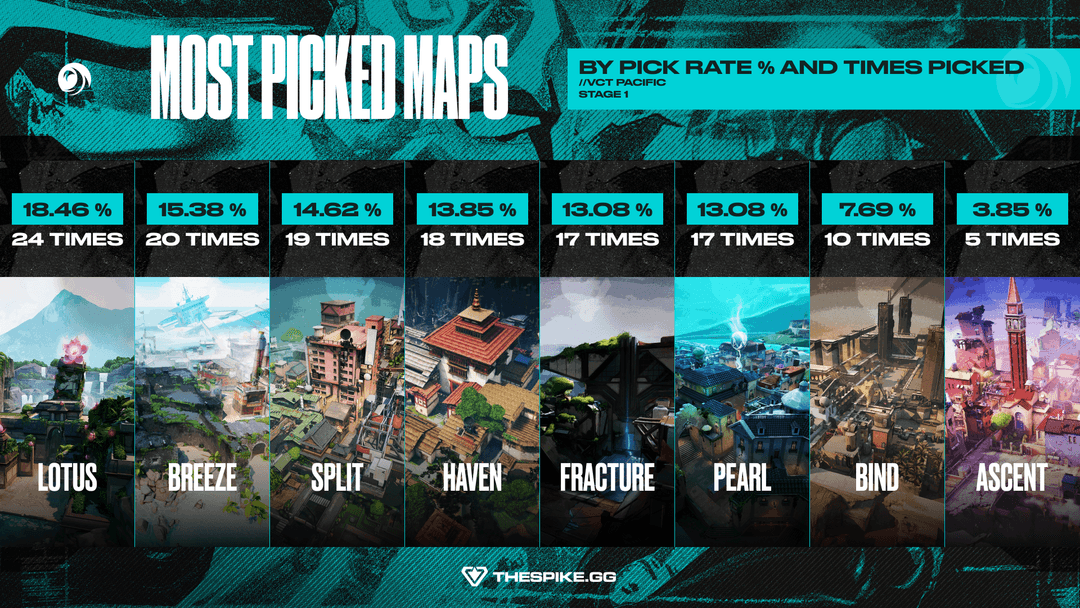
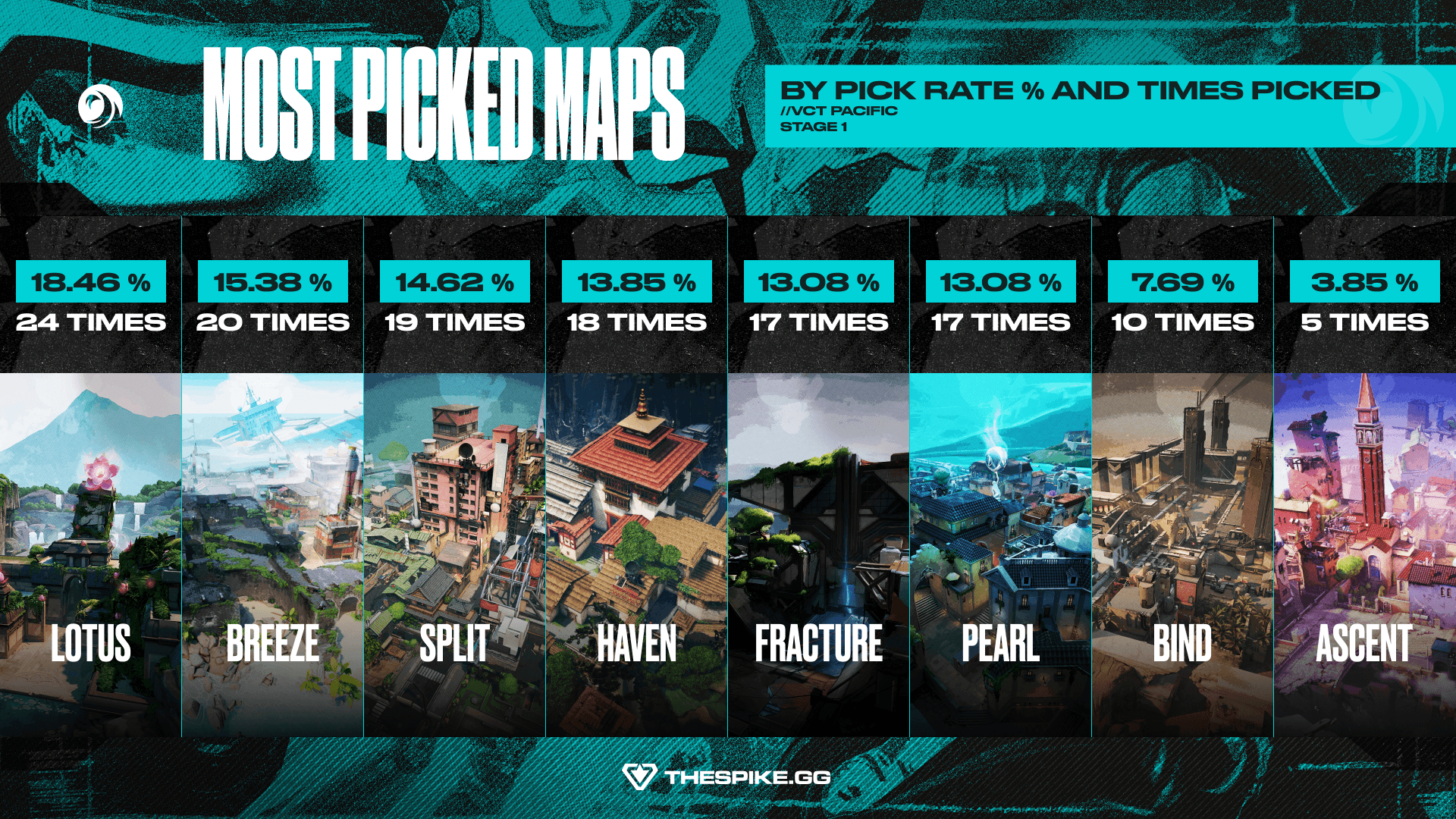
Most picked maps in VCT Pacific 2026 Stage 1 (Image Exclusive to THESPIKE.GG)
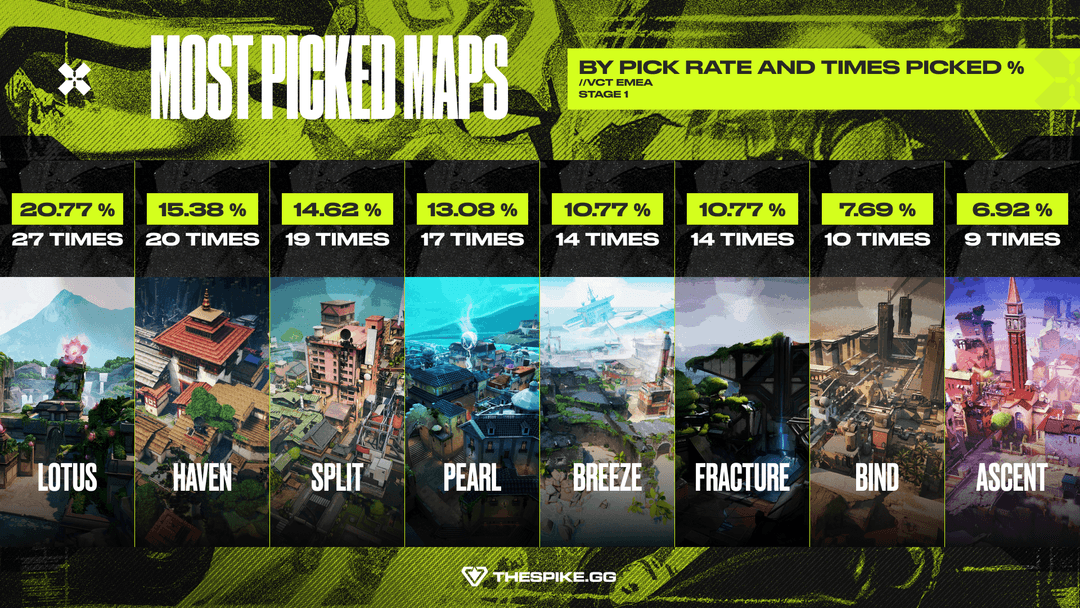
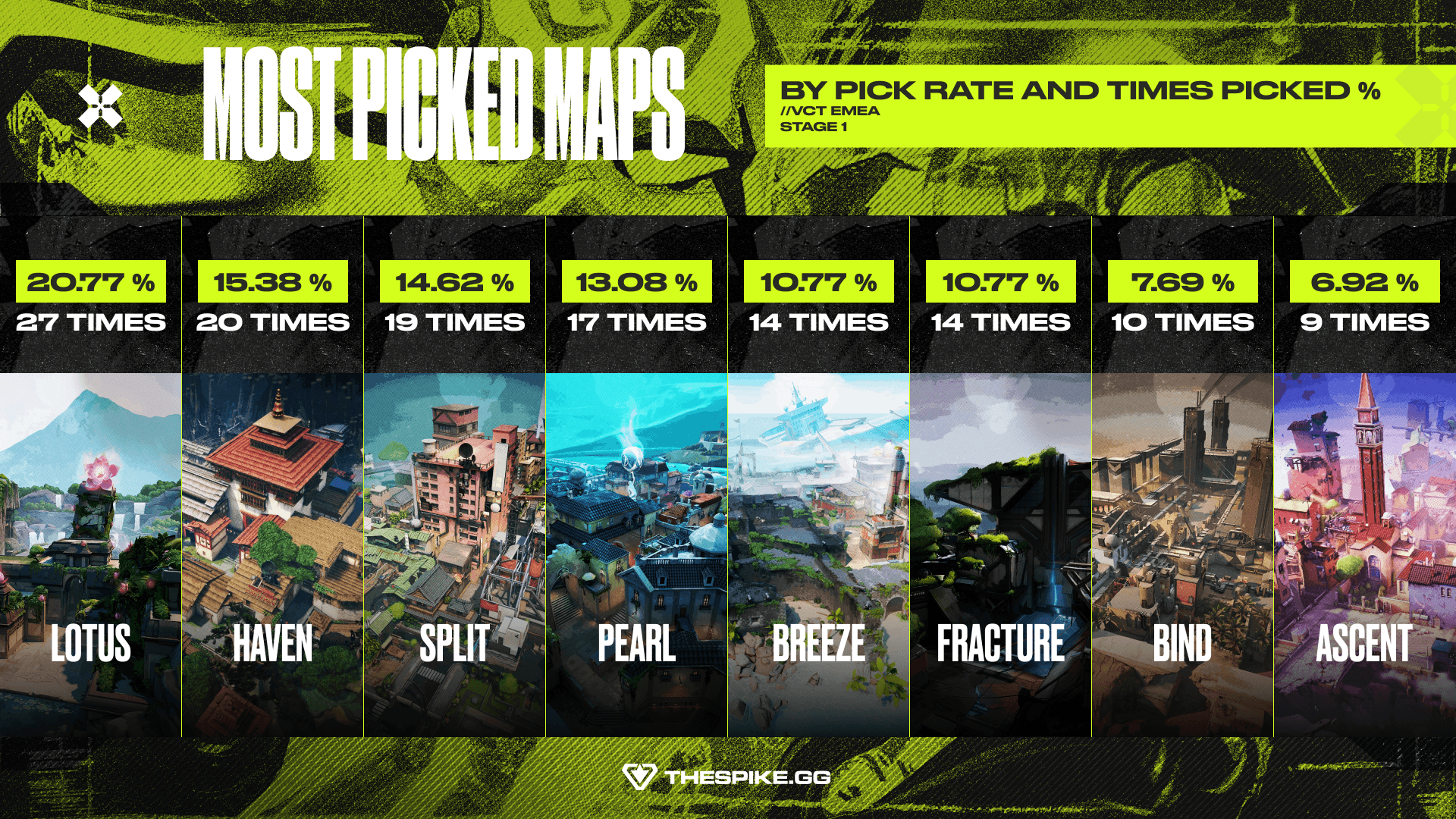
Most picked maps in VCT EMEA 2026 Stage 1 (Image Exclusive to THESPIKE.GG)
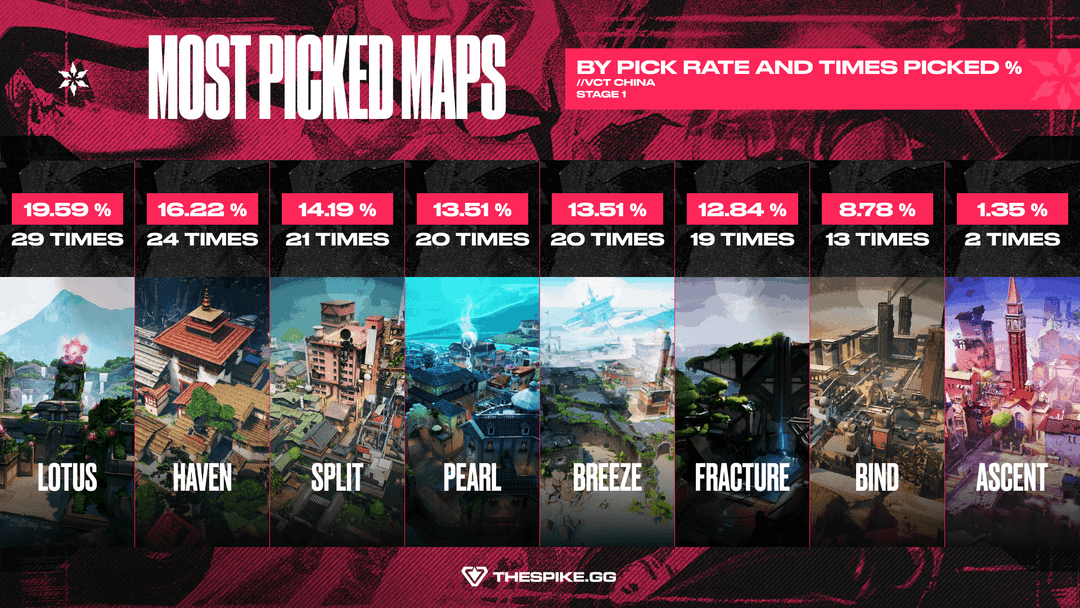
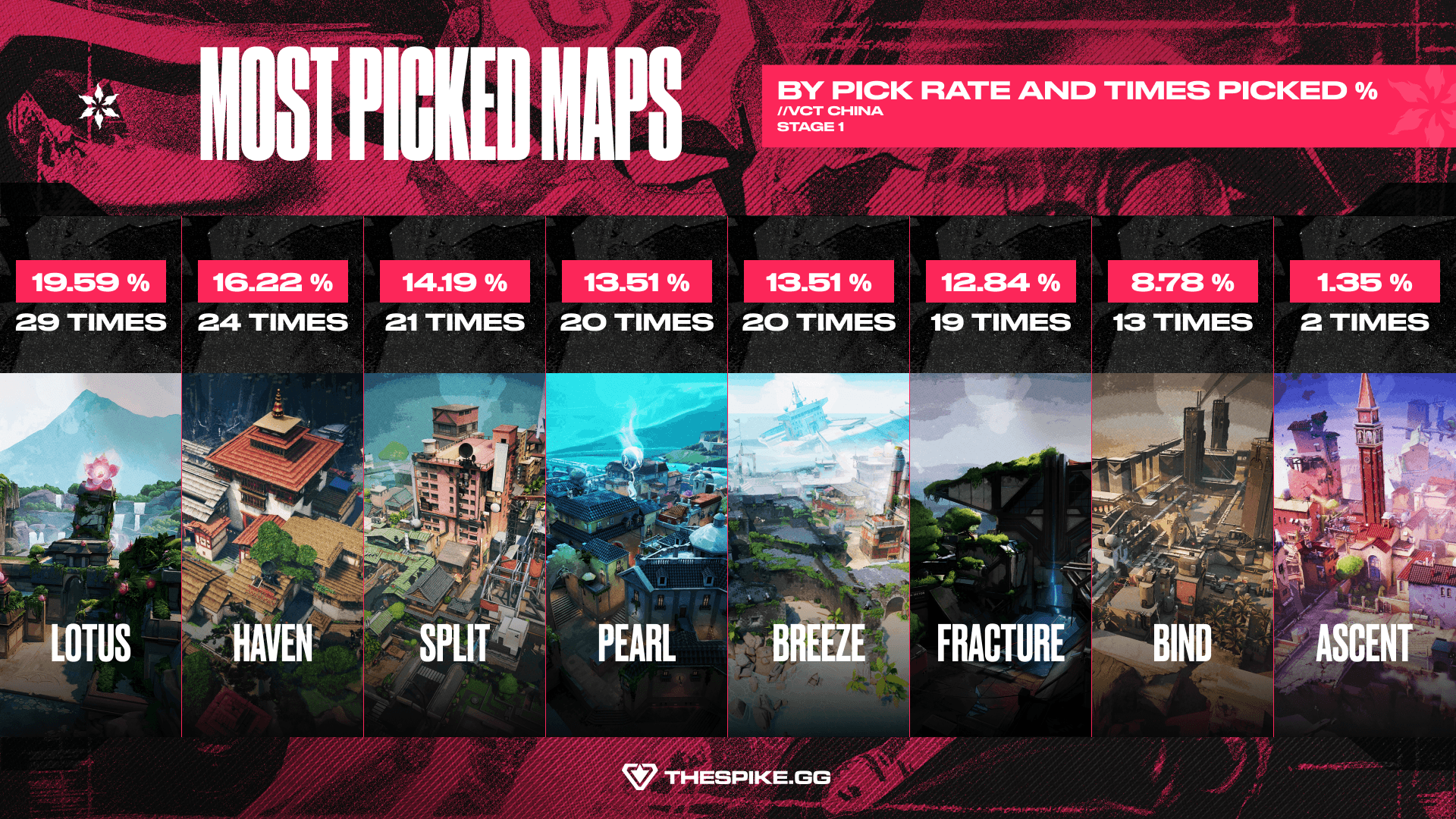
Most picked maps in VCT China 2026 Stage 1 (Image Exclusive to THESPIKE.GG)
Breeze and Fracture: Aggression vs Respect
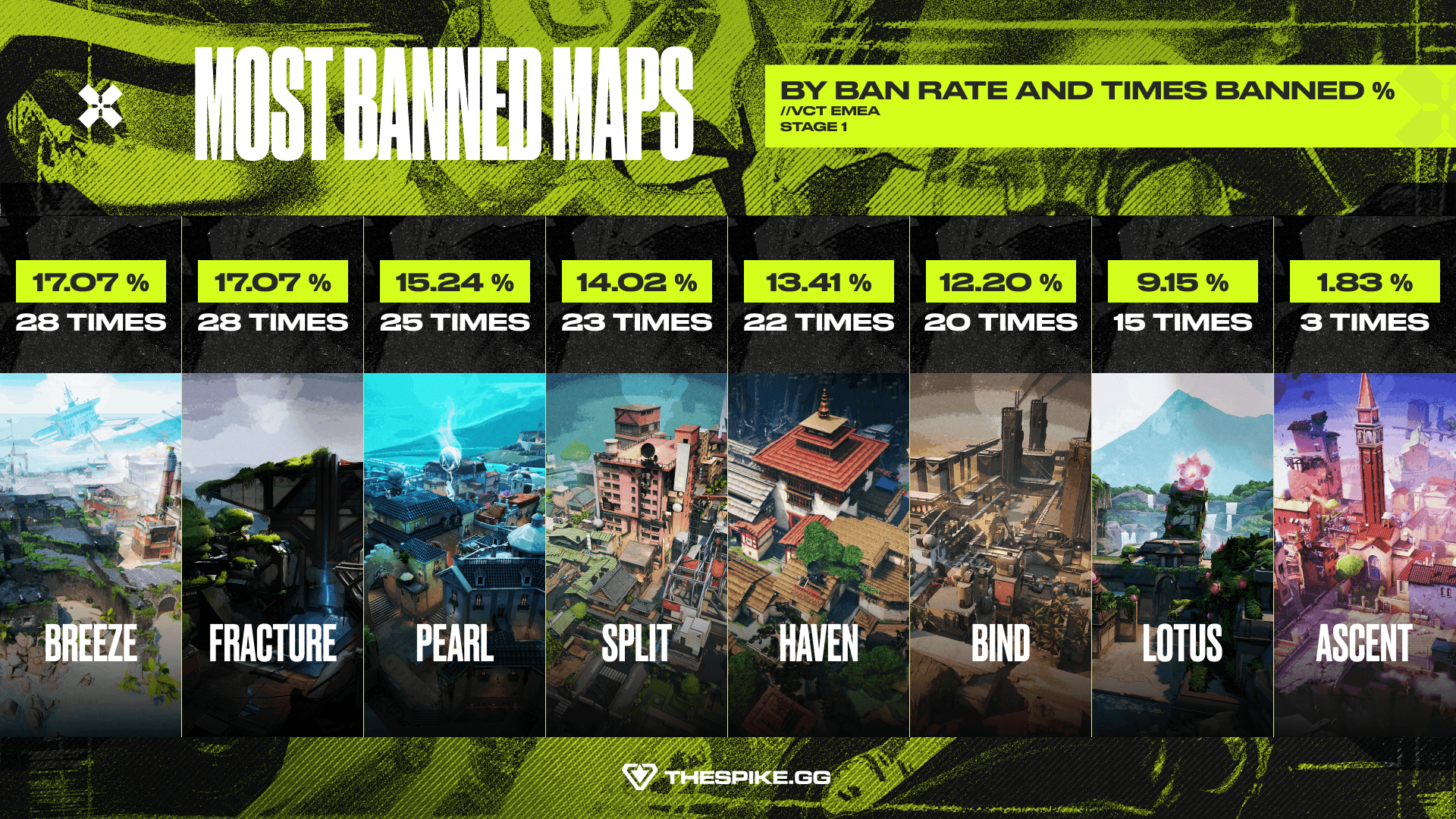
Breeze emerges as the “confidence” map for Americas and China, both regions posting some of the highest pick rates on the map alongside strong attacking win percentages. Americas pushes Breeze to roughly 18% of picks with attack sides winning well above 55%, while China picks it in the low‑teens with a slight defensive edge, indicating teams there are more comfortable playing structured holds than explosive executes. EMEA also leans into Breeze with double‑digit pick rate but shows a clear willingness to ban it aggressively, reflecting polarized comfort across teams.
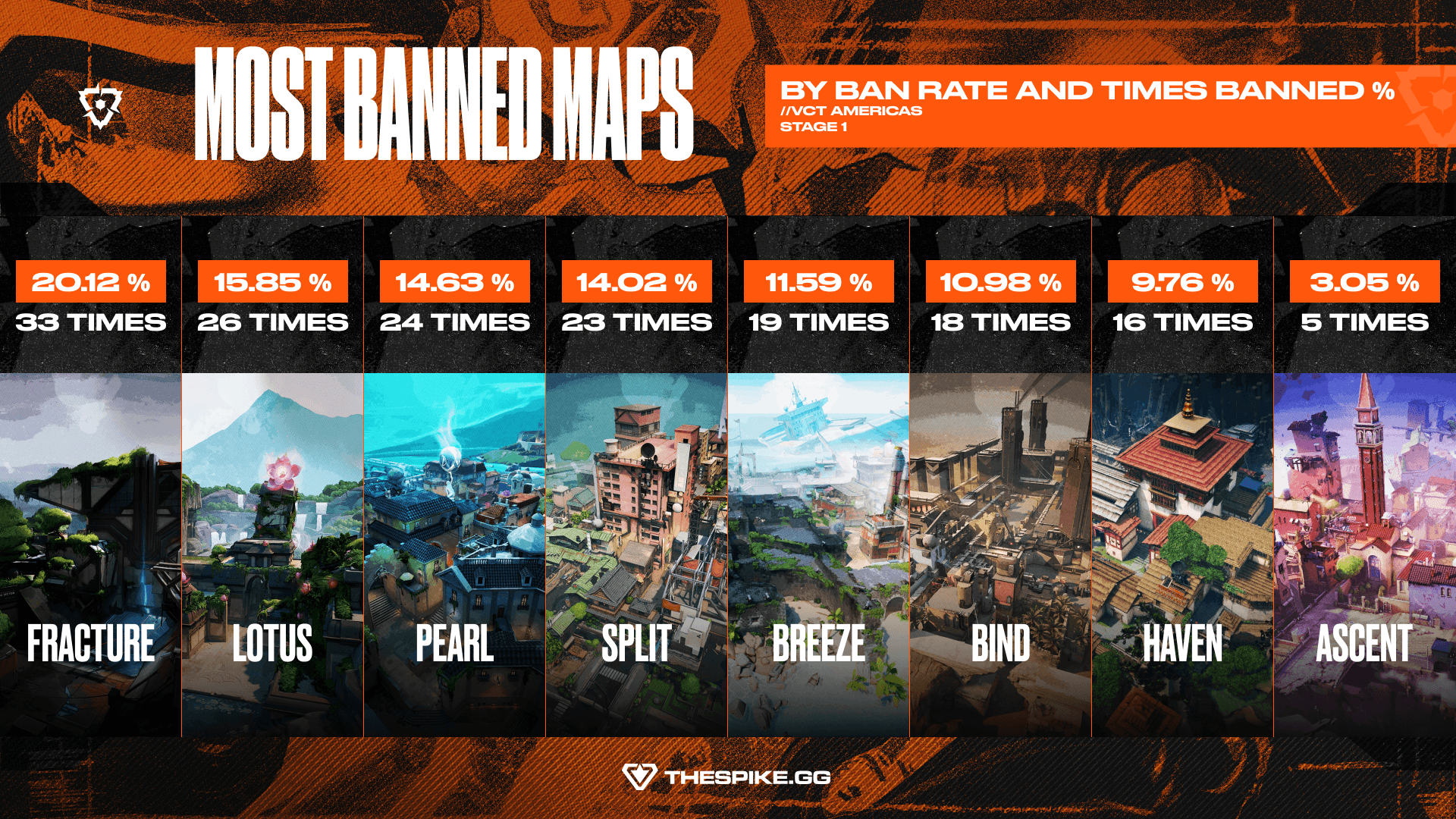
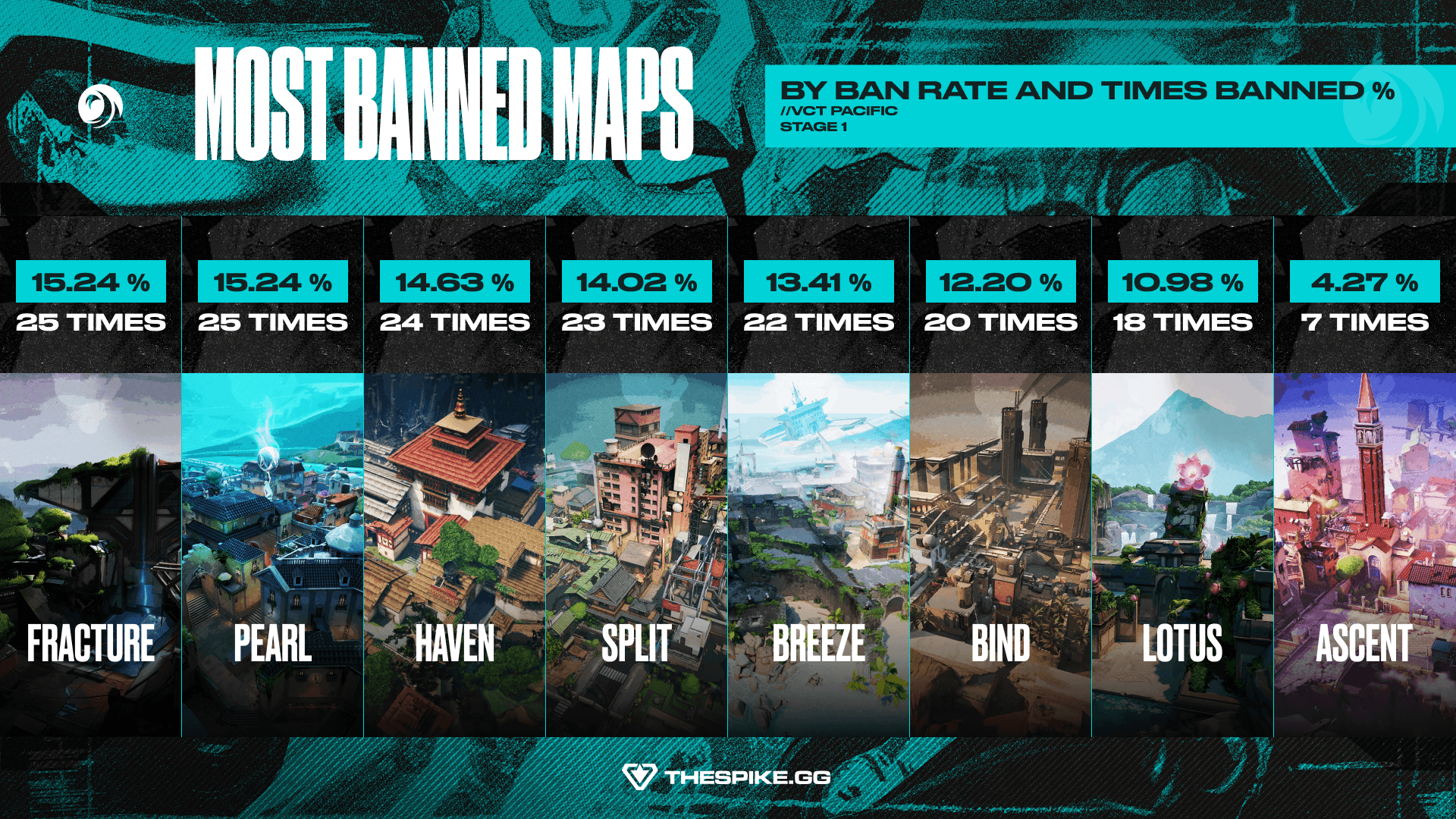
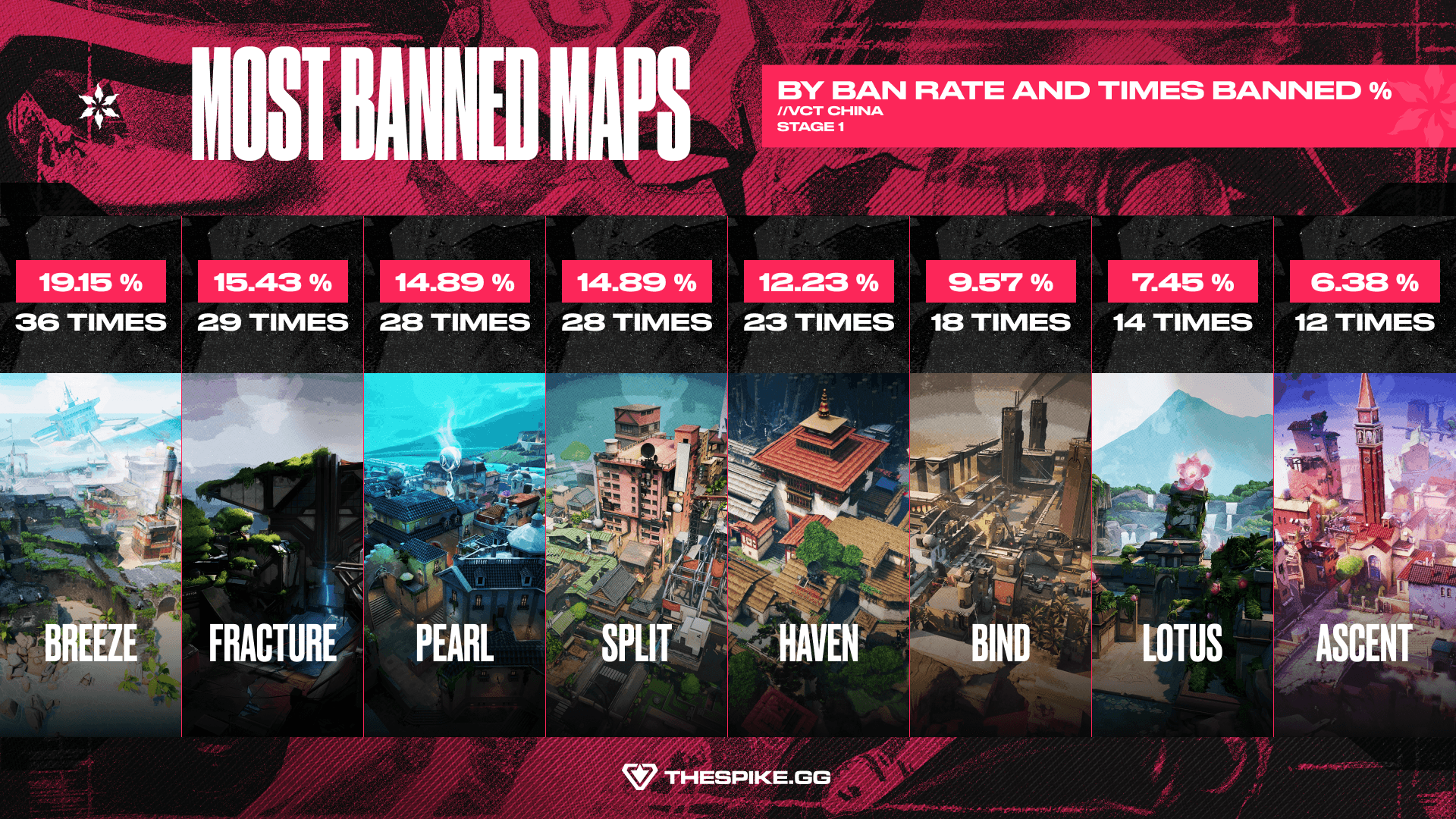
Fracture gets very different treatment. Pacific and EMEA keep it in a mid‑tier slot with similar pick rates but noticeable ban pressure, suggesting a split between teams that thrive in brawl‑heavy defaults and those that want it out entirely. Americas shows one of the highest ban rates on Fracture relative to its modest pick rate, a sign that while a few teams weaponize it as a specialist pick, the broader region would rather avoid the volatility. China again sits in the middle: respectable pick rate, high bans, and a slightly attacker‑favored win rate that rewards teams willing to lean into set plays.
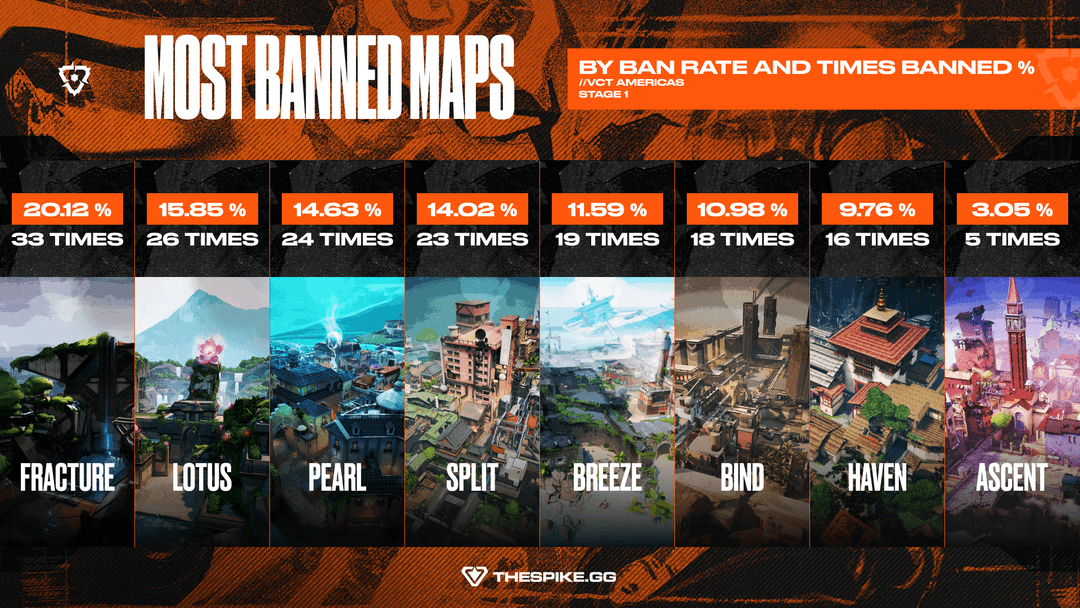
Most banned maps in VCT Americas 2026 Stage 1 (Image Exclusive to THESPIKE.GG)
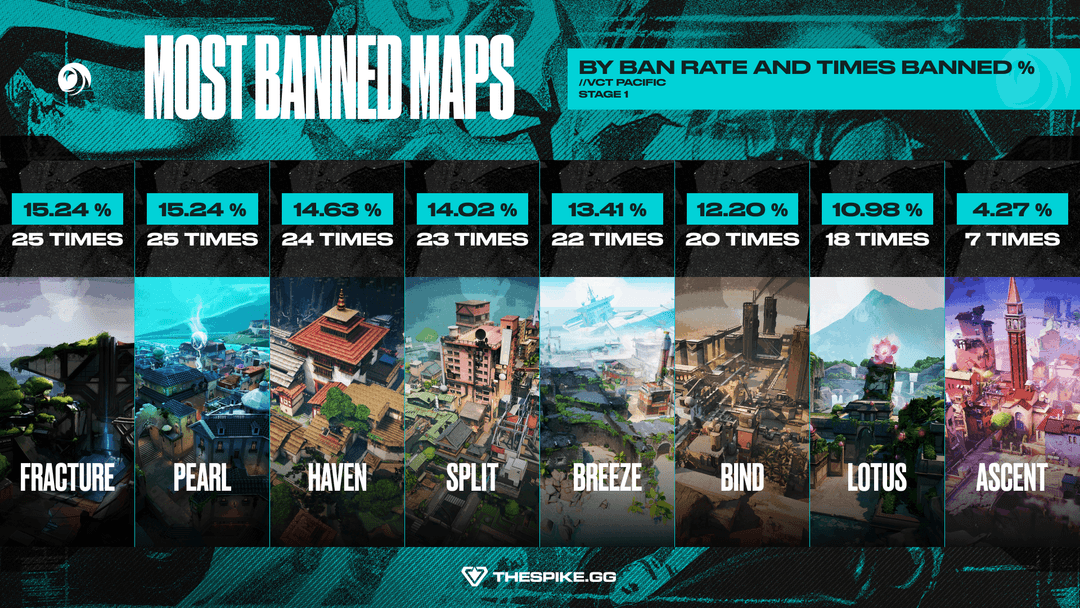
Most banned maps in VCT Pacific 2026 Stage 1 (Image Exclusive to THESPIKE.GG)
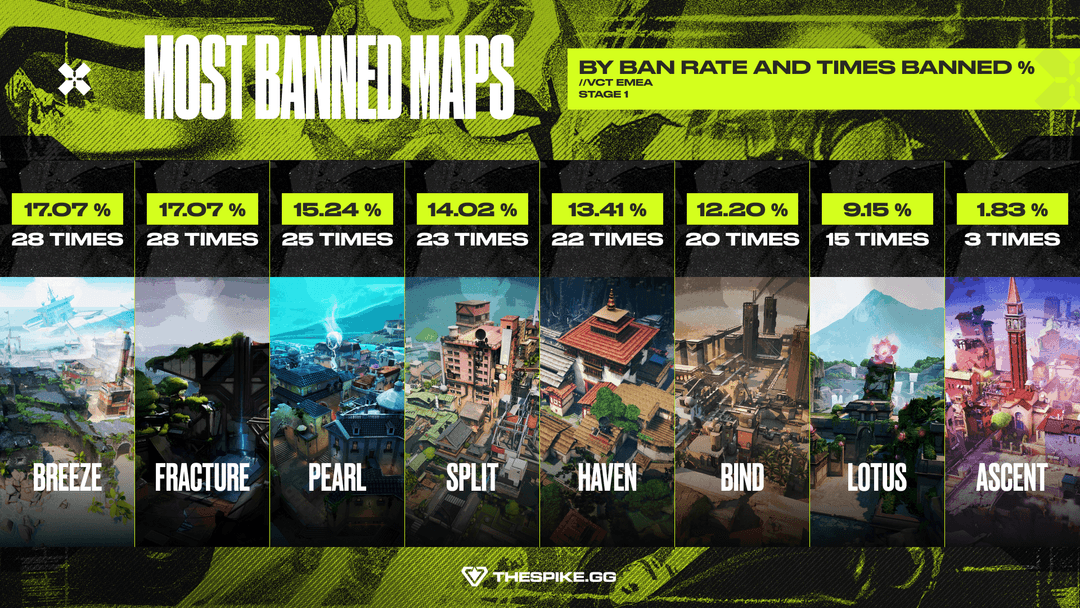
Most banned maps in VCT EMEA 2026 Stage 1 (Image Exclusive to THESPIKE.GG)
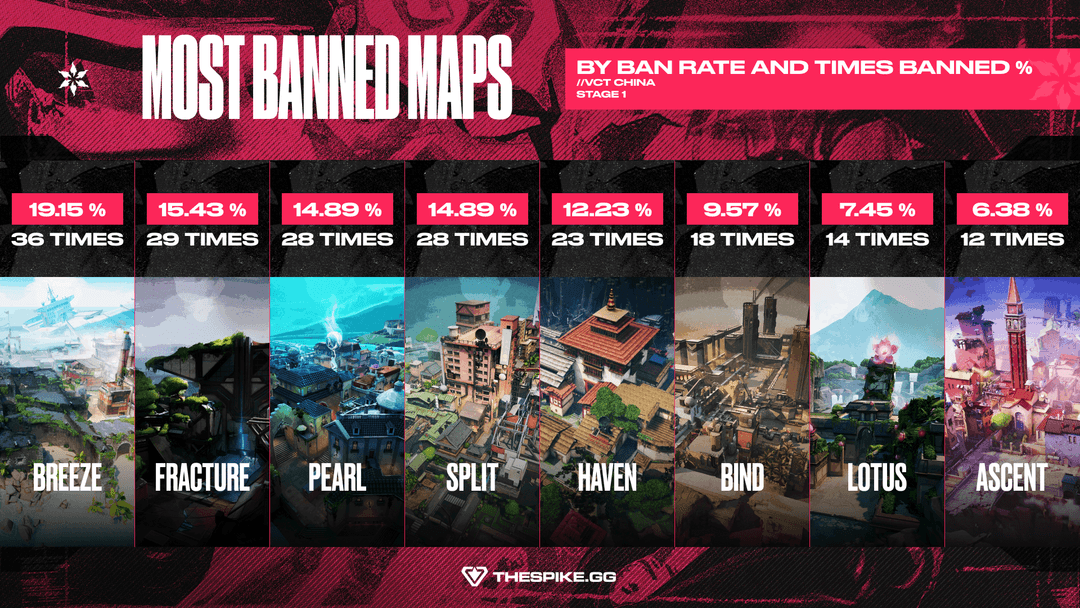
Most banned maps in VCT China 2026 Stage 1 (Image Exclusive to THESPIKE.GG)
Pearl and Split: Defensive Strongholds
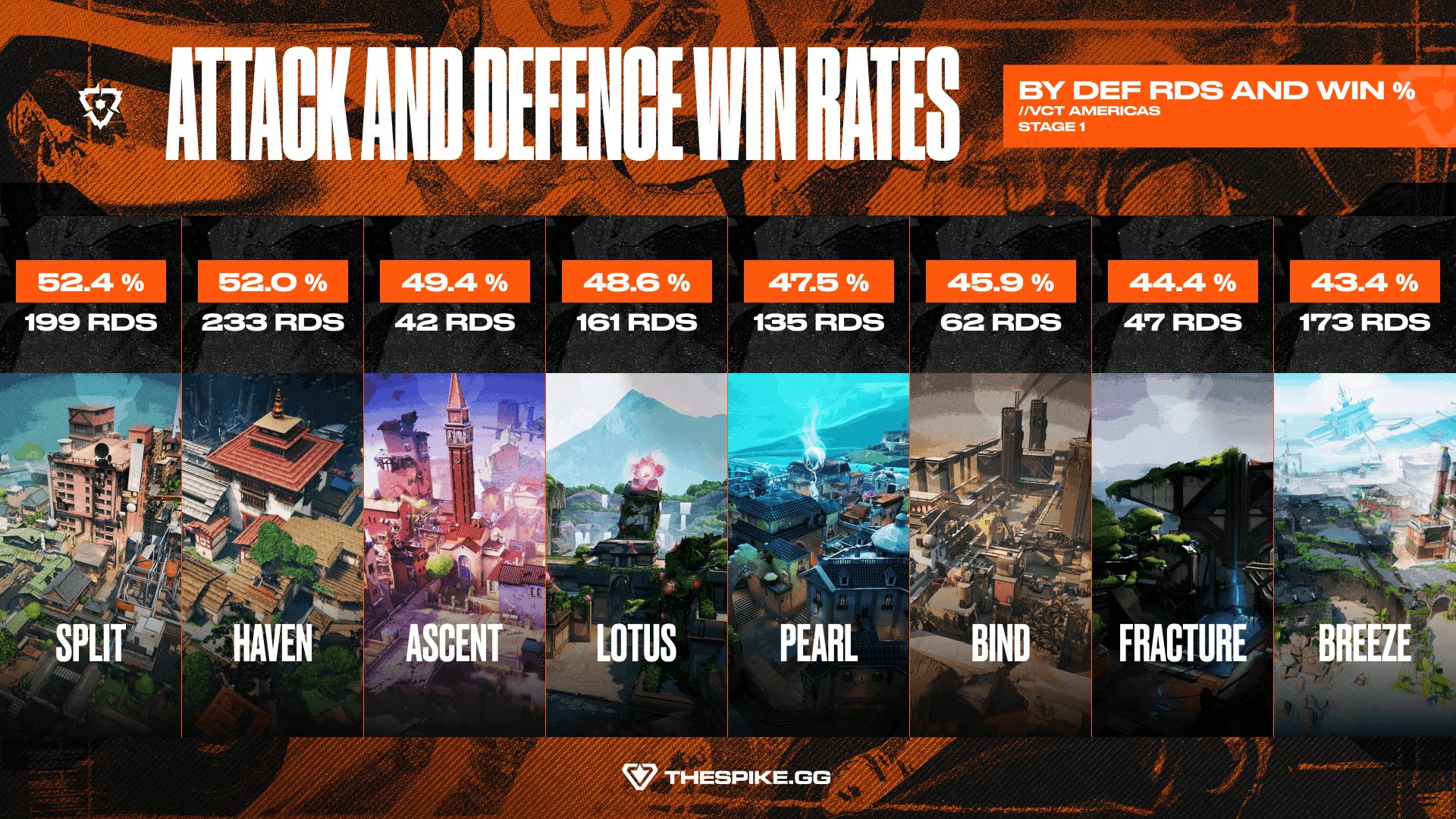
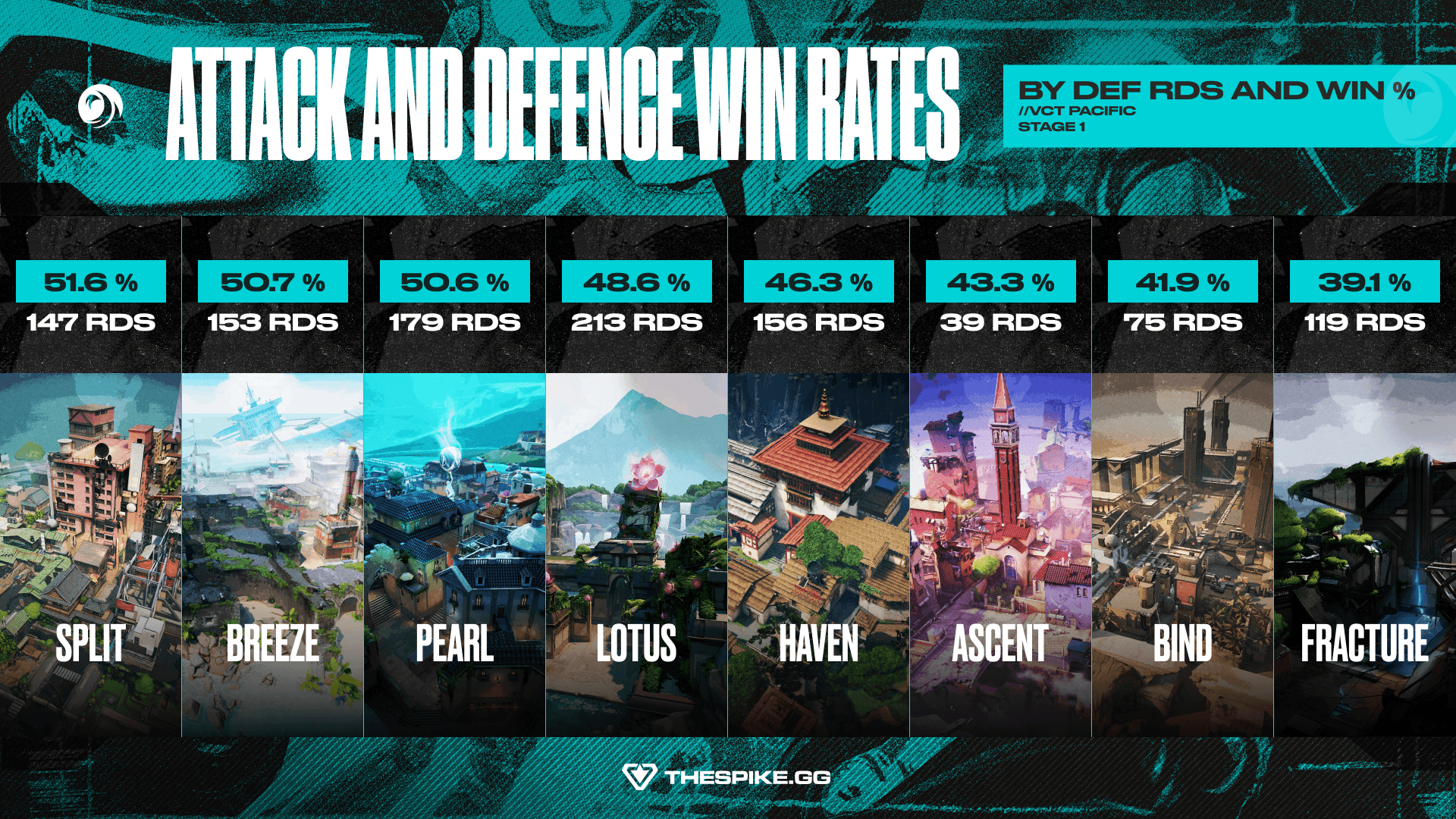
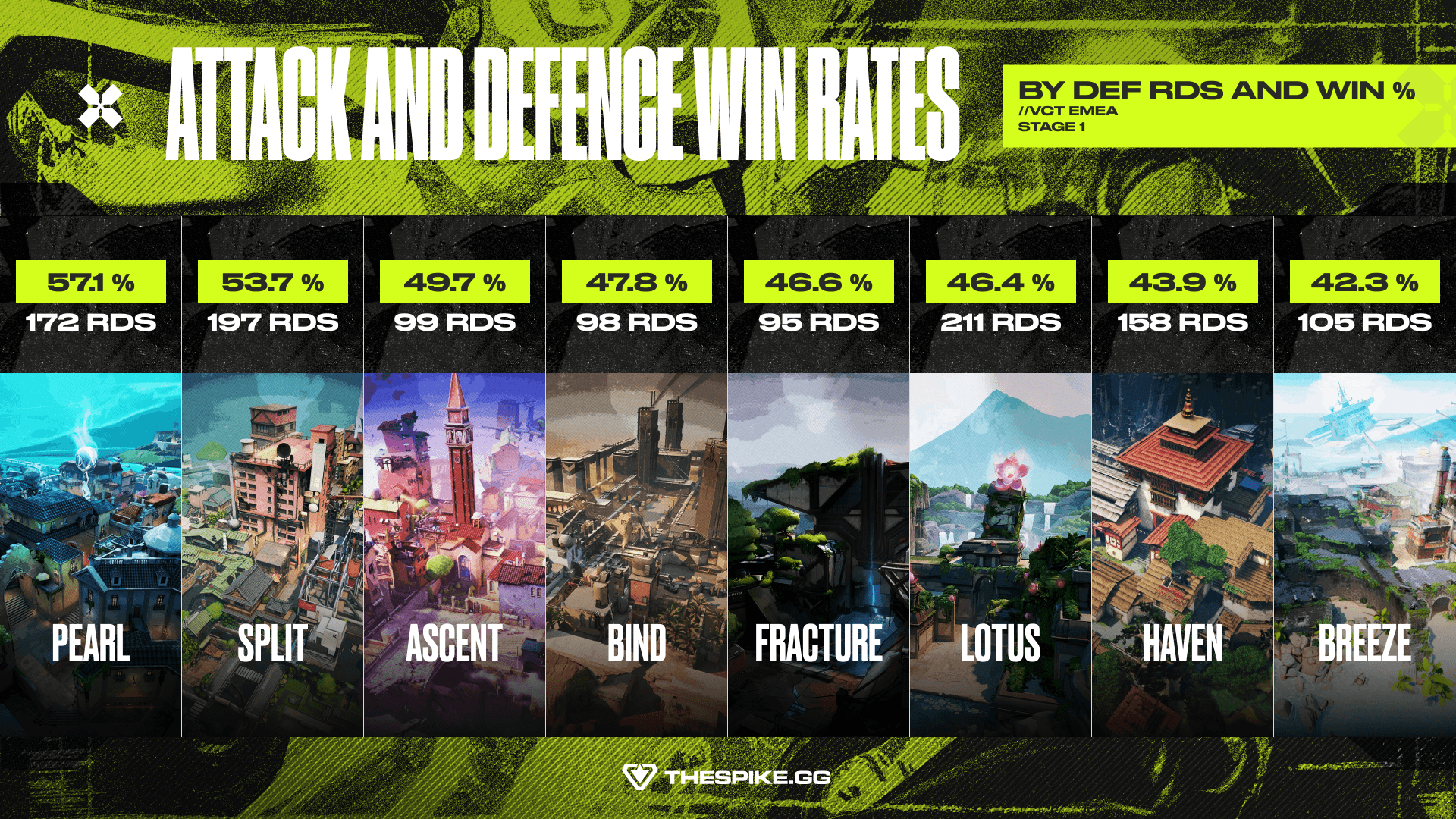
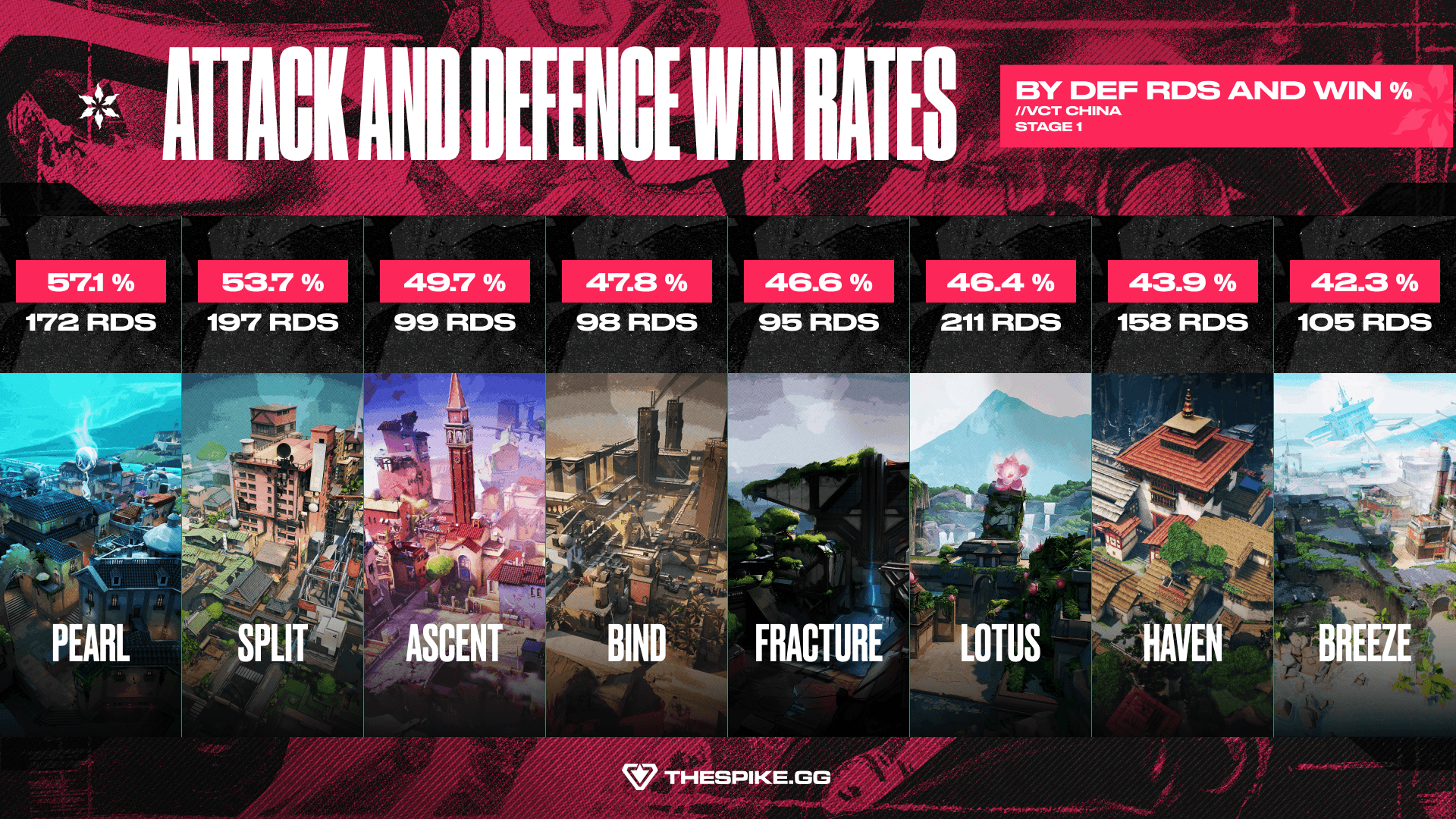
Pearl and Split function as the defensive backbone of the pool, and the numbers are remarkably consistent across regions. In EMEA, Pearl posts one of the most defense‑skewed profiles, with defenders taking well over half the rounds despite a healthy mid‑teens pick rate, turning it into a natural choice for teams confident in their site anchors and retake protocols. Americas and Pacific show slightly more balanced outcomes but still tilt towards defenders, while China not only bans Pearl at one of the highest rates but also sees its win rates stay close to even, implying a general discomfort with the map’s macro rather than a clear advantage either way.
Split tells a similar story but with higher universal trust. All four regions sit in a comparable band of pick rate, roughly mid‑teens, and its ban rate is high but not extreme, indicating it is too fundamental to drop entirely yet punishing enough that teams are selective about when they go there. Defence win rates on Split consistently edge out attack wins, especially in EMEA and Americas, reinforcing its identity as the map where fundamentals—utility layering, site exec discipline, and late‑round trading—decide series.
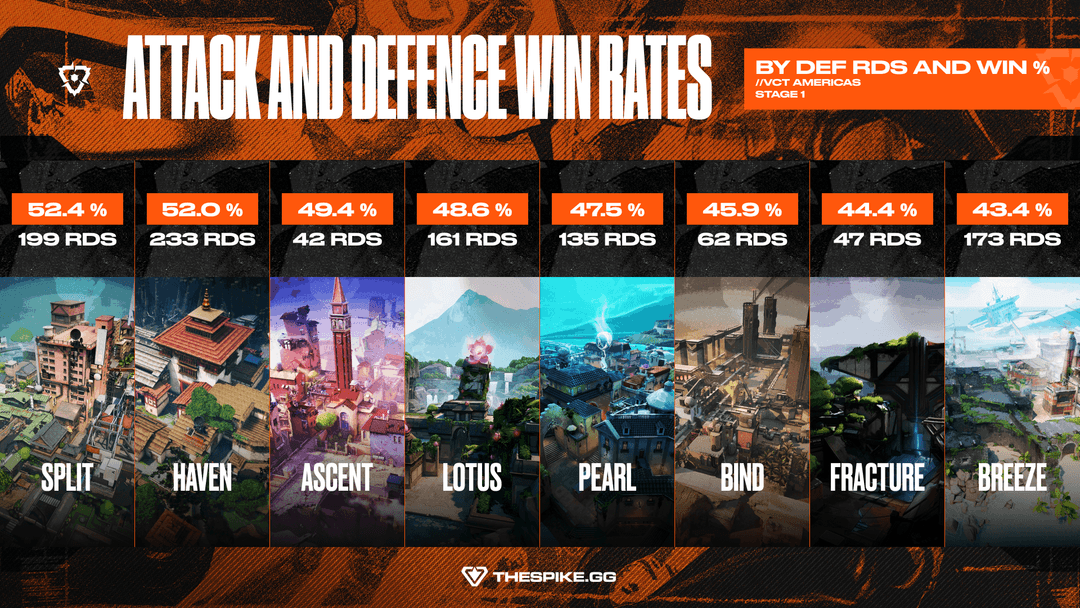
VCT Americas 20206 Stage 1 Map Defense Win Rate (Image Exclusive to THESPIKE.GG)
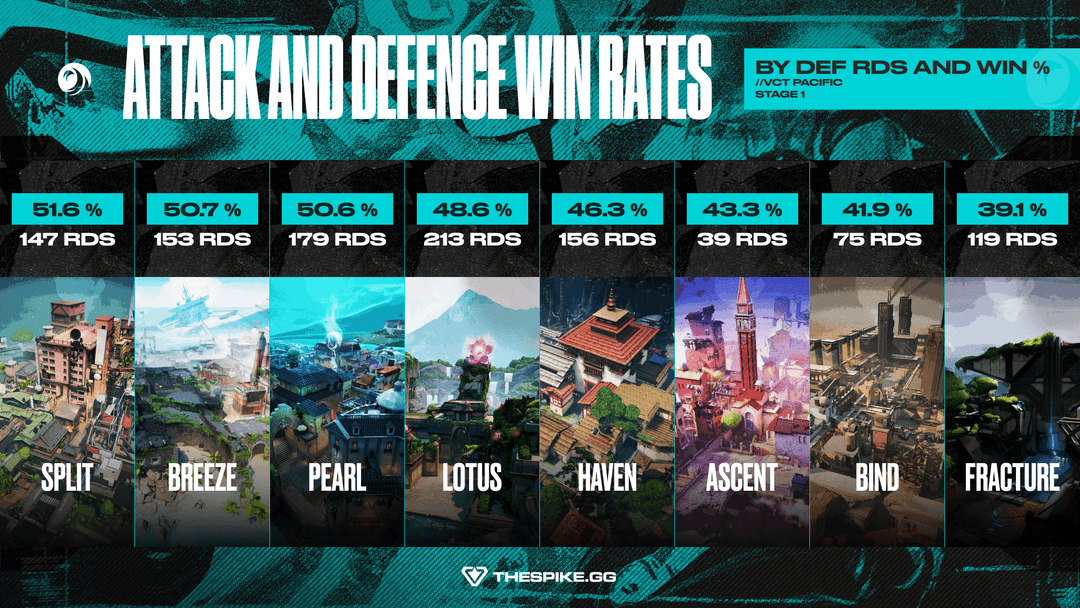
VCT Pacific 20206 Stage 1 Map Defense Win Rate (Image Exclusive to THESPIKE.GG)
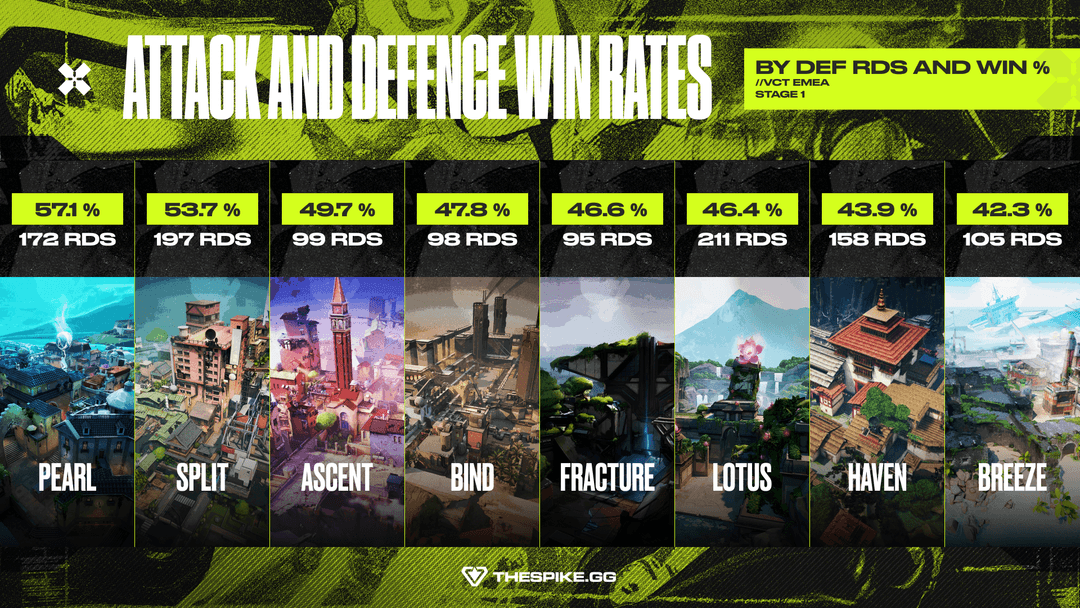
VCT EMEA 20206 Stage 1 Map Defense Win Rate (Image Exclusive to THESPIKE.GG)
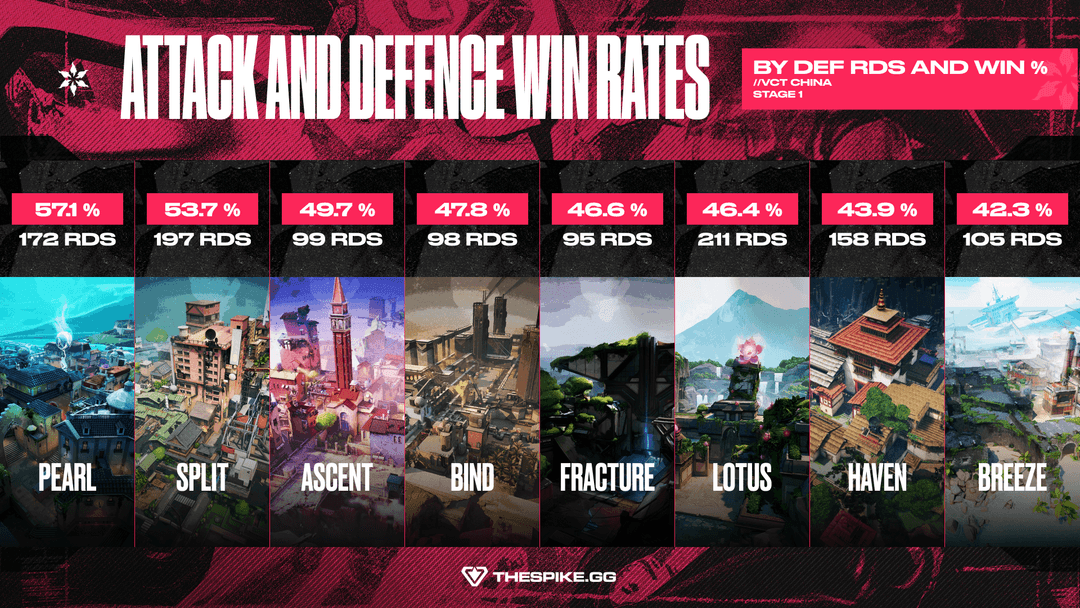
VCT China 20206 Stage 1 Map Defense Win Rate (Image Exclusive to THESPIKE.GG)
Regional Stylistic Fingerprints
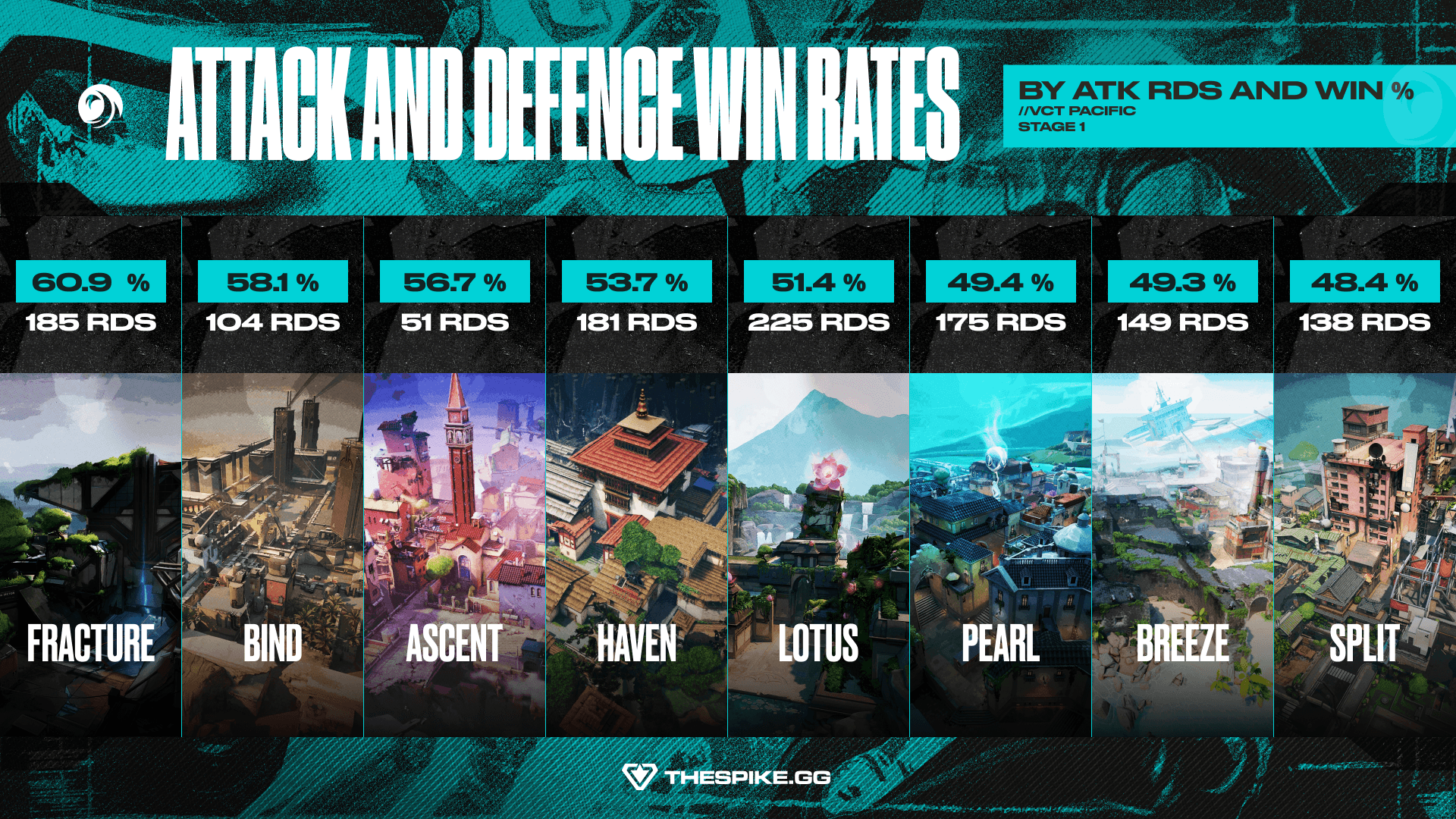
Pacific presents the most balanced map spread of any region. Lotus and Haven lead the pick charts, but Breeze, Split, and Pearl all see consistent play, with Fracture and Bind occupying a comfortable middle ground. Ascent barely featured, largely due to the timing of its mid-event introduction. Notably, attack win rates on Fracture and Bind are among the highest in the region, reflecting Pacific's well-documented comfort with structured executes and coordinated utility usage.
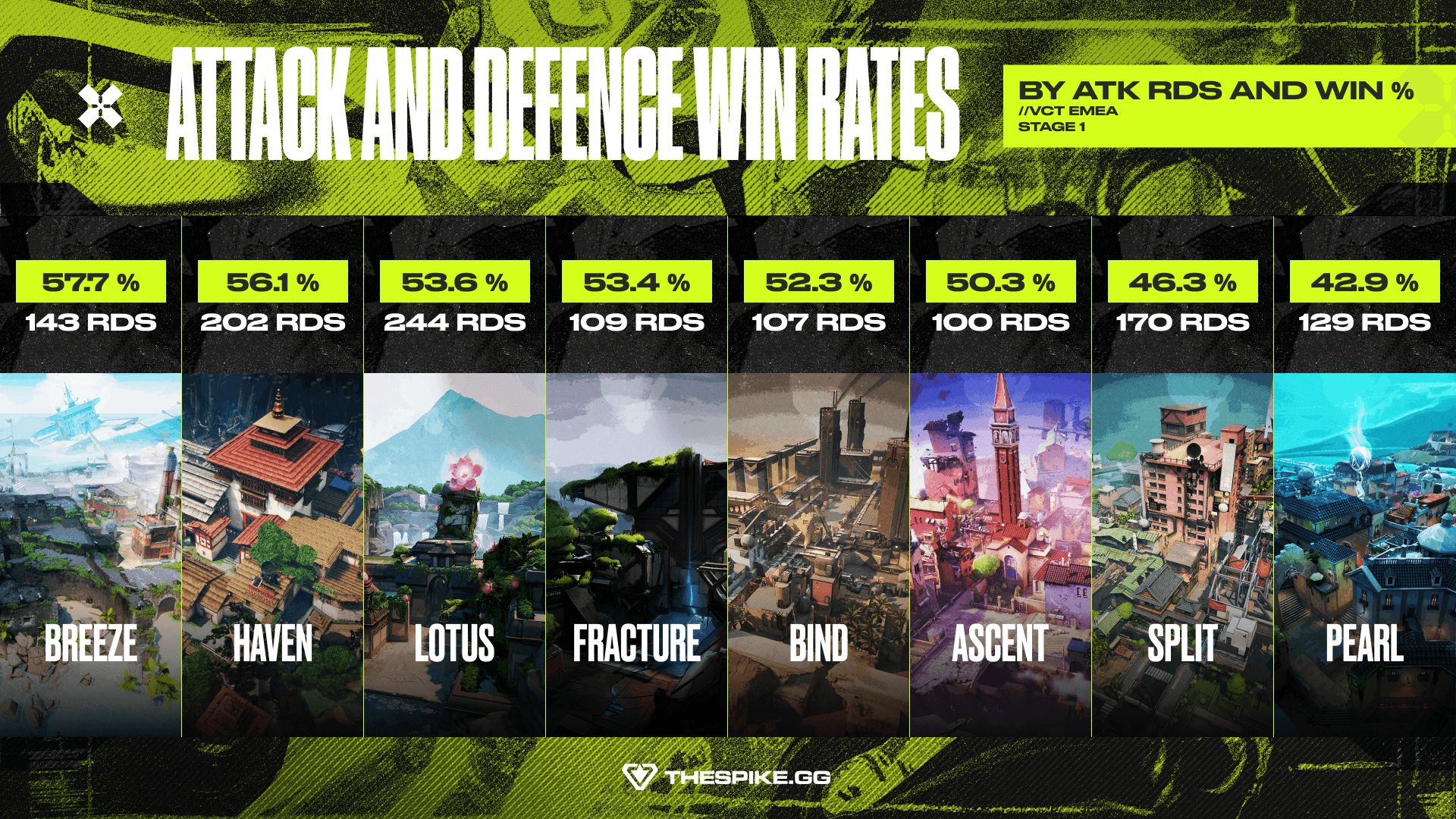
EMEA doubles down on Lotus and Haven as its primary battlegrounds, deploying Breeze and Fracture as situational flex picks. The region's sharpest characteristic, however, is its defensive identity, as Pearl and Split both show a pronounced defensive skew, pointing to a playstyle built around slow defaults, disciplined rotations, and punishing opponents' mistakes.
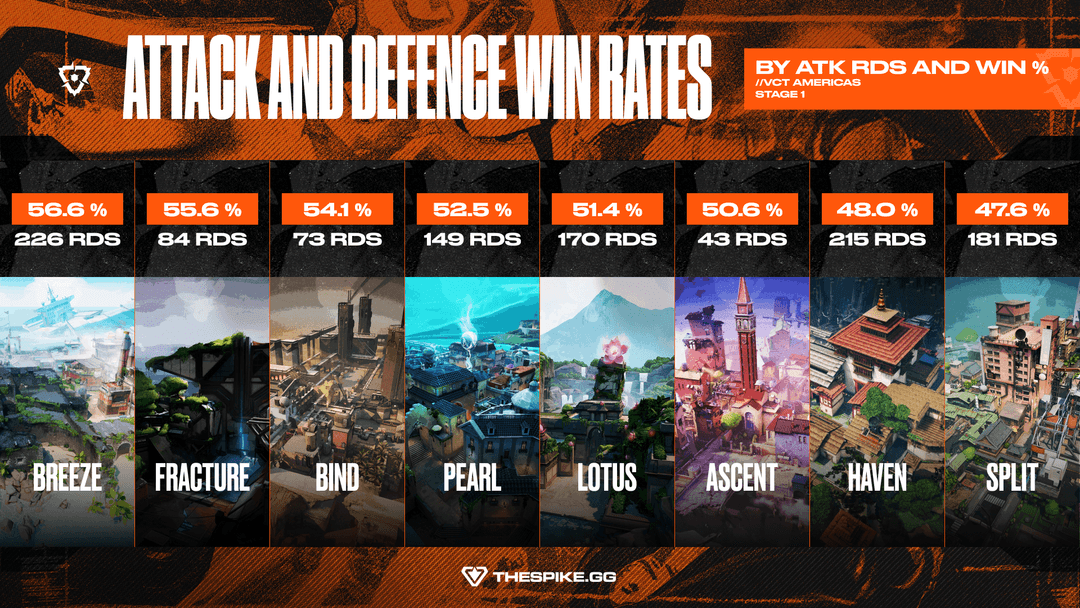
VCT Americas 20206 Stage 1 Map Attack Win Rate (Image Exclusive to THESPIKE.GG)
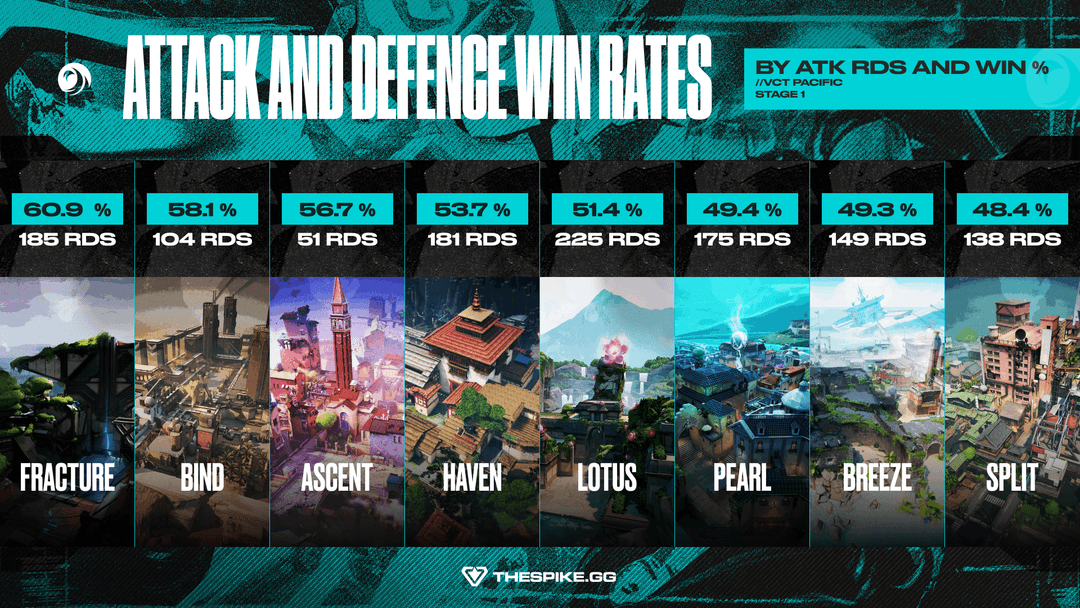
VCT Pacific 20206 Stage 1 Map Attack Win Rate (Image Exclusive to THESPIKE.GG)
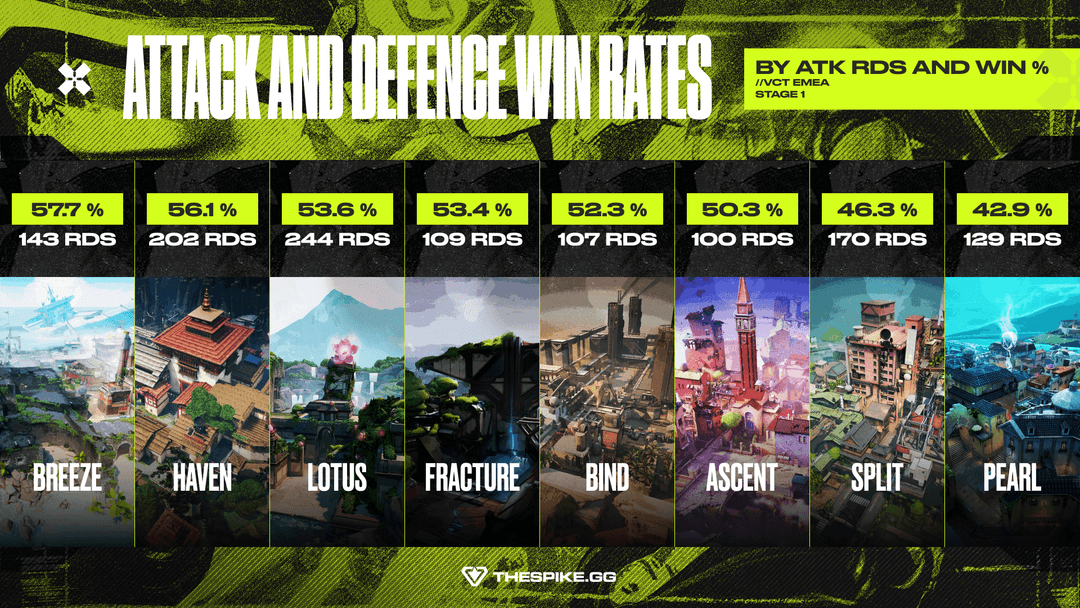
VCT EMEA 20206 Stage 1 Map Attack Win Rate (Image Exclusive to THESPIKE.GG)
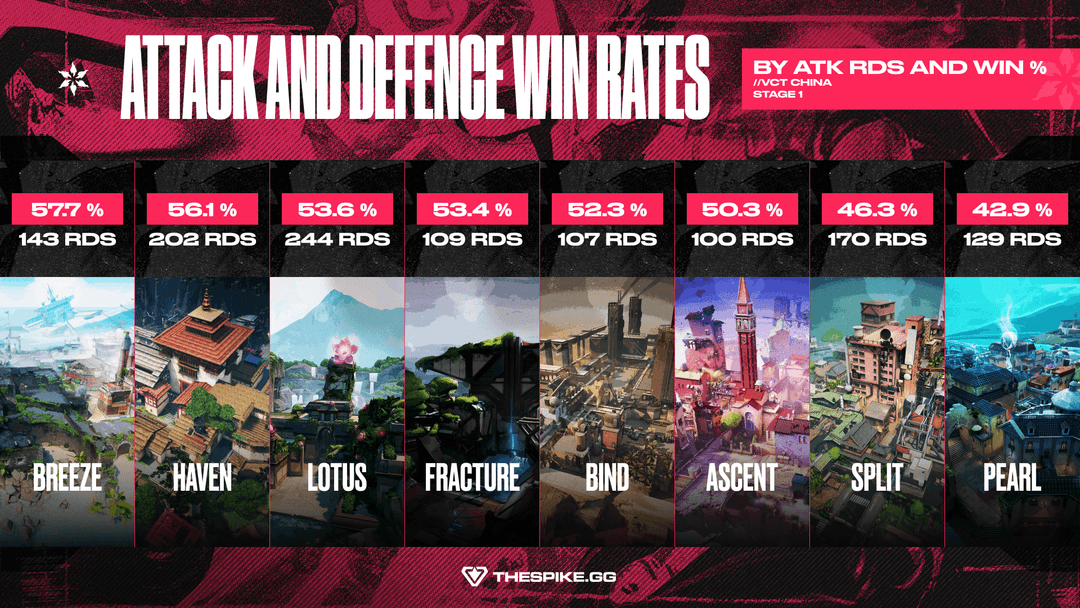
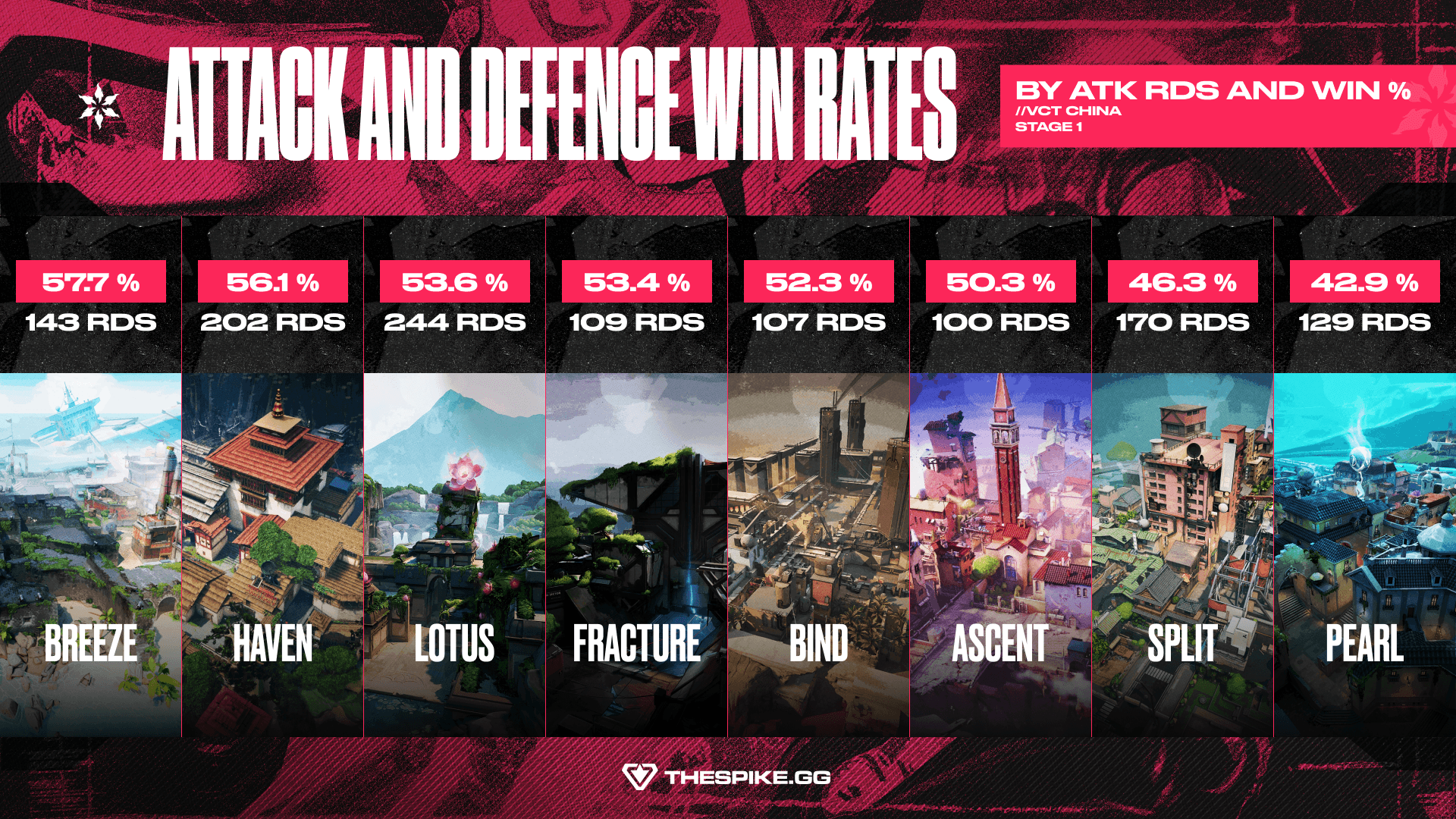
VCT China 20206 Stage 1 Map Attack Win Rate (Image Exclusive to THESPIKE.GG)
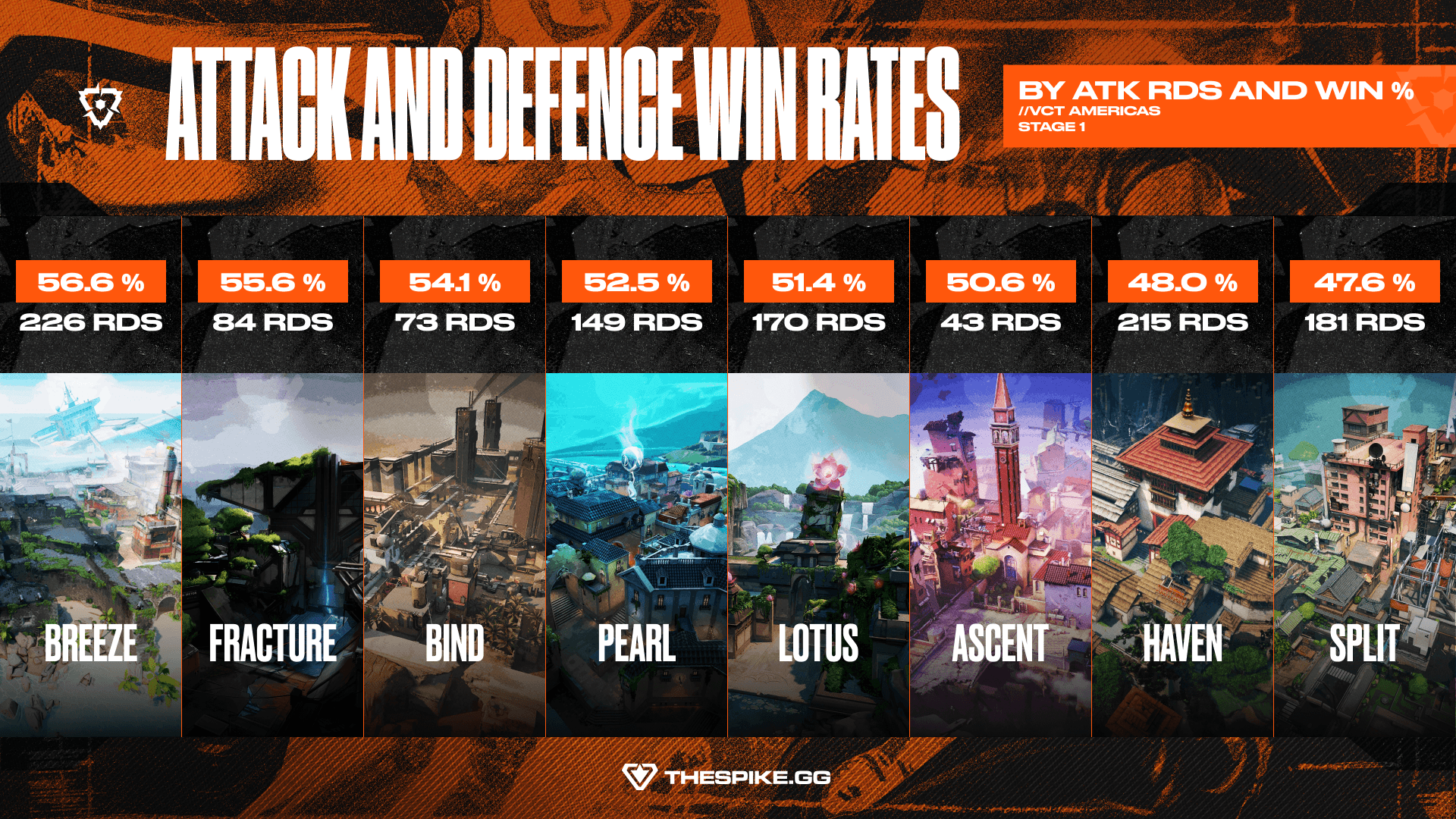
Americas leans on Breeze and Haven, with Breeze delivering some of the strongest attacking win rates in the league. Fracture's heavy ban rate signals that only a few teams truly thrive in its chaotic environment.
China is the most Lotus-dependent region, pairing it consistently with Haven and Split. Bind, Breeze, and Fracture form a crowded and unsettled middle tier, suggesting Chinese teams are still actively searching for their second identity beyond Lotus.
What this means for the evolving meta
Taken together, Stage 1 paints a picture of convergence around Lotus and Haven as global staples while leaving room for regional flavor through Breeze, Fracture, and the defensive fortresses of Pearl and Split. The Bind-Ascent mid‑event swap complicates any early read on Ascent in particular, but the low pick rates and small sample sizes signal that teams will need some time before the global meta on that map really stabilizes.
For now, coaches and analysts can treat Lotus as the clearest window into a team’s identity, with Haven, Breeze, and Split rounding out a regional fingerprint that should only become sharper as VCT 2026 progresses.
For all things VCT-related, make sure to stay tuned to THESPIKE.GG as we continue to update you with the freshest game and esports news.
Featured Image Source: Riot Games
Latest News
- Aspas opens up: “I just want to go back to being myself”The MIBR player gives a touching interview as he discusses this difficult stretch in his career.
 about 22 hours ago
 - Top 3 most disappointing teams of Stage 1: Which squads are falling off?Let’s take a look at the three most disappointing teams of Stage 1.
 2 days ago
 - VALORANT Patch 12.10: Replay sharing, Masters London Pick'Ems, and moreVALORANT Patch 12.10 brings Replay Sharing, Masters London Pick'Ems, Skirmish map updates, and bug fixes for Miks and Harbor. 2 days ago
Comments
vct 2023
For all information about the VCT 2023, check out our VCT Hub. There you will find our FAQ to answer all of your questions and details about the teams, different Leagues, and more.