Fortnite Lock On Assault Rifle: Stats, how to use it & more
Lock on. Burst. Eliminate.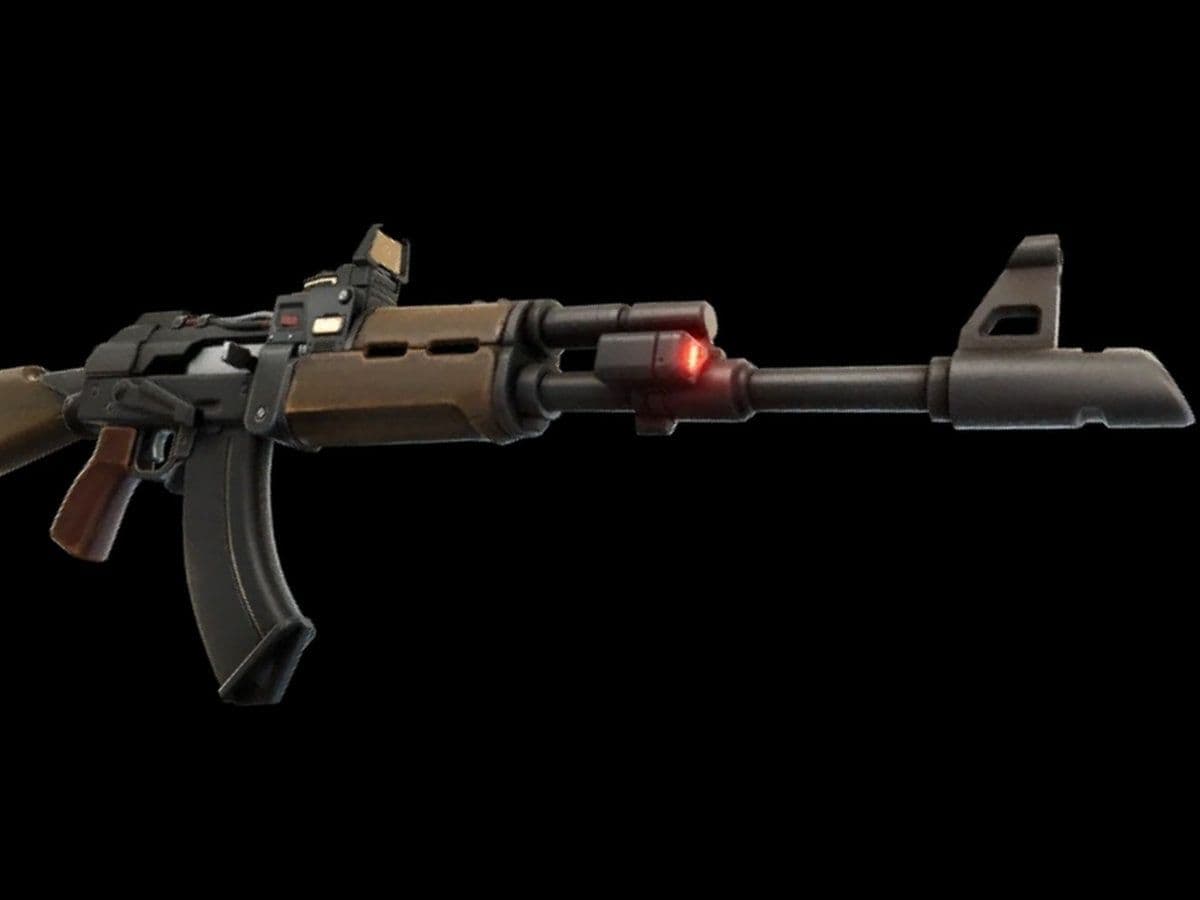
The Lock On Assault Rifle is one of the most unique weapons to hit Fortnite: Battle Royale. Introduced in the v39.40 update, this rifle isn’t just another Fortnite gun. Unlike traditional assault rifles that depend entirely on recoil control and aim tracking, this weapon uses a lock-on targeting system that allows players to deal consistent damage to moving enemies. Because of this, it plays very differently from standard ARs and rewards patience, positioning, and timing.
This Fortnite guide explains how the Lock On Assault Rifle works, where to find it, its strengths and weaknesses, and how to use it correctly in real matches.
What is the Fortnite Lock On Assault Rifle?
The Fortnite Lock On Assault Rifle is a medium-range assault weapon designed around a two-step combat system:
- Lock-on targeting
- Guaranteed burst damage
Instead of firing immediately for maximum accuracy, the weapon encourages players to hold their aim on an enemy until the lock-on system fully charges. Once locked, the Lock On Assault Rifle releases a burst that automatically hits the target, even if they move slightly after the lock is completed.
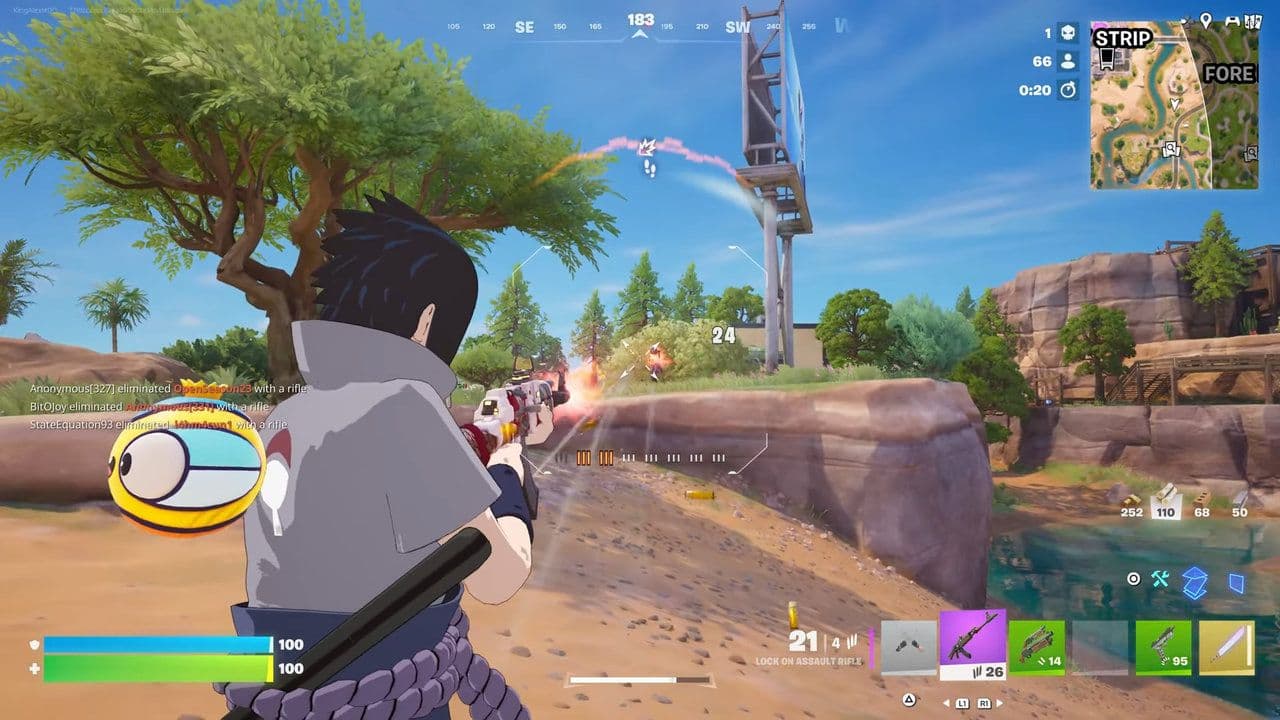
This makes the weapon especially useful against:
- Sprinting enemies
- Players using mobility items
- Targets attempting to escape fights
Fortnite Lock On Assault Rifle stats
The Fortnite Lock On Assault Rifle appears in Common, Uncommon, Rare, Epic, and Legendary rarities. Higher rarities increase damage and DPS but keep the same core mechanics.
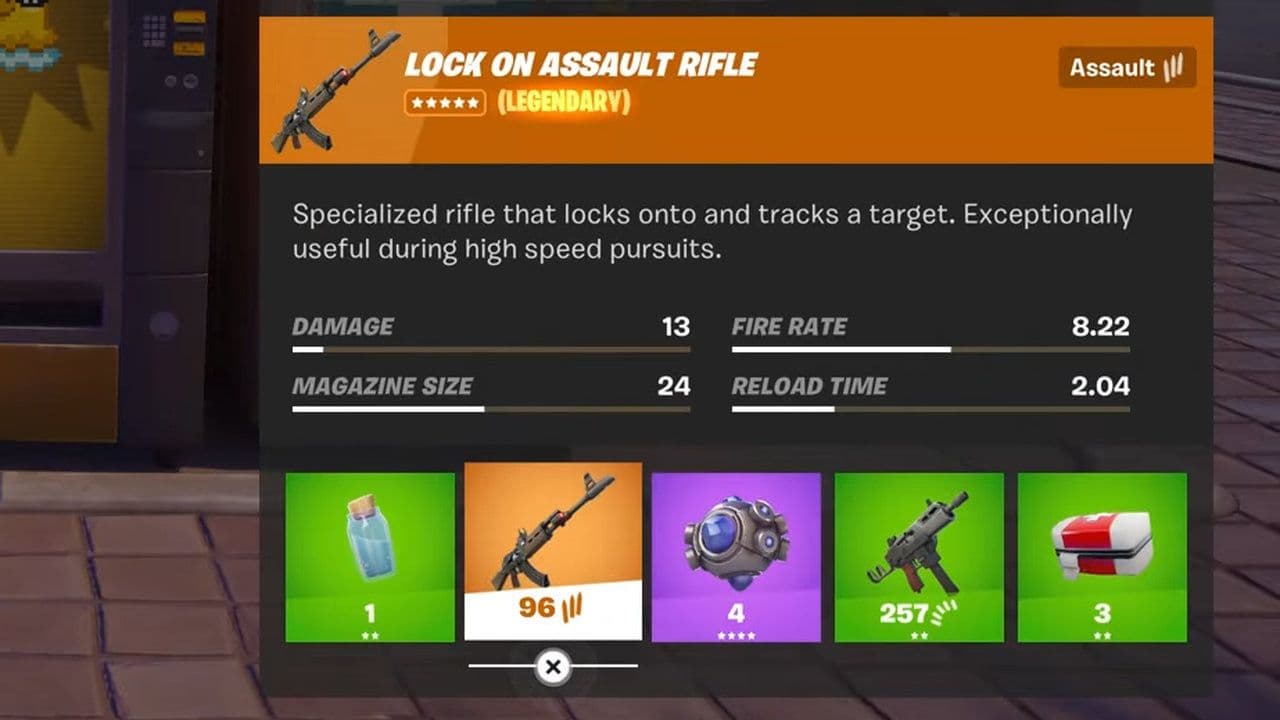
At Legendary rarity, the Lock On Assault Rifle reaches its highest efficiency, offering solid DPS while keeping its reliable lock-on burst. It is not designed for heavy structure damage and performs best when focused on player eliminations, not builds.
How does the lock-on mechanic work?
Understanding the lock-on system is critical to using the Fortnite Lock On Assault Rifle correctly.
Targeting phase
When aiming down sights:
- A unique reticle appears on screen
- Keep an enemy inside the reticle without losing line of sight
- Lock indicators begin filling around the crosshair
- After four indicators fill, the target is fully locked
The lock will break if:
- The enemy moves behind cover
- The enemy exits the effective range
- You stop aiming down sights
Firing phase
Once locked:
- Press the fire button to release a burst
- The burst guarantees hits on the locked target
- Shots will land even if the enemy strafes or jumps slightly
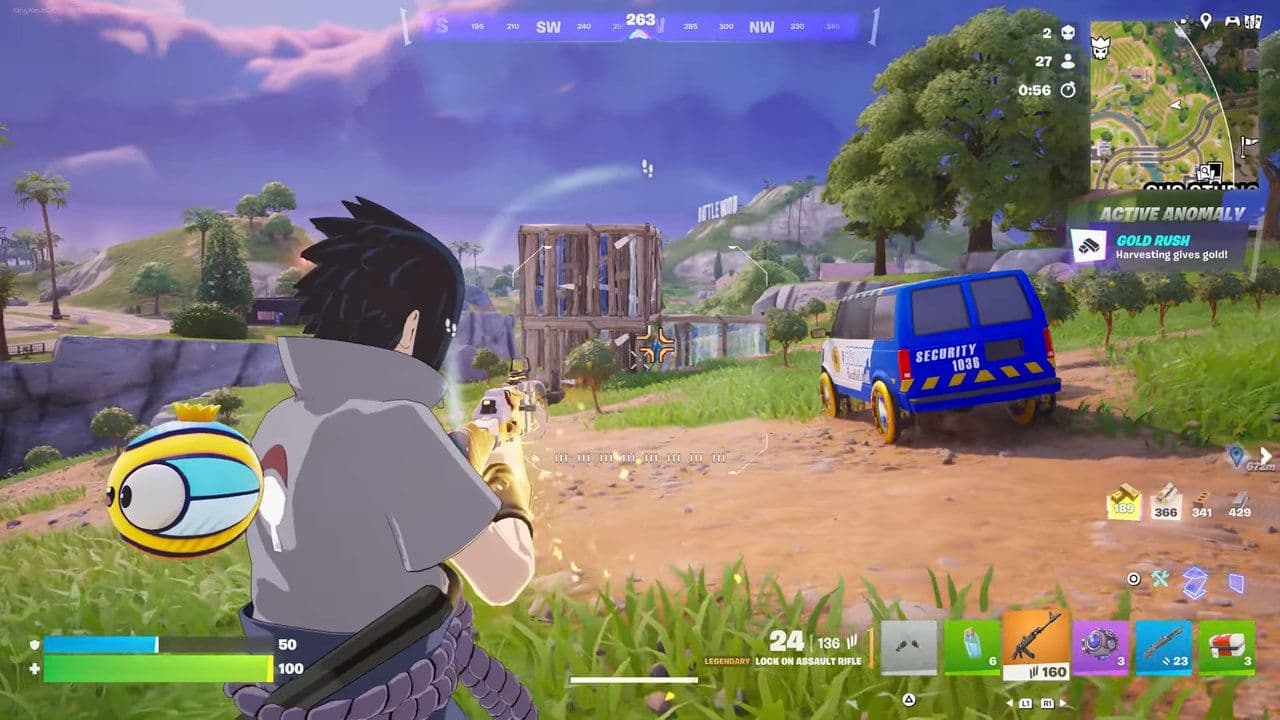
This makes the Lock On Assault Rifle extremely effective against players who rely on movement rather than cover.
How to get the Fortnite Lock On Assault Rifle
The Fortnite Lock On Assault Rifle is part of the regular loot pool and can be found through:
- Floor loot
- Chests
- Supply drops
- Vending machines (Gold Bars)
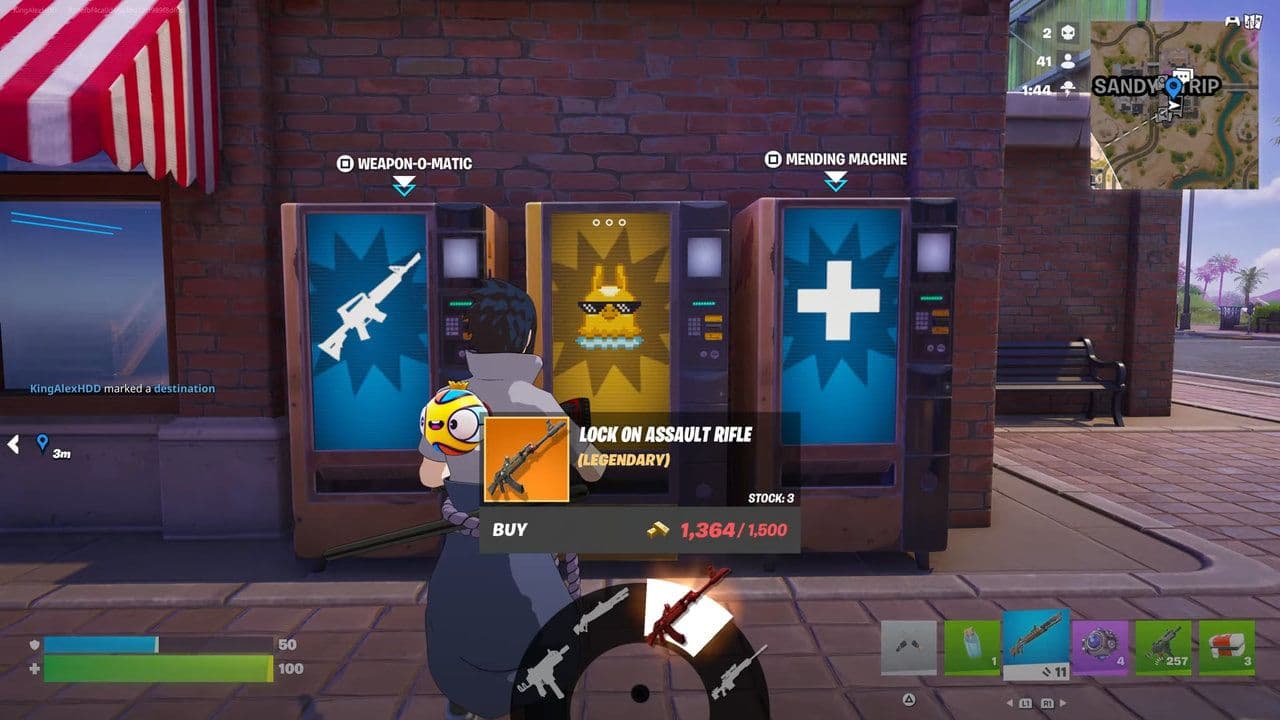
There is currently no Mythic version, and it is not tied to a boss or NPC. Availability depends on the current loot pool of the season, but when active, it is widely obtainable.
Best ways to use the Fortnite Lock On Assault Rifle
- The Fortnite Lock On Assault Rifle performs best at medium range, between shotgun and sniper distances. Use it to target enemies rotating between zones, crossing open areas, or retreating from fights.
- Avoid firing too early. Waiting for a full lock-on is essential, as partial locks lower damage consistency and waste ammunition.
- Since the weapon is weak at close range, pair it with a shotgun or SMG. Use the Lock On Assault Rifle to break shields or finish escaping enemies, then switch weapons if opponents push aggressively.
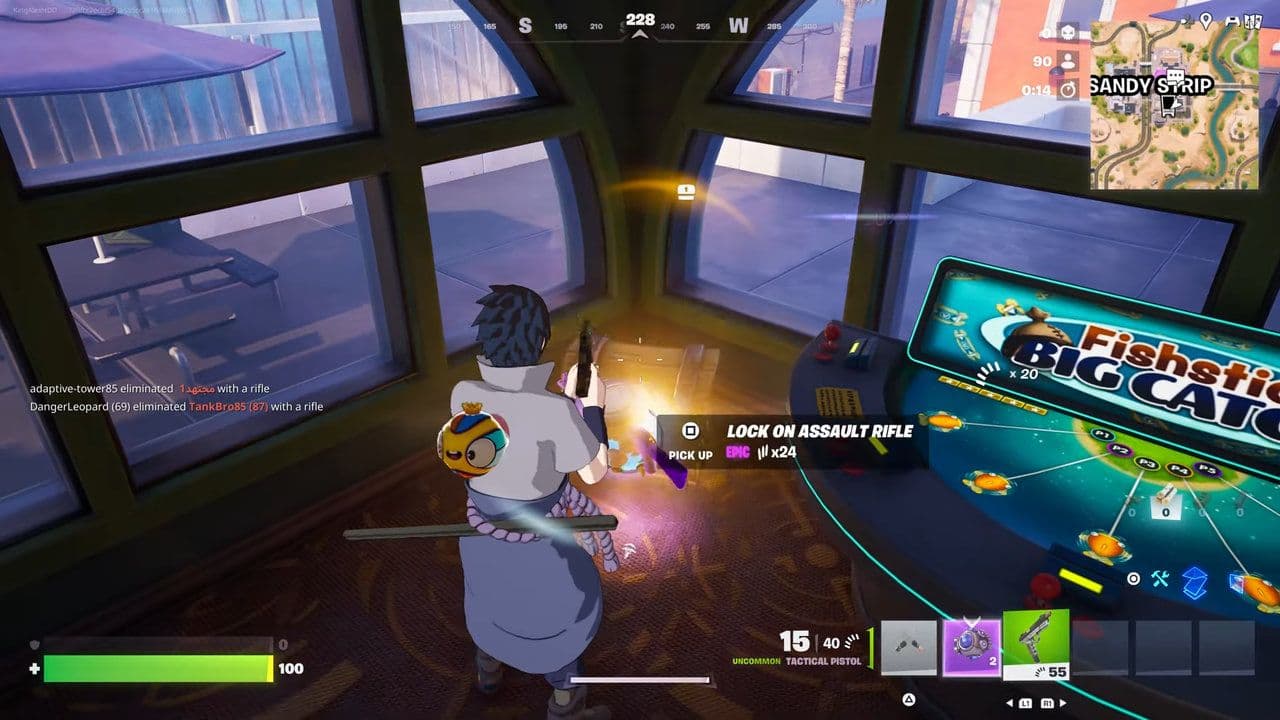
The Fortnite Lock On Assault Rifle is not a replacement for traditional assault rifles in every situation, but it excels in specific combat scenarios. Players who value consistency, tracking, and controlled engagements will find it extremely effective, especially in open areas and Zero Build modes.
Used correctly, it can shut down fast movers, punish poor rotations, and secure eliminations that standard ARs often miss.
That’s all for today! Looking for more Fortnite guides? Check out these:
All Related Guides
 Using the Bank Shot Pistol's ricochet in Fortnite explainedDiscover how the Bank Shot Pistol ricochet works in Fortnite, where to find it, and the fastest way to finish ...
 How to get the Arc Lightning Gun in Fortnite (4 easy ways)Learn how to get the Arc Lightning Gun in Fortnite fast. Discover chest locations, boss drops, vending machine...
 Every weapon for OG FortniteEvery weapon for OG Fortnite! Rediscover the iconic arsenal that shaped the game, from shotguns to snipers and...
 How to damage guardian shields in Fortnite?Check out this simple guide on how to complete the damage Guardian Shield task efficiently:...
 Are Kinetic Blades still in Fortnite?In this article you're going to find out if the Kinetic Blades are still in Fortnite...
 Best guns in FortnitePrepare to dominate the battle royale arena with our comprehensive guide to the best guns in Fortnite Chapter ...
 Where to find Bender’s Shiny Metal Raygun in FortniteWhere's Bender's Ray Gun in Fortnite? Map, stats, and tips on how to dominate!...